
Chapter 2
How do bears hibernate?
All winter long, a bear lies in its den without eating a thing. How does it get through those months?
10 pages · about 5 minutes
How do bears hibernate?
Chapter 2
All winter long, a bear lies in its den without eating a thing. How does it get through those months?
10 pages · about 5 minutes
Page 1 of 10
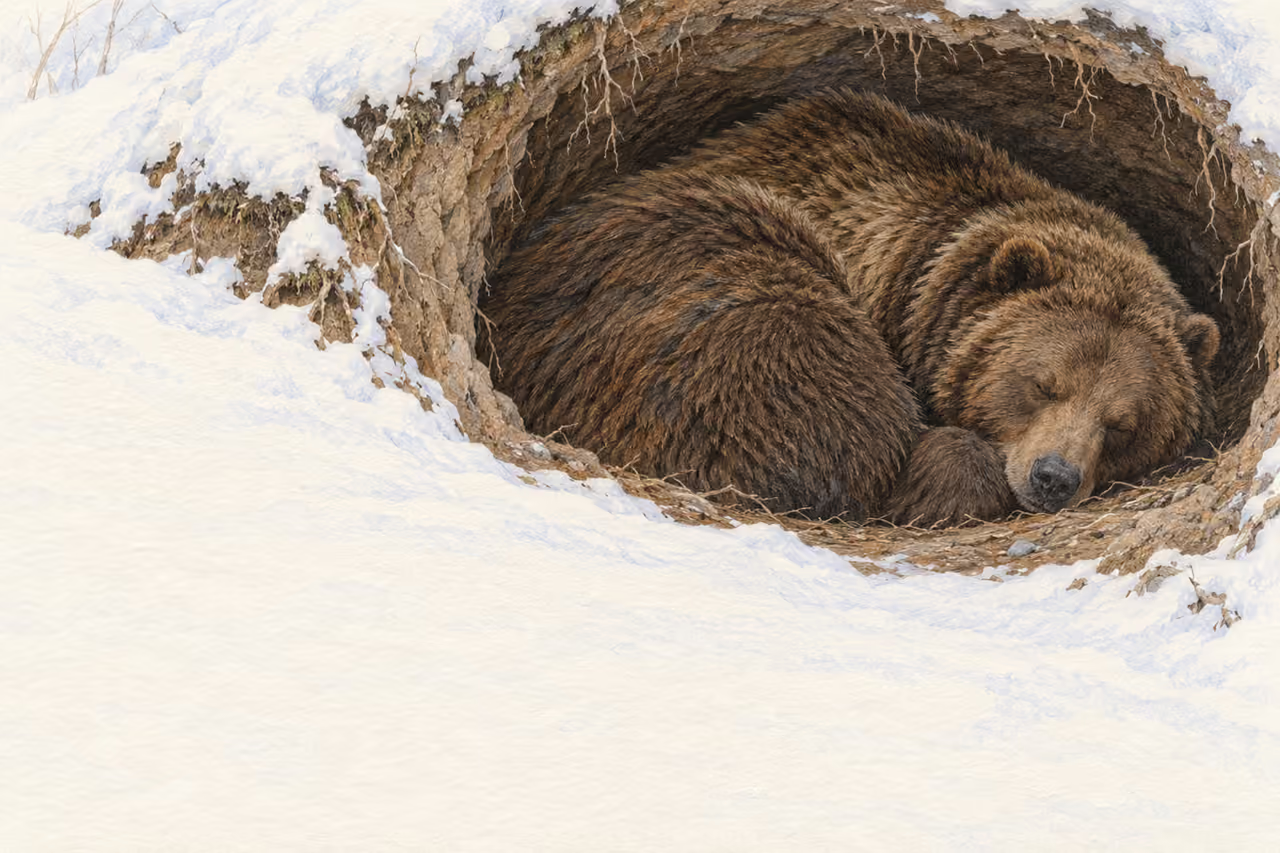
On Sunday evening, Na watched a film with Dad about brown bears in Alaska, where winter turns everything white. All autumn the bears caught salmon and ate and ate, then crawled into their dens and stayed there.
Cú Bông guessed that hibernating meant a very deep sleep. The bear must slowly go cold, cold as a stone in the snow.
In the film, scientists checked a hibernating bear: its body was still warm. But its heart beat strangely slowly, fewer than ten times a minute. In spring, the bear walked out of its den, much thinner than before.
While hibernating, a bear doesn't eat, drink or go to the toilet for months. Its body temperature drops only a little: in the black bears studied, to about 30 to 36 °C. Ground squirrels are different: when they hibernate, they cool to almost freezing.
The bear's heart beats very slowly, sometimes fewer than ten times a minute. Its body uses energy far more slowly too. In the black bears studied, energy use fell to about a quarter of the resting rate. It lives on its body's stores, so over winter it can lose about a third of its weight.
Pick each season to compare the bear. In which season does the bear's heart beat most slowly?
A hibernating bear doesn't eat or drink; its heart beats very slowly and its body uses far less energy. It stays warm, and lives on the stores it built up in summer and autumn.
Everything this chapter tells you rests on at least two trustworthy sources, retold in the book's own words.
Cú Bông's books are open to everyone who signs in: read page by page like a paper book, with a small experiment right on the page.
All it takes is a Google account — no new password.