
Chapter 3
Why don't penguins get cold in the ice and snow?
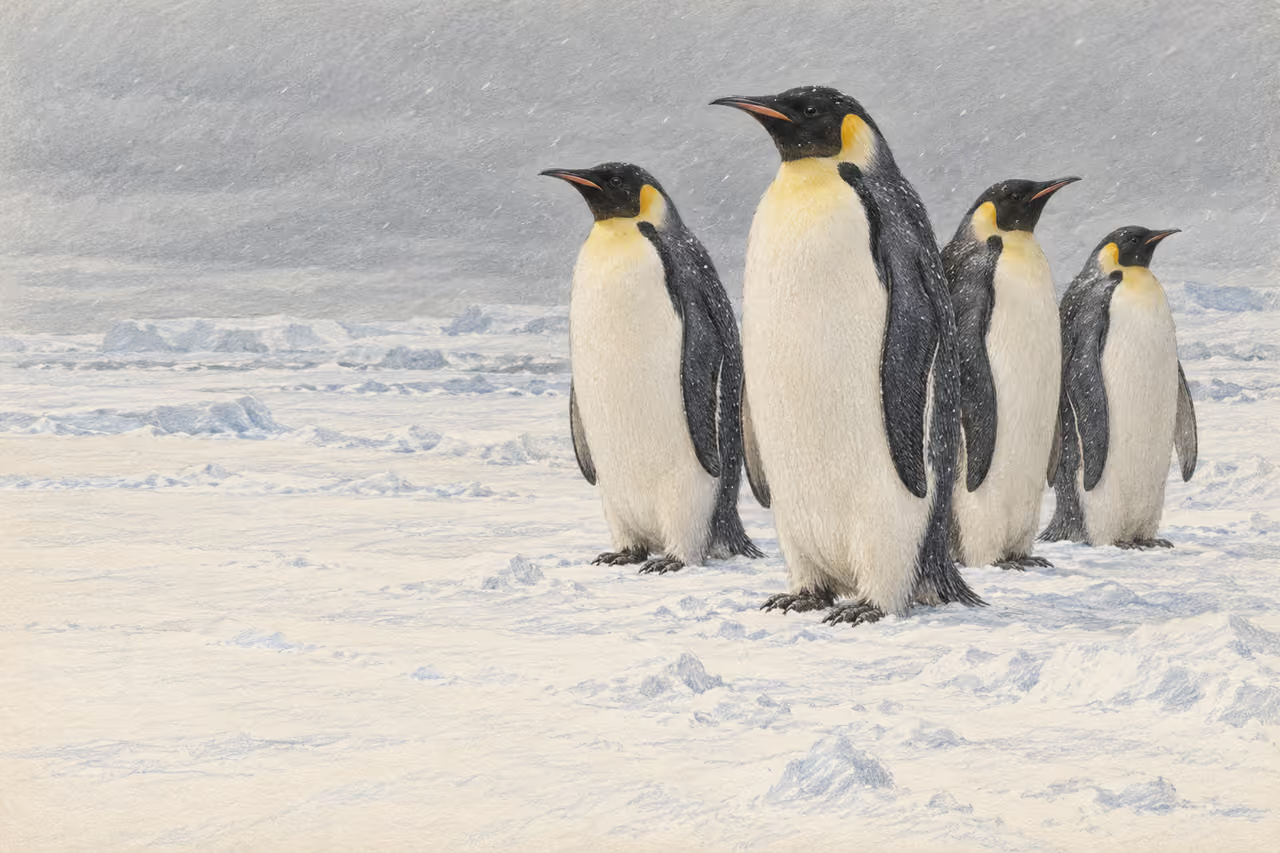
Emperor penguins stand in the ice and snow in winter while the wind howls. Why don't they get freezing cold?
10 pages · about 5 minutes
Why don't penguins get cold in the ice and snow?
Chapter 3
Emperor penguins stand in the ice and snow in winter while the wind howls. Why don't they get freezing cold?
10 pages · about 5 minutes
Page 1 of 10
That summer, Mum took Na to the aquarium. Behind a cold glass wall, a few penguins stood calmly on chilly rocks, their feet on the ice.
Cú Bông pressed a wing to the glass and snatched it straight back. It guessed that penguins standing on ice that long must have feet frozen solid.
Nearby, a screen showed Antarctica: a flock of emperor penguins stood packed together in a blizzard. The birds on the windward edge kept moving round to the sheltered side. In the Antarctic winter, the males stood on the ice, guarding their eggs.
Emperor penguins have several layers of short, scale-like feathers that keep the cold out. Under the skin, thick fat keeps them warm and stores energy. In the legs and flippers, warm blood flowing out runs close to cold blood flowing back. So heat goes back into the body instead of being lost.
Below 0 °C, a penguin increases the flow of warm blood to its feet. Special fats in its feet help stop them freezing. Through the winter, males guarding eggs huddle to share warmth. Windward-edge birds move round to the warmer, sheltered side, so over time their places in the huddle change.
Step through to see how a penguin keeps warm. At which step does heat from the blood flowing to the feet go back into the body?
Several layers of short, scale-like feathers keep out the cold; thick fat keeps them warm and stores energy. In the legs and flippers, blood returns heat to the body. Through the winter, males guarding eggs huddle to share warmth. Birds on the windward edge move round to the warmer, sheltered side; over time places change.
Everything this chapter tells you rests on at least two trustworthy sources, retold in the book's own words.
Cú Bông's books are open to everyone who signs in: read page by page like a paper book, with a small experiment right on the page.
All it takes is a Google account — no new password.