
Chapter 4
What does a snake do with its tongue?
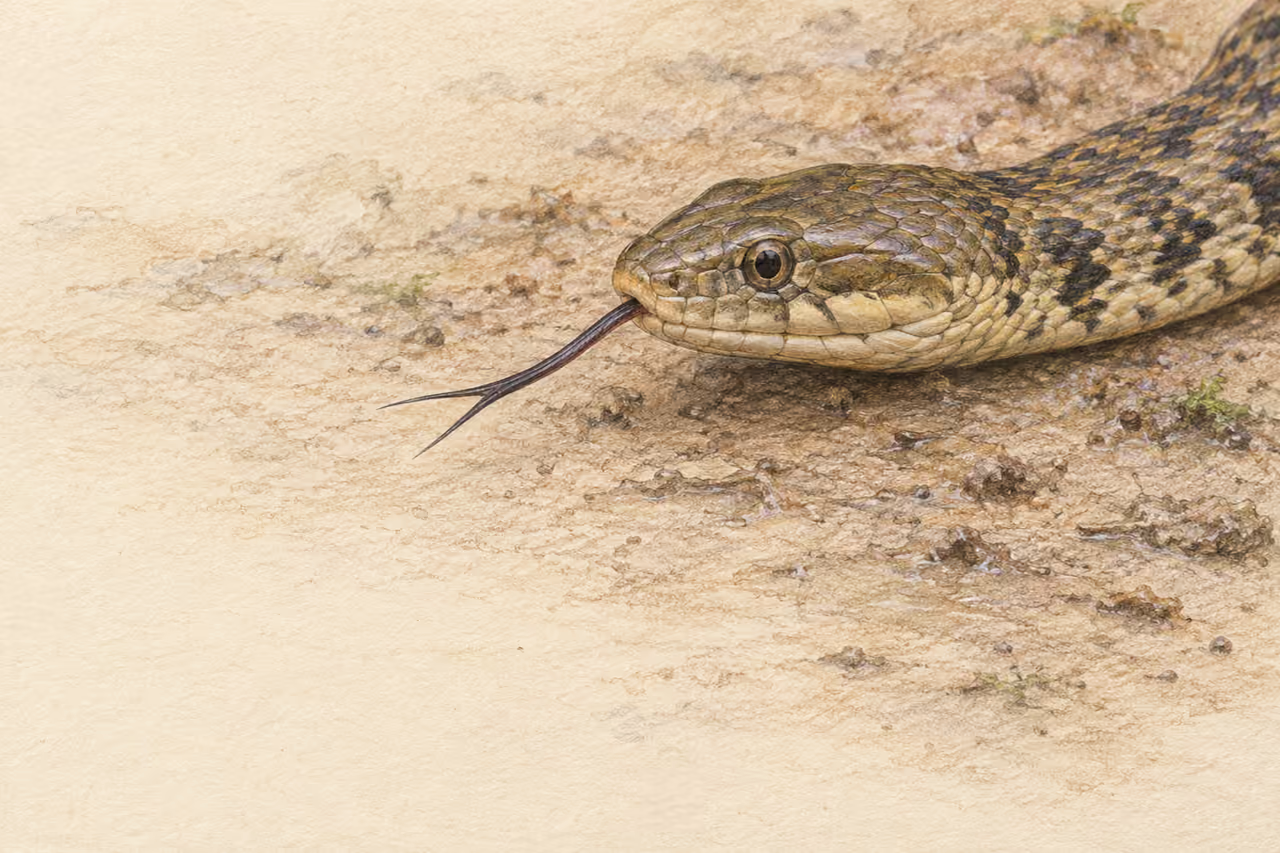
As a snake moves along, it keeps flicking its forked tongue in and out. What is it doing?
10 pages · about 5 minutes
What does a snake do with its tongue?
Chapter 4
As a snake moves along, it keeps flicking its forked tongue in and out. What is it doing?
10 pages · about 5 minutes
Page 1 of 10
After an afternoon shower, a water snake slid out along the ditch behind Grandpa's garden. Grandpa kept Na well back, and the two of them stood still and watched.
Cú Bông was frightened and guessed the tongue was poisonous. Flicking it like that must be a warning before it stings anyone who comes close.
But the snake paid no attention to anyone; it kept dipping its tongue to the ground. It wound along the ditch bank, flicking its tongue from time to time. Grandpa said: “A snake's tongue can't sting, but always keep well away from snakes.”
Each flick picks up scent-carrying chemicals from the air or the ground. The traces are detected by a small smell-sensing organ in the roof of the mouth. That organ sends signals to the brain, which works out the smell.
A snake's tongue is forked, so on each flick its two tips sample two spots a little apart. Comparing the two sides, the snake can tell which way a scent trail runs. That is how it follows trails left by prey or by other snakes.
Step through to see how a snake smells with its tongue. At which step does the snake tell which way the scent trail runs?
A snake's tongue picks up scent-carrying traces. An organ in the roof of its mouth sends signals to the brain, which works out the smells. Its forked tongue tells it which way a scent trail runs.
Everything this chapter tells you rests on at least two trustworthy sources, retold in the book's own words.
Cú Bông's books are open to everyone who signs in: read page by page like a paper book, with a small experiment right on the page.
All it takes is a Google account — no new password.