
Chapter 1
Why do birds fly in a V?
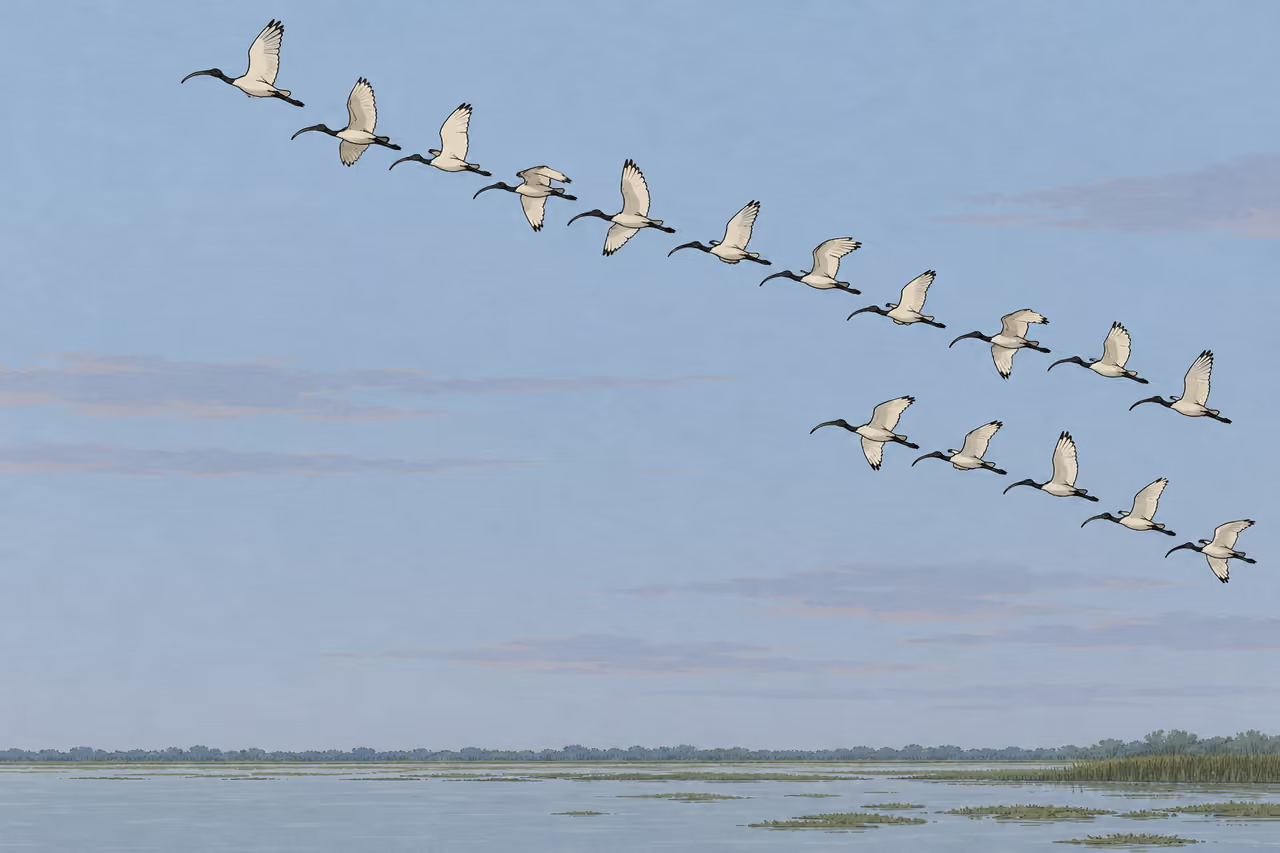
At dusk, a flock of birds crosses the sky in a neat V. Nobody is giving orders, so why fly like that?
10 pages · about 5 minutes
Why do birds fly in a V?
Chapter 1
At dusk, a flock of birds crosses the sky in a neat V. Nobody is giving orders, so why fly like that?
10 pages · about 5 minutes
Page 1 of 10
Over the holiday, Na's family went to Tràm Chim in Đồng Tháp and took a small boat out at sunset. A flock of ibises flew over, lined up in a long V across the sky.
Cú Bông guessed the bird at the front was the leader. It knew the way, so the rest of the flock simply followed.
Na raised her binoculars for a closer look. Oddly, no bird flew straight behind the one ahead; each was a little off to one side. If they only wanted to follow, wouldn't a straight line be easier?
A flapping wing leaves a swirl of air behind it. Rising air off the wingtips can lift a bird behind; falling air pushes down. In 2014, scientists studied a different ibis, the northern bald ibis, flying in a V. The birds behind placed themselves where they could ride the rising air of the bird ahead.
Birds behind timed their wingbeats so a wingtip traced the same path through the air as the wingtip ahead. In the study, northern bald ibises directly behind another flapped out of step. That may reduce the effects of the sinking air. Scientists think flying in a V can let the birds behind save energy.
Step through to see how a bird uses the rising air off the wingtips of the bird ahead. At which step does the wingtip of the bird behind meet the rising air?
In the study, northern bald ibises in a V placed themselves where they could ride the bird ahead's rising air. Scientists think flying in a V can let the birds behind save energy.
Everything this chapter tells you rests on at least two trustworthy sources, retold in the book's own words.
Cú Bông's books are open to everyone who signs in: read page by page like a paper book, with a small experiment right on the page.
All it takes is a Google account — no new password.