
Chapter 1
How do bats fly in the dark?
No moon, no street lamp — and still a bat threads its way through the thickest trees.
10 pages · about 5 minutes
Chapter 1
No moon, no street lamp — and still a bat threads its way through the thickest trees.
10 pages · about 5 minutes
Page 1 of 10
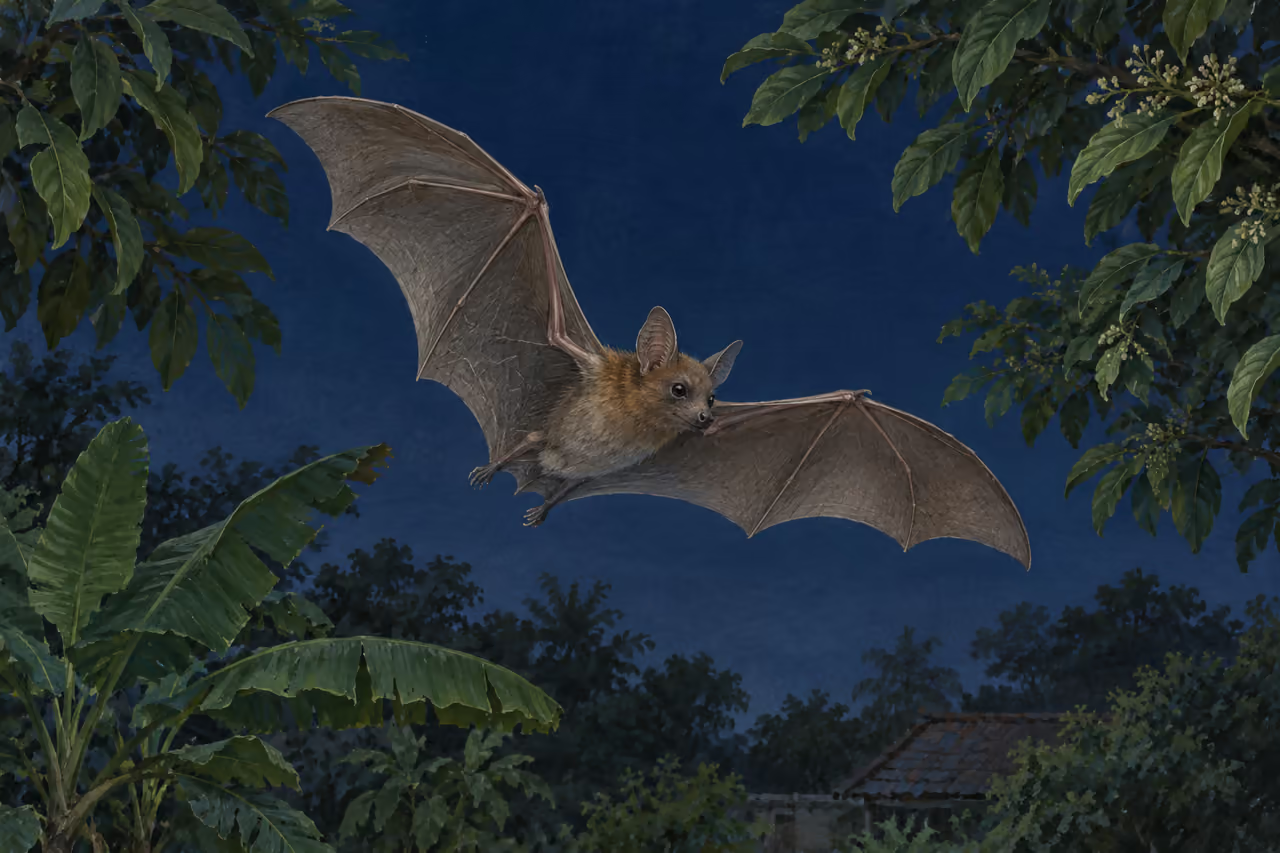
At dusk, Cú Bông sat on a branch, watching a bat circle the garden. The sky grew darker, yet the bat still slipped neatly between the leaves.
Cú Bông decided the bat must be blind — why else would it dart about so? But as it passed the lamp, Cú Bông saw its bright black eyes.
Cú Bông listened hard and heard nothing at all. Even so, the bat flew straight at a moth fluttering round the lamp.
Many bat calls are too high for people to hear. Cú Bông heard nothing, but that does not mean the bat was silent.
The call travels out to a branch or a moth and bounces back towards the bat. That returning sound is called an echo. The bat listens to the echoes to tell what is around it, and where.
Press Call to make the bat call, then watch the echo come back. Move the moth nearer or further to see, in the model, whether the echo comes back sooner or later. Switch on Bat spots prey, then press Call and see how the calls change.
Many bats make high calls and listen for the echoes that come back. The echoes help them find their way, and their food, in the dark.
Everything this chapter tells you rests on at least two trustworthy sources, retold in the book's own words.