
Chapter 4
Why do cats purr?
That familiar purr does not only mean a cat is happy.
10 pages · about 4 minutes
Chapter 4
That familiar purr does not only mean a cat is happy.
10 pages · about 4 minutes
Page 1 of 10
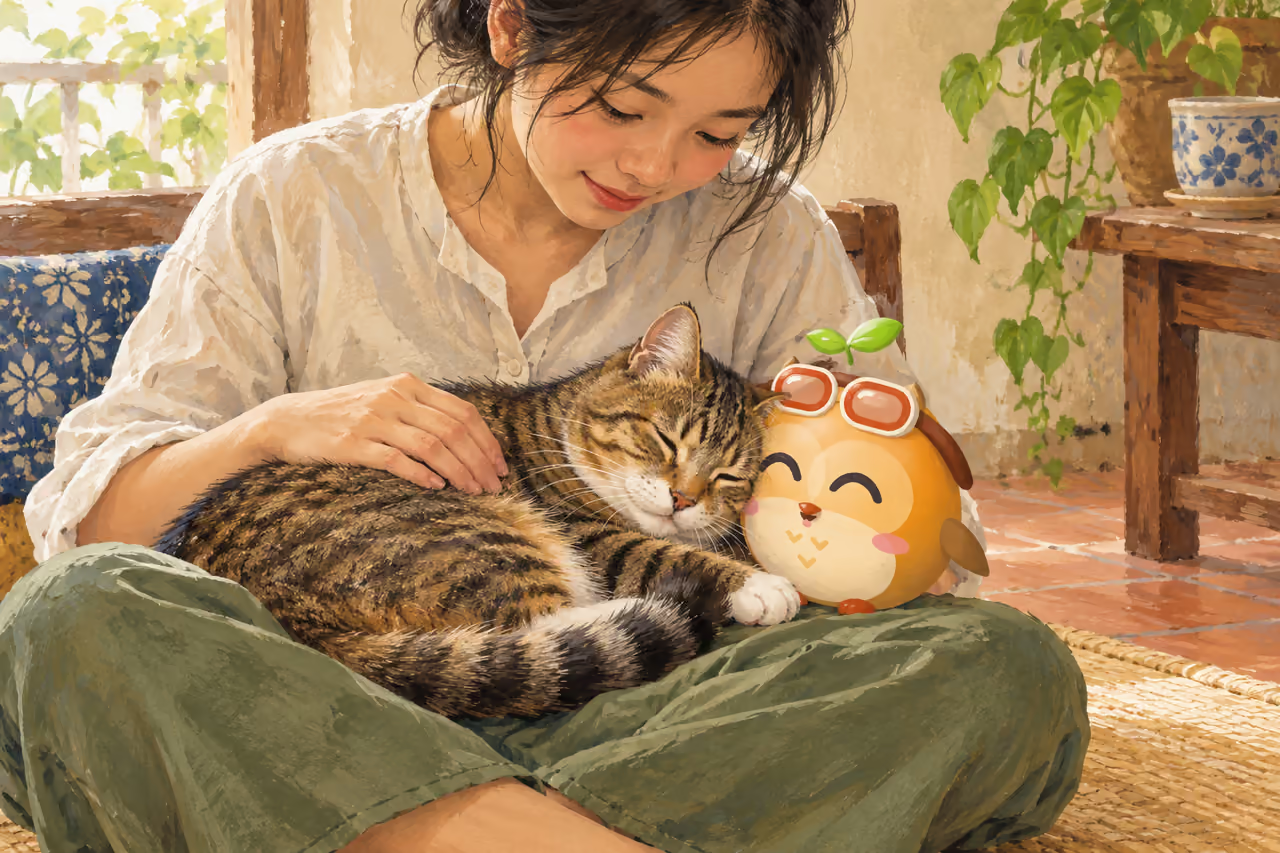
Mướp the cat lay curled up beside Cú Bông, purring steadily. Cú Bông rested a wing on her back and felt her whole body hum gently.
Cú Bông decided that a purring cat must be a happy one. It seemed to make sense: the cat looked perfectly relaxed.
The next day, Mướp hurt her paw and lay quietly in a corner. Strangely, she was still purring.
A cat's purr starts in its voice box, in the throat. As air passes through the voice box, the vocal folds help make the purr. Scientists are still working out exactly how.
A mother cat often purrs softly while lying with her kittens. Scientists think the mother's purr may help her kittens feel calm.
Tap each picture to see how the cat might be feeling. Cats may purr in very different situations.
Cats often purr when they feel content, but they can purr when ill or hurt too. The purr starts in the voice box, in the cat's throat.
Everything this chapter tells you rests on at least two trustworthy sources, retold in the book's own words.