
Chapter 10
Why does a dog pant on a hot day?
On a hot day a dog lies with its tongue out, breathing fast and hard. Is it thirsty, tired, or something else?
10 pages · about 5 minutes
Chapter 10
On a hot day a dog lies with its tongue out, breathing fast and hard. Is it thirsty, tired, or something else?
10 pages · about 5 minutes
Page 1 of 10
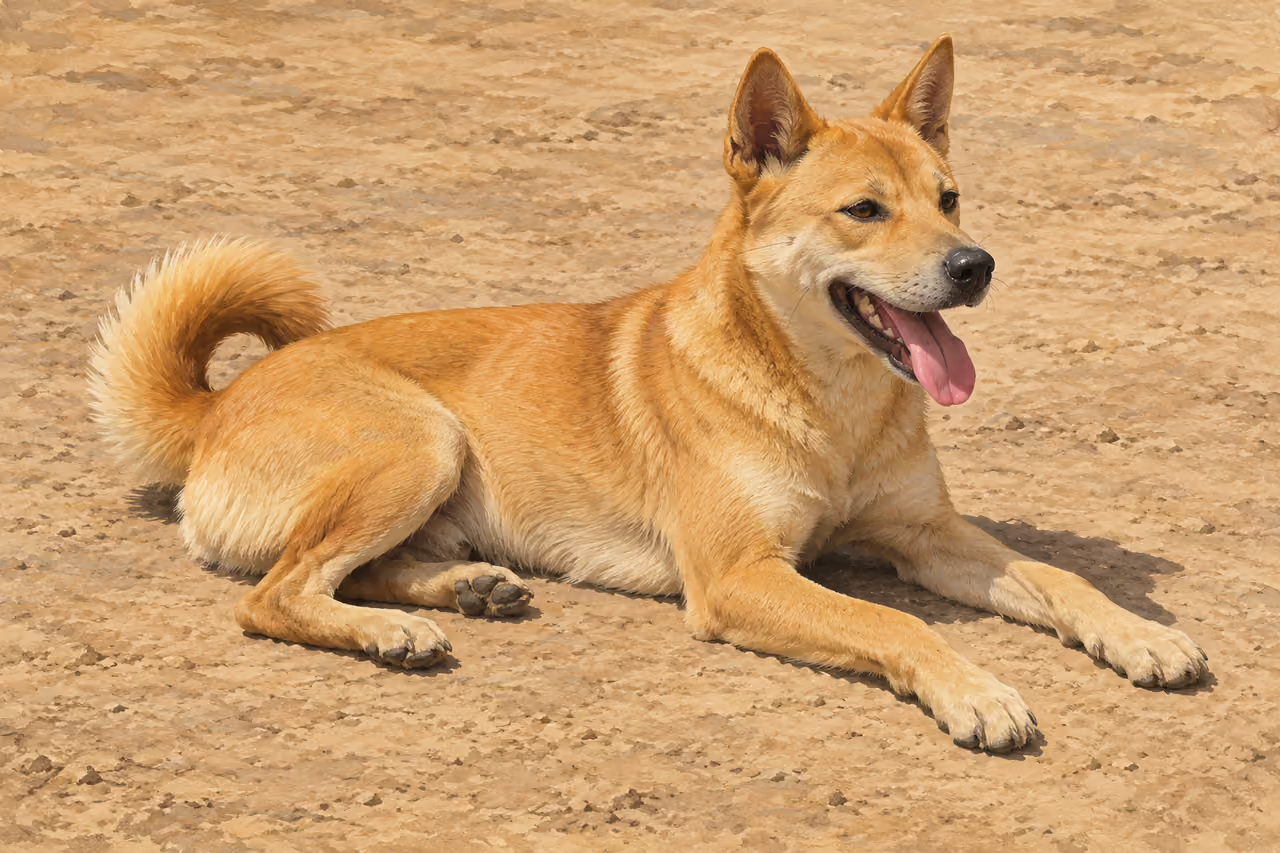
That noon the sun was fierce, and Grandpa's dog, Vàng, chased the hens all round the yard. When it stopped, it flopped down, mouth open, tongue out, panting and panting.
Cú Bông guessed Vàng was sweating through its tongue, the way people sweat on their foreheads.
Na stroked Vàng's back: the fur was hot but bone dry, without a drop of sweat. Na's own forehead, meanwhile, was dripping. Grandpa led Vàng into the shade of the mango tree and put down some water; soon its panting slowed.
Dogs can sweat only a little, so their main way of cooling down is panting. As a dog pants, moisture evaporates from its tongue and airways. That evaporation helps bring its body temperature down.
Dogs do have sweat glands in their paw pads, but these are not enough to cool them. When a dog is too hot, it often pants harder. When it is very hot or humid, panting may not be enough, and a dog can get heatstroke.
Pick each scene to compare how Vàng breathes. In which scene is Vàng most at risk of overheating?
Dogs sweat very little; they cool down mainly by panting, as water evaporates from the tongue and airways. On hot days, dogs need shade and water.
Everything this chapter tells you rests on at least two trustworthy sources, retold in the book's own words.