
Chapter 8
How does a gecko cling to the ceiling without falling?
A gecko strolls upside down across the ceiling as if it were walking on the floor. What keeps it from falling?
10 pages · about 5 minutes
Chapter 8
A gecko strolls upside down across the ceiling as if it were walking on the floor. What keeps it from falling?
10 pages · about 5 minutes
Page 1 of 10
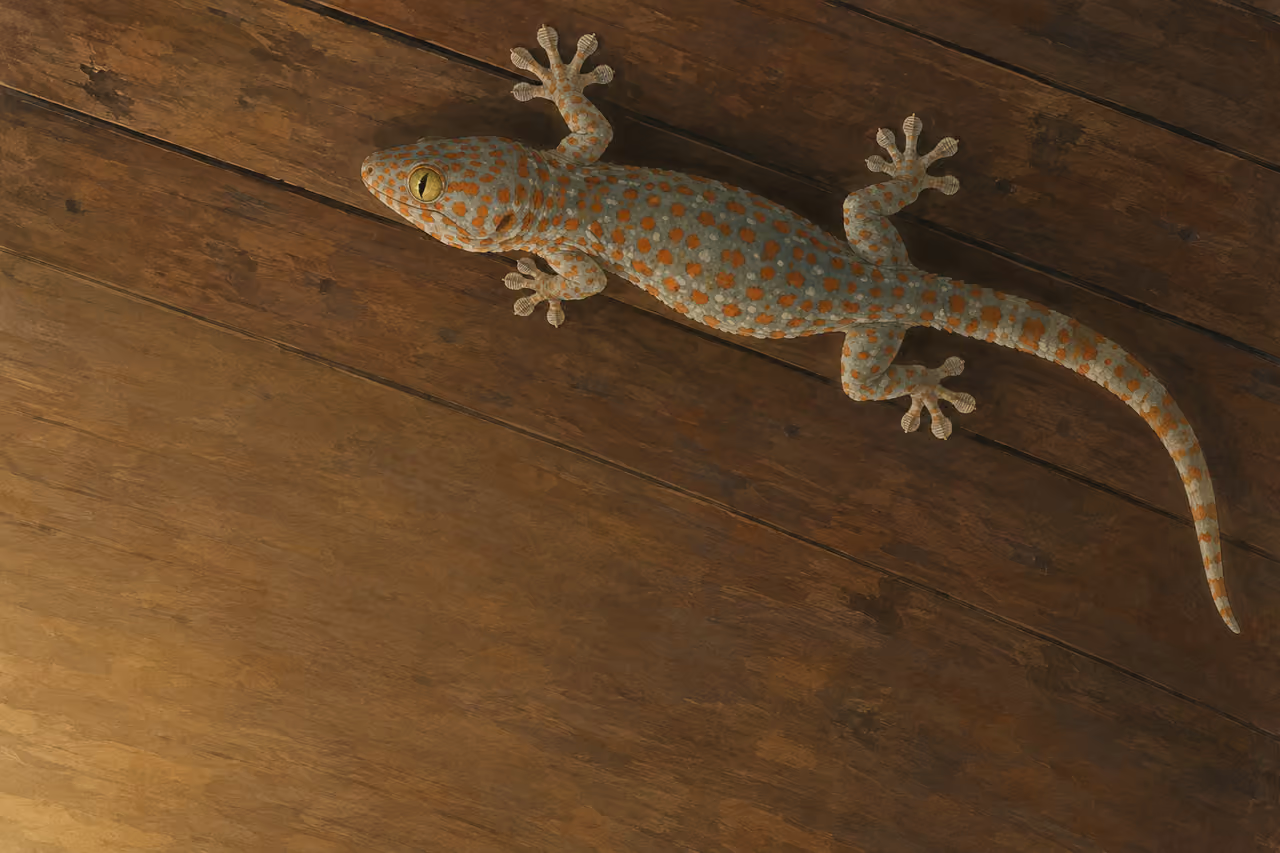
That evening, as dinner went on the table at Grandpa's, a call rang out from the roof: “To-kay! To-kay!” Grandpa pointed at a beam, where a blue-grey gecko speckled with orange clung upside down. It stayed there all through dinner and never once dropped onto the food.
Cú Bông guessed its feet must be sticky, like a strip of tape. Or perhaps they had suckers, like a squid's arms.
When it moved on, Na shone a torch where it had been: clean wood, not a trace of glue. And at every step, its toes curled up and peeled off the beam, the way you peel off tape. So what was holding it on?
Under a gecko's feet are millions of tiny hairs, too small to see without a microscope. From the end of each hair sprout hundreds of tinier stalks, each ending in a tiny pad. Those pads can press extremely close to a wall.
Scientists think that, that close, very weak pulls between molecules start to count. Each pad pulls very weakly, but so many pads together hold the gecko on.
Step through to watch a gecko put a foot down and lift it again. At which step does the gecko's foot let go?
A gecko's toes carry millions of tiny hairs, with many tiny pads at their ends. Scientists think the tiny pads and the surface attract one another, helping the gecko cling. To move on, it curls its toes back and peels the pads off.
Everything this chapter tells you rests on at least two trustworthy sources, retold in the book's own words.