
Chapter 6
How do bees turn nectar into honey?
A drop of nectar in a flower is as runny as water, yet honey in a jar is thick and slow. What did the bees do in between?
10 pages · about 5 minutes
Chapter 6
A drop of nectar in a flower is as runny as water, yet honey in a jar is thick and slow. What did the bees do in between?
10 pages · about 5 minutes
Page 1 of 10
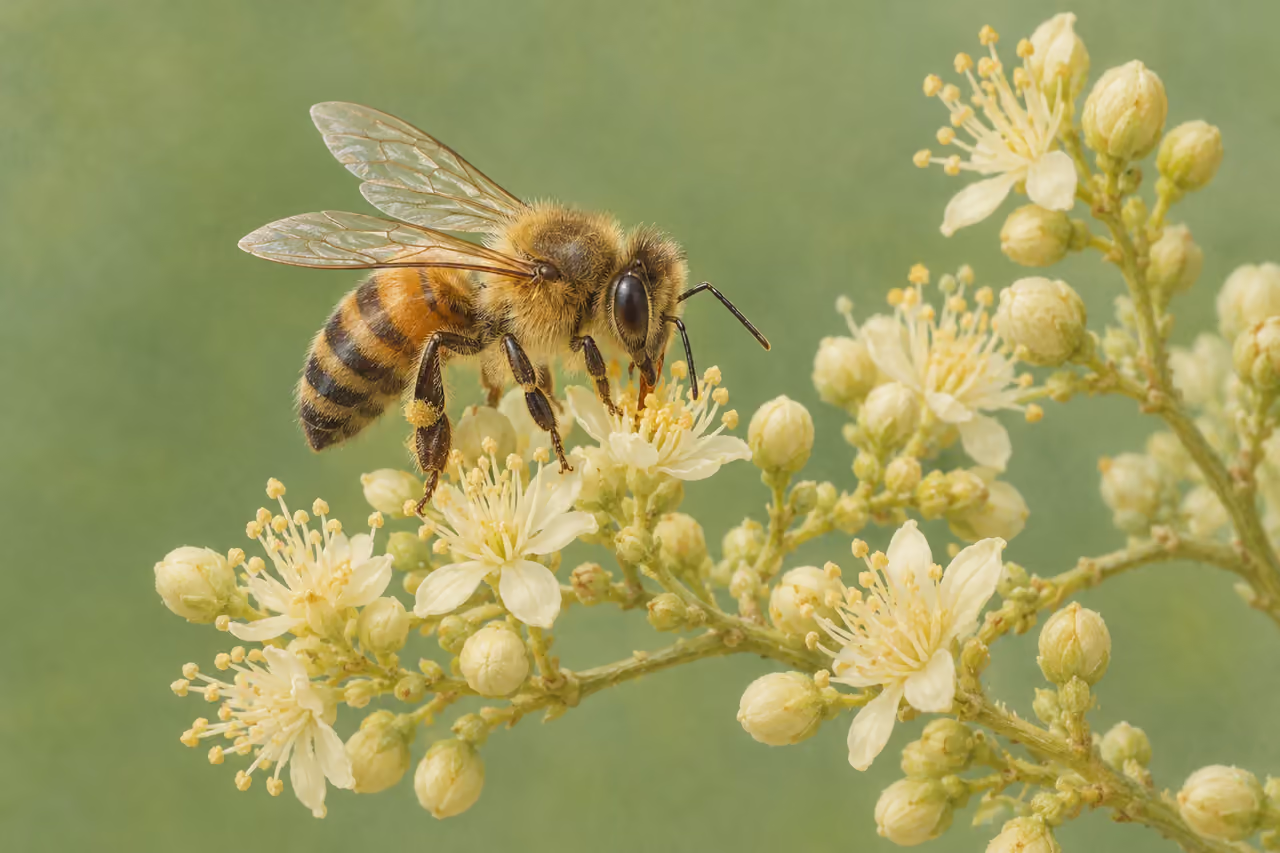
In March, Mr Hải's longan orchard in Hưng Yên was covered in pale blossom. Na went with her dad, and they could hear the bees from the gate. Under the trees stood rows of wooden hives, bees busy at every door.
Cú Bông had a simple idea: the honey is already there in the flowers. The bees just sip it up, carry it home and put it away.
Mr Hải picked a pumpkin flower and showed Na the nectar inside: clear and runny as water. Then he spooned out some honey: golden, thick, sliding off in a slow ribbon. Both were sweet, so why were they so different?
Forager bees sip nectar, fly home and pass it mouth to mouth to the bees that stay in the hive. As it is handed on, the bees mix in something of their own, called an enzyme. It splits the sugar in nectar into simpler sugars.
Next comes the drying, because nectar is still full of water. The bees spread it thinly in the wax cells so the water evaporates faster. Rows of bees fan their wings, and the draught carries the damp air away. Once it is dry enough, they seal each cell with a lid of fresh wax.
Step through to follow a drop of nectar from the flower to a wax cell. In this model, which step shows the nectar being dried?
Honey is nectar that bees have mixed with an enzyme and partly dried. Once it is dry enough, they seal it in with a lid of fresh wax.
Everything this chapter tells you rests on at least two trustworthy sources, retold in the book's own words.