
Chapter 7
How does a rooster know dawn is coming?
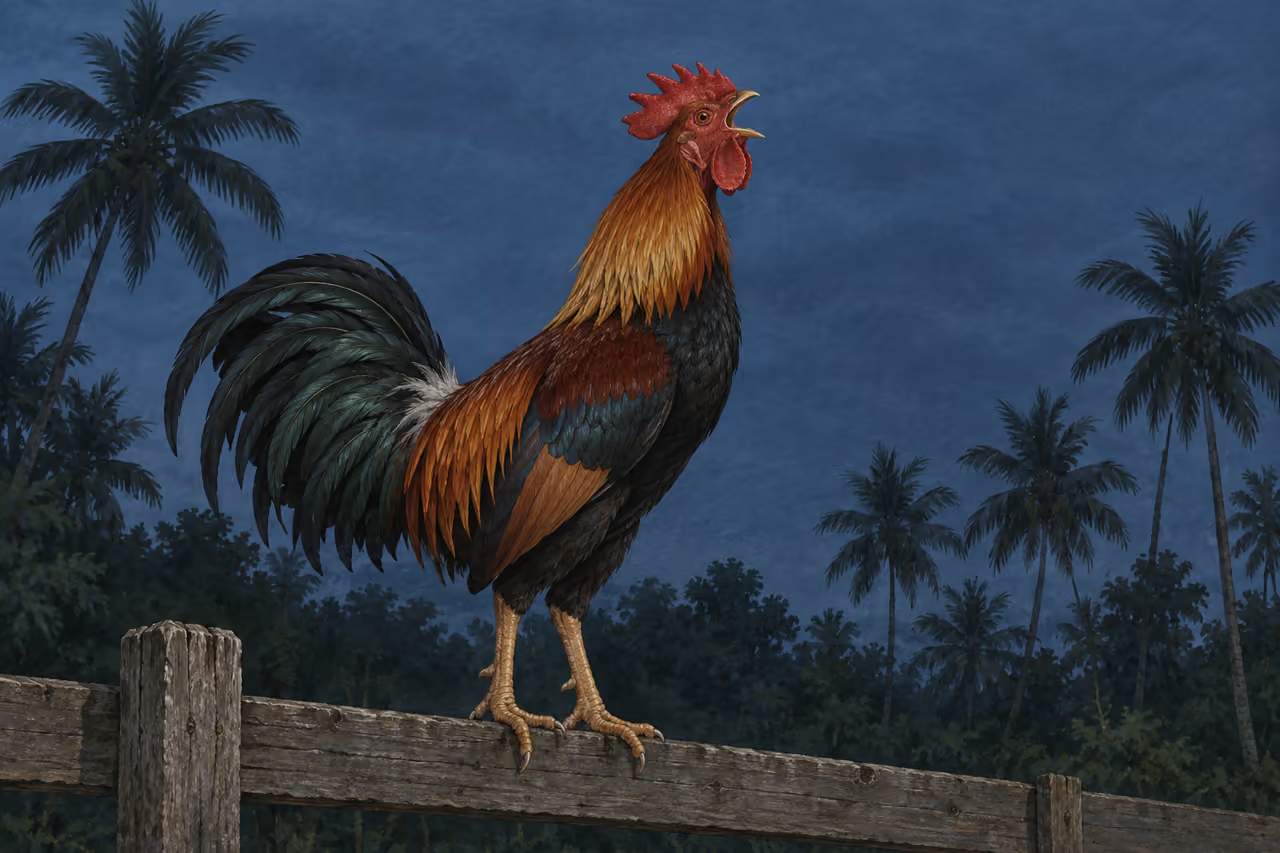
It is still pitch dark, not a hint of sun, and the rooster is already crowing. How does it know the time?
10 pages · about 5 minutes
Chapter 7
It is still pitch dark, not a hint of sun, and the rooster is already crowing. How does it know the time?
10 pages · about 5 minutes
Page 1 of 10
That summer, Na stayed with her grandparents in Tiền Giang, in a wooden house among the coconut palms. At almost four in the morning, Grandpa's rooster let out a long crow by the coop. Na lifted the mosquito net and looked out: still dark, not a glimmer of light.
Cú Bông decided the rooster must have seen some light somewhere. Moonlight, perhaps, or the lamp next door.
The next evening, a car came down the dirt road and its headlights swept over the coop. The rooster crowed at once, though it was only eight o'clock. So light really could set it off. But at four that morning, no light had shone on the coop at all.
In one experiment, scientists in Japan kept roosters under dim light around the clock. Even so, they still crowed around the time their body clocks marked as near dawn. Each one has a body clock inside it that runs on a cycle of about a day.
Car headlights can prompt a rooster to crow outside the morning hours, too. In the experiment, the roosters' responses to outside cues varied over the day. The results showed that a rooster's daily rhythm also shapes how it responds to outside cues.
Step through the experiment to see when the rooster crows. In this experiment, what shows that the rooster has a clock inside it?
An internal body clock helps a rooster time its crowing near dawn. Car headlights can set a rooster crowing outside the morning hours. The body clock also affects how it responds to outside signals.
Everything this chapter tells you rests on at least two trustworthy sources, retold in the book's own words.