
Chapter 10
Why does each person have their own fingerprint?
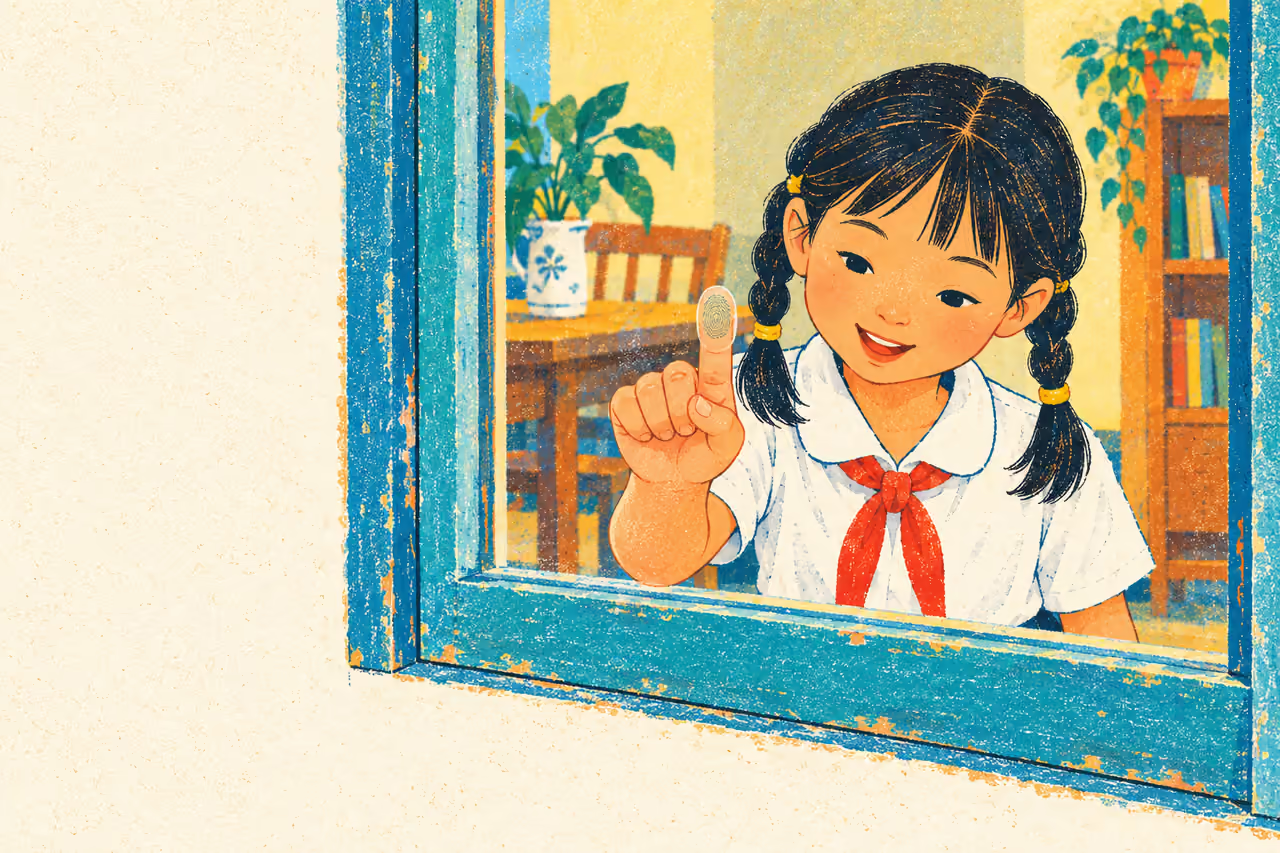
Press a finger on a window and you leave tiny fingerprint lines. Why does each person have their own fingerprint?
10 pages · about 5 minutes
Why does each person have their own fingerprint?
Chapter 10
Press a finger on a window and you leave tiny fingerprint lines. Why does each person have their own fingerprint?
10 pages · about 5 minutes
Page 1 of 10
In the art lesson, Na's class dipped their fingertips in paint and printed caterpillars and flowers on paper. Mai and Lan are identical twins, as alike as two peas in a pod.
Cú Bông guessed that Mai and Lan had exactly the same fingerprints and that no one could tell them apart.
Na looked at Mai's and Lan's fingerprints through a magnifying glass. The patterns looked alike, but when she looked carefully they were not the same.
Fingerprints are patterns of small raised skin ridges on the finger pads. The ridges form before birth, in the womb, and their patterns usually stay the same throughout life. The ridges spread out from several starting points on each fingertip. Where they meet helps shape the pattern.
The timing, position and direction of the starting points help shape the pattern, so fingerprints vary endlessly. Both genes and conditions in the womb shape a fingerprint. Even identical twins, who share almost the same DNA, have different fingerprints, though they can look alike.
Step through to see how fingerprints form in the womb. At which step do the ridges meet?
Fingerprints are patterns of small raised skin ridges on the finger pads. The ridges form before birth, in the womb, and their patterns usually stay the same throughout life. Both genes and womb conditions shape a fingerprint. The timing, position and direction of the starting points help shape the pattern, so fingerprints vary endlessly.
Everything this chapter tells you rests on at least two trustworthy sources, retold in the book's own words.
Cú Bông's books are open to everyone who signs in: read page by page like a paper book, with a small experiment right on the page.
All it takes is a Google account — no new password.