
Chapter 3
How do our eyes see colour?
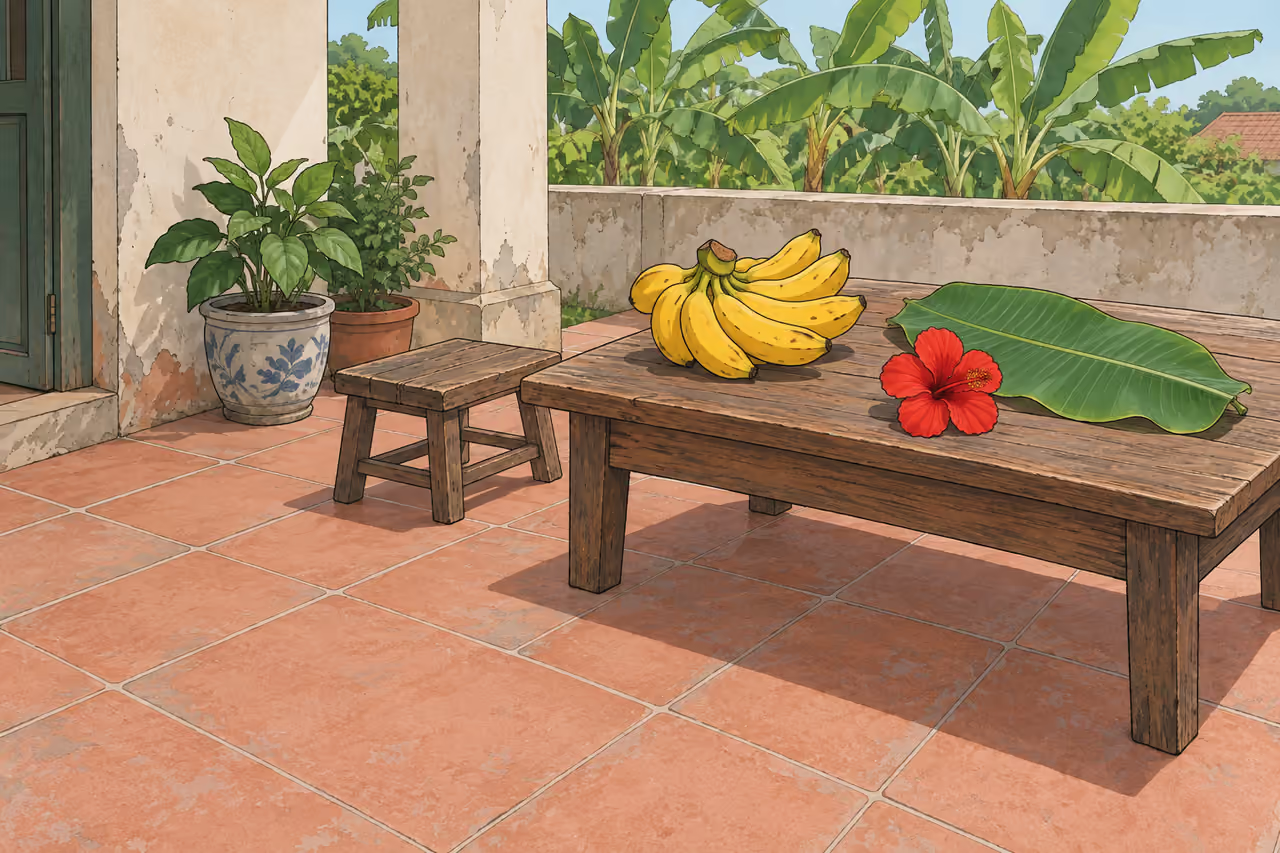
A yellow banana, a green leaf, a red flower. How do our eyes see colour?
10 pages · about 5 minutes
How do our eyes see colour?
Chapter 3
A yellow banana, a green leaf, a red flower. How do our eyes see colour?
10 pages · about 5 minutes
Page 1 of 10
Late one afternoon, Na sat on the porch colouring a picture of a banana grove. As it grew dark, the pencils in her box all started to look the same dull grey.
Cú Bông guessed the colours had faded away in the dark, like an old shirt washed too often.
Then Mum switched on the porch light. In a blink, the red pencil was bright red again, and the green one green. The colours hadn't gone anywhere; they just needed light.
White sunlight is a mix of all the colours of the rainbow. When that white light falls on the banana, some is absorbed and some is reflected. Light reflected from the banana reaches our eyes, and the brain helps us see that it is yellow.
At the back of the eye are three kinds of cone cell, often called red, green and blue cones. Each kind responds to a different range of light. Combining their signals, the brain lets us tell apart millions of colours. In very dim light we see mostly with rods, which don't detect colour.
Step through to see why a banana looks yellow. Which two kinds of cone cell does light from the banana stimulate most?
Under white light, the banana absorbs some light and reflects some into our eyes. Three kinds of cone cell at the back of the eye signal the brain, which lets us see colour. In very dim light we see mostly with rods, which don't detect colour, so things look grey.
Everything this chapter tells you rests on at least two trustworthy sources, retold in the book's own words.
Cú Bông's books are open to everyone who signs in: read page by page like a paper book, with a small experiment right on the page.
All it takes is a Google account — no new password.