
Chapter 6
How does the nose smell things?
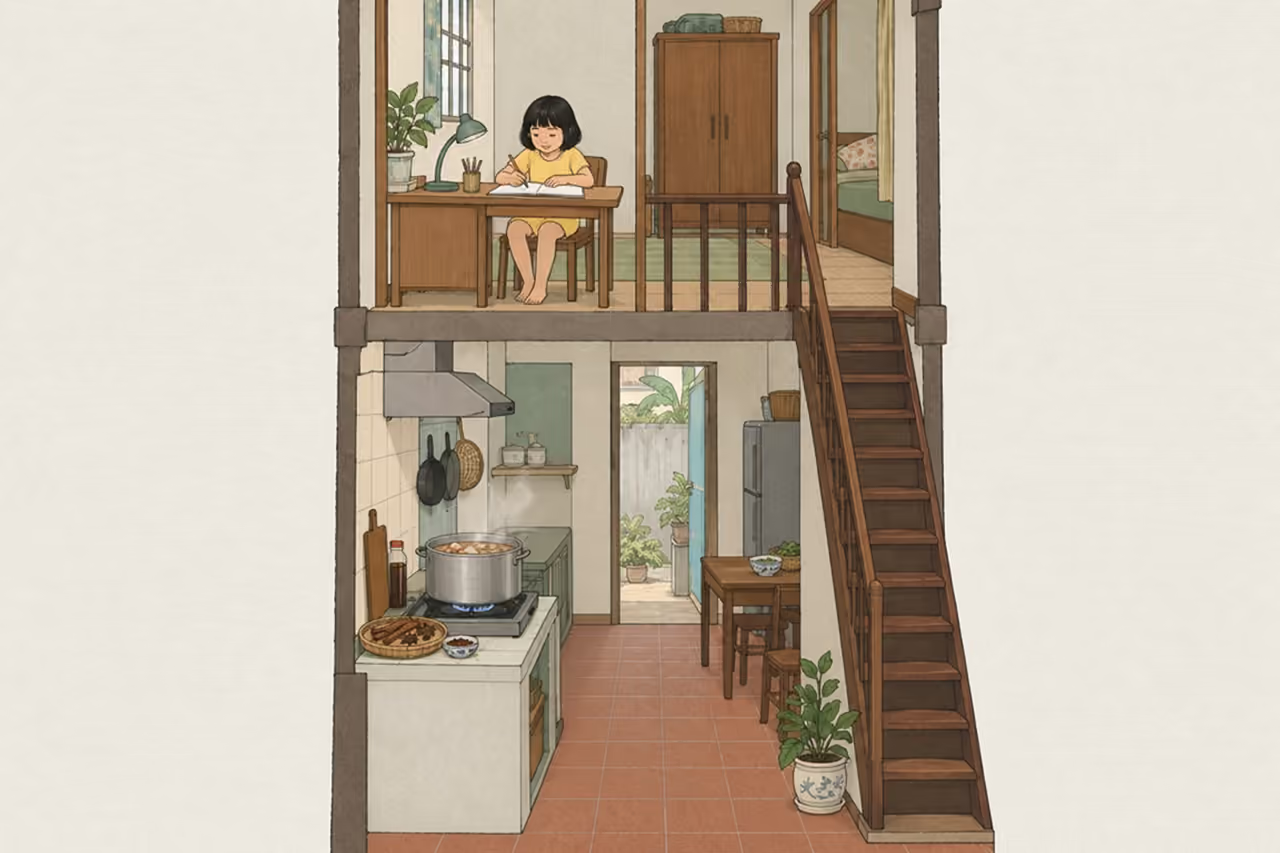
Mum is cooking phở downstairs, and Na can smell it from upstairs. How does a smell reach the nose?
10 pages · about 5 minutes
How does the nose smell things?
Chapter 6
Mum is cooking phở downstairs, and Na can smell it from upstairs. How does a smell reach the nose?
10 pages · about 5 minutes
Page 1 of 10
On Sunday afternoon, Na was doing her homework upstairs. Down in the kitchen, Mum was simmering the broth for phở, and soon Na could smell cinnamon and star anise.
Cú Bông guessed the smell was the white steam rising from the pot and floating straight upstairs.
Na ran down to the kitchen: the steam only rose around the top of the pot, then vanished. Yet upstairs still smelled lovely, with no steam in sight. Looking at the pot, Na remembered last week's cold: her nose was blocked and the phở tasted really bland.
The broth gives off odour molecules, far too small to see. They travel through the air, and we breathe them into the nose. High inside the nose is a small patch of smell cells. Each smell cell has one kind of receptor, which picks up only a few kinds of odour molecule.
One smell sets off several kinds of receptor together. The smell cells send messages to the brain, which reads the combination and knows: that's phở! Smell is a big part of a food's flavour. When a cold blocks the nose, odours reach the smell cells less easily, so food often tastes bland.
Step through: odour molecules reach the nose, then smell cells send signals to the brain. At which step does the brain know it's phở?
The broth gives off odour molecules, too small to see, and we breathe them into the nose. Each smell cell has one kind of receptor, which picks up only a few kinds of odour molecule. The smell cells send messages to the brain, which reads the combination from several kinds of receptor as one smell.
Everything this chapter tells you rests on at least two trustworthy sources, retold in the book's own words.
Cú Bông's books are open to everyone who signs in: read page by page like a paper book, with a small experiment right on the page.
All it takes is a Google account — no new password.