
Chapter 10
How does a graze heal?
A graze on the knee grows a hard brown crust. Where does that scab come from, and what is going on under it?
10 pages · about 5 minutes
Chapter 10
A graze on the knee grows a hard brown crust. Where does that scab come from, and what is going on under it?
10 pages · about 5 minutes
Page 1 of 10
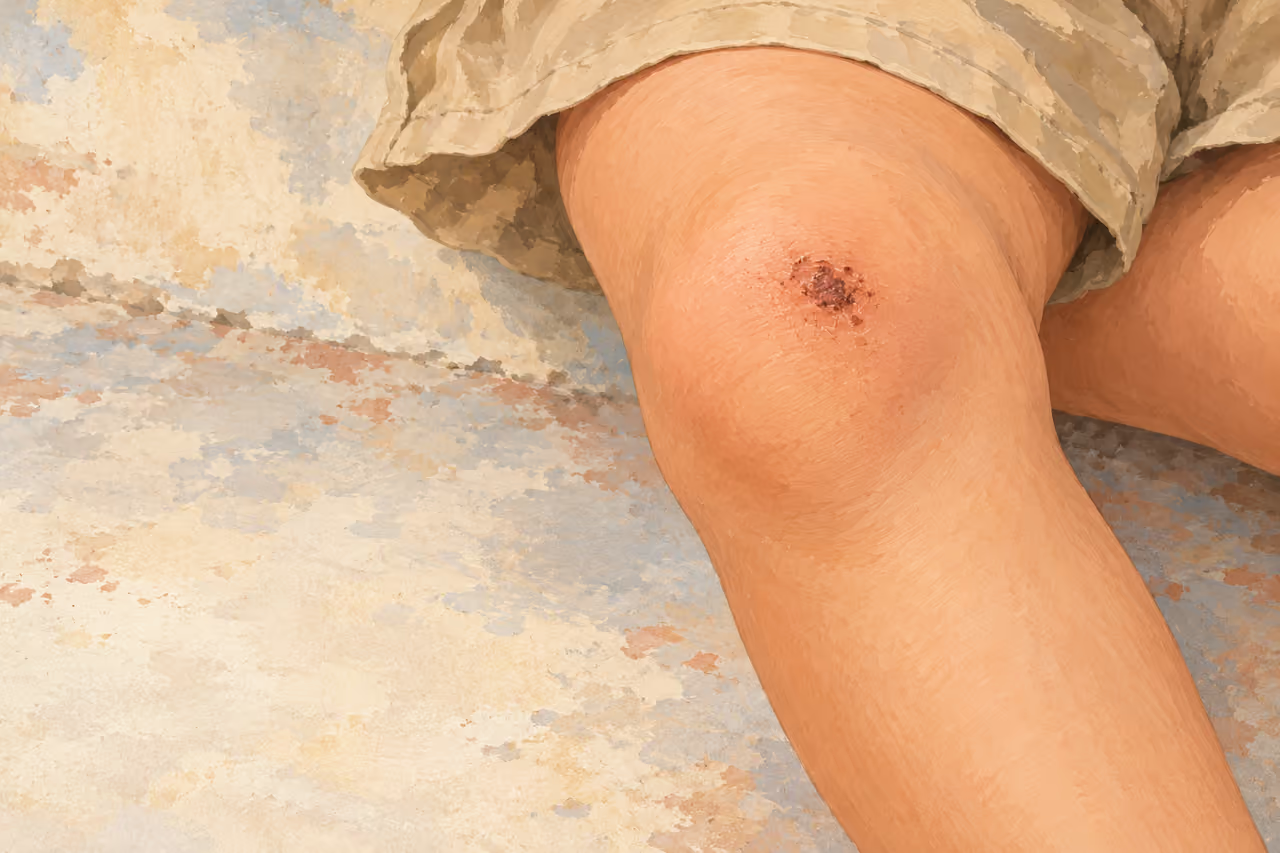
After the game, Na dashed indoors, tripped on the step and grazed her knee. Mum rinsed the graze with clean water and put a plaster on it. Two days later, a hard, dark brown scab had formed, crisp as a rice cracker.
Cú Bông guessed the scab was dried dirt on the cut and ought to be picked off.
Na picked one corner by accident: it bled a little, and days later a new scab formed. The part she left alone came off by itself after more than a week. Underneath was new skin, pink and whole.
When skin is grazed, tiny bits in the blood called platelets stick together. With thin threads called fibrin, they make a clot, and the bleeding stops. The clot dries and hardens into a scab.
The scab keeps germs out while the skin underneath heals. Under it, new skin grows; once healed, the scab falls off by itself, usually after a week or two. Picking a scab can open the wound again, so it heals more slowly and may leave a scar.
Step through to watch a graze heal. At which step does the bleeding stop?
When skin is grazed, the blood clots and dries into a scab that keeps germs out. New skin grows underneath, so leave the scab alone and let it fall off.
Everything this chapter tells you rests on at least two trustworthy sources, retold in the book's own words.