
Chapter 3
Why do we get hiccups?
A “hic” pops out without warning, then again, and again. Where does it come from?
10 pages · about 4 minutes
Chapter 3
A “hic” pops out without warning, then again, and again. Where does it come from?
10 pages · about 4 minutes
Page 1 of 10
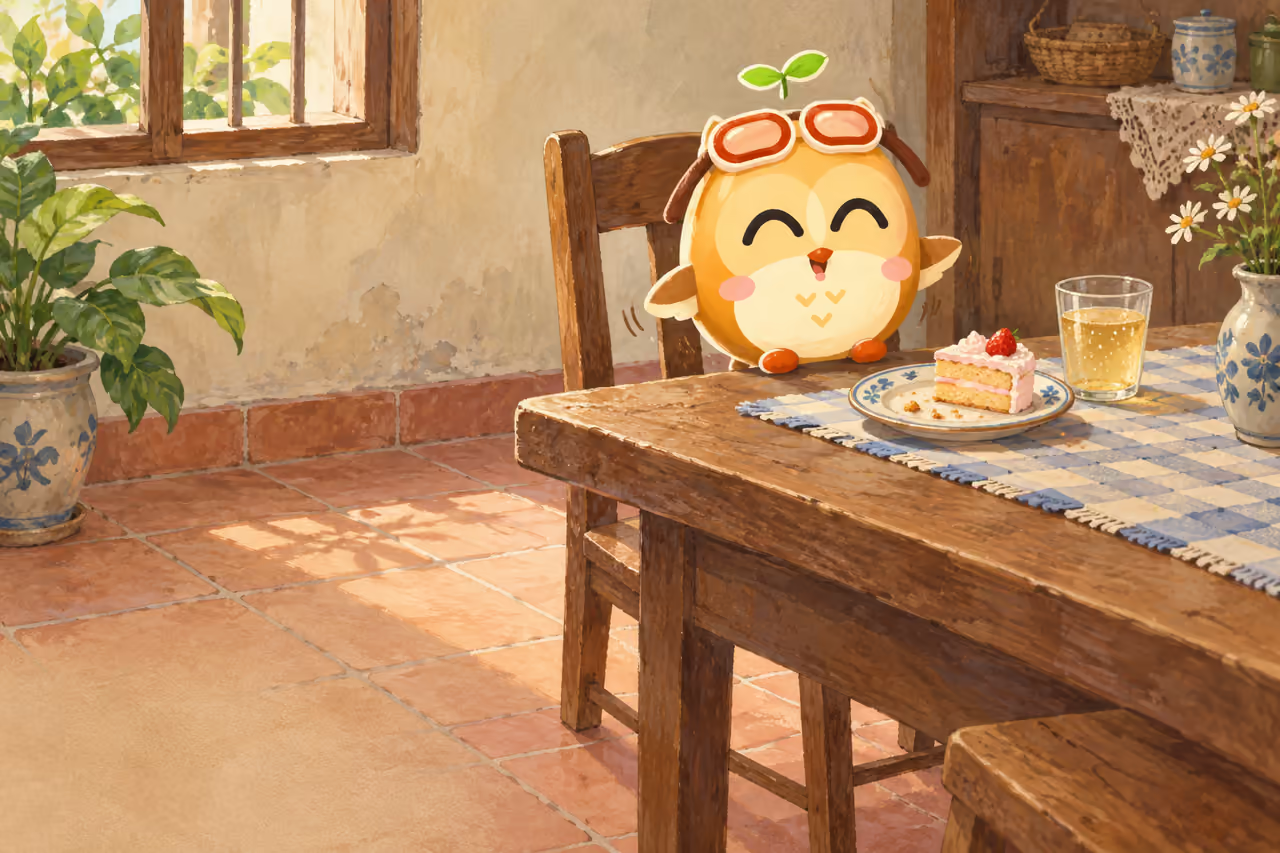
At Na's birthday party, Cú Bông ate cake far too fast and gulped down a fizzy drink. Then — “hic!” — and Cú Bông could not stop.
Cú Bông guessed the hic was coming from its tummy. But with a wing on its chest, Cú Bông felt a small jolt inside with every hic.
A few minutes later, the hiccups stopped on their own, though nobody had done a thing.
Under our lungs lies a big sheet of muscle that we breathe with. It is called the diaphragm.
In a hiccup, the diaphragm suddenly tightens, all by itself. The “hic” comes straight after, and medical sources explain it in two ways. One says the vocal cords close quickly; another, that the quick breath in makes the epiglottis slam shut.
Tap the diaphragm to see a hiccup step by step.
In a hiccup, the diaphragm tightens suddenly, all by itself, and a “hic” comes with it. Hiccups usually stop by themselves after a few minutes.
Everything this chapter tells you rests on at least two trustworthy sources, retold in the book's own words.