
Chapter 6
Why do we sneeze?
Atchoo! In a split second, your whole body jolts. What is it trying to get rid of?
10 pages · about 5 minutes
Chapter 6
Atchoo! In a split second, your whole body jolts. What is it trying to get rid of?
10 pages · about 5 minutes
Page 1 of 10
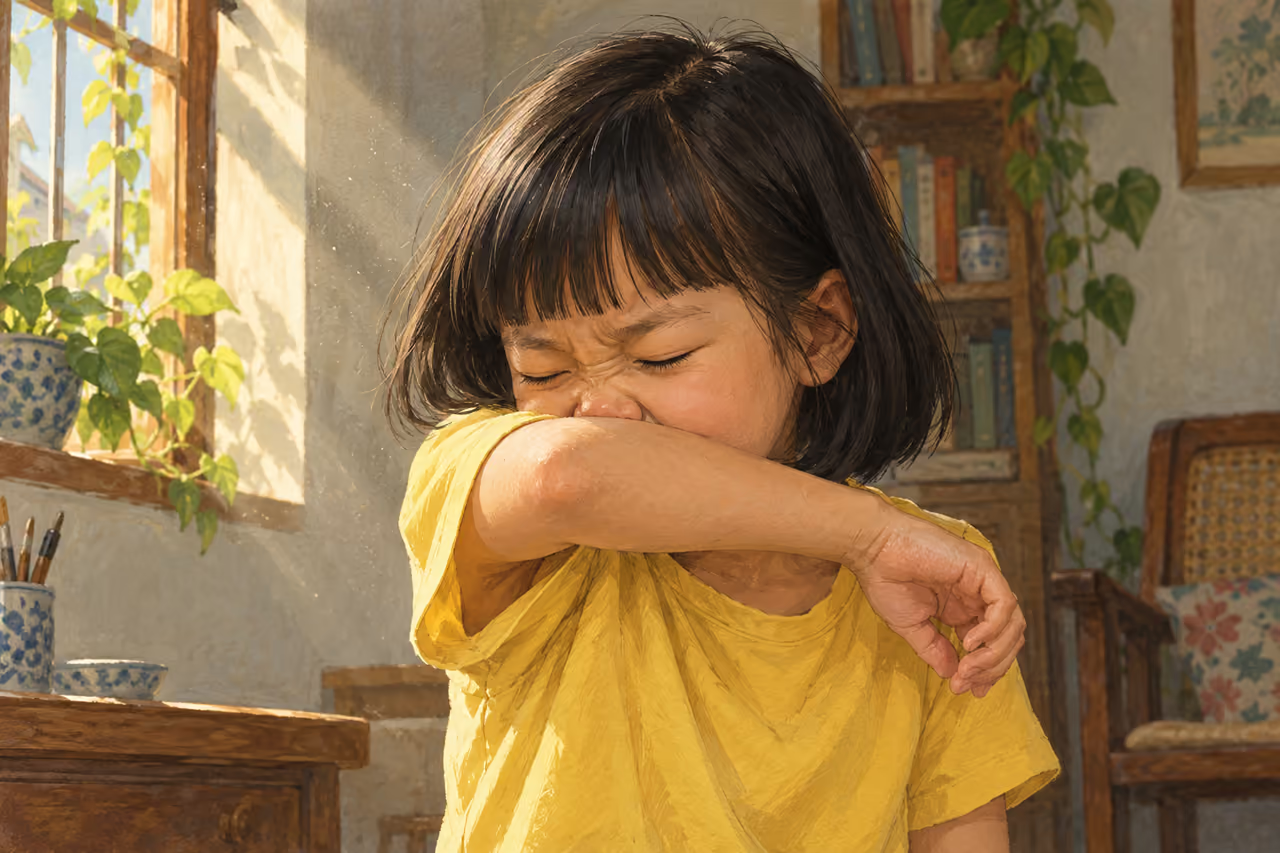
On Saturday morning, Na went upstairs to help Grandma dust Grandad's old bookcase. The moment she pulled out the first book, dust swirled up in a beam of sunlight. Na sneezed three times in a row.
Cú Bông hurried over with a box of tissues, worried Na had caught a cold. But Na had no fever, and her nose wasn't running at all.
Grandma sent them out into the yard for some air. After a while under the starfruit tree, Na stopped sneezing. Perhaps the dust upstairs had tickled her nose. A sneeze doesn't always mean a cold.
A speck of dust, some pollen or a cold virus tickles the inside of your nose. Your nose sends a signal to part of your brain. That part signals muscles in your chest, belly and throat to act together. Air from your lungs shoots out through your nose and mouth, carrying the irritation with it.
Plenty of things can tickle a nose: dust on shelves, pollen from the garden, tiny flakes of pet skin. So healthy people sneeze too. But a sneeze sends out tiny droplets, and if they carry germs, other people can catch them.
Step through to follow the signal from the nose to the brain, then see how the body makes a sneeze. Several groups of muscles work together to make one sneeze.
We usually sneeze when something irritates the inside of the nose. The brain signals several muscle groups to work together, and a burst of air helps clear the irritant. Cover a sneeze with a tissue, or your elbow if you have none.
Everything this chapter tells you rests on at least two trustworthy sources, retold in the book's own words.