
Chapter 1
Why does a cut banana turn brown after a while?
A freshly cut slice of banana is creamy white, yet a little later its cut face has gone brown. Why does a cut banana turn brown?
10 pages · about 5 minutes
Why does a cut banana turn brown after a while?
Chapter 1
A freshly cut slice of banana is creamy white, yet a little later its cut face has gone brown. Why does a cut banana turn brown?
10 pages · about 5 minutes
Page 1 of 10
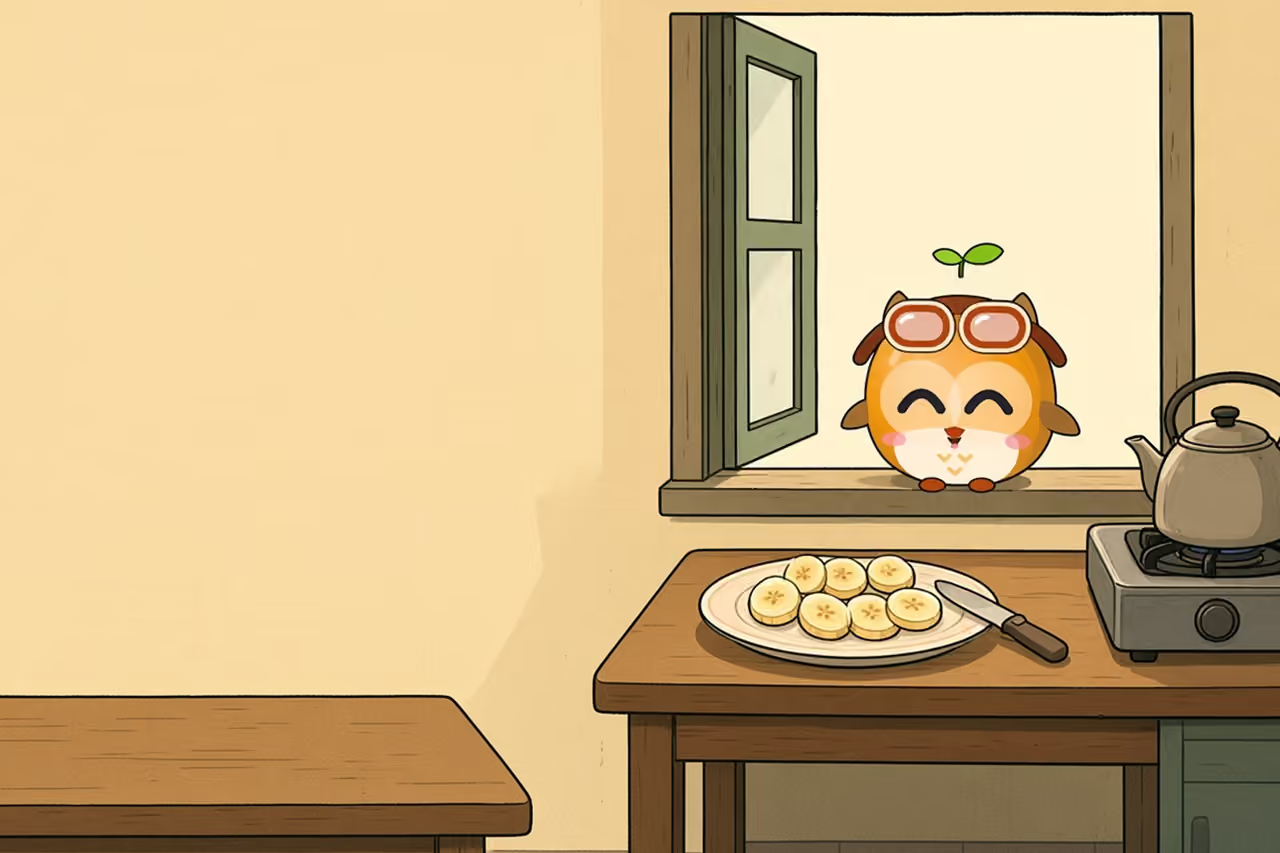
That afternoon, Grandma sliced half a banana onto a plate and squeezed a little lime over a few slices. She left the other half in its peel, and Na ran off to wash her hands.
When Na came back, the slices without lime had gone brown at the cut. Cú Bông guessed the banana had been left out too long and had started to go bad.
Grandma peeled the other half and cut one slice: its face was creamy white. The slices with lime had only just begun to darken. One banana, so why was some of it brown and some not?
A banana holds a substance called an enzyme, which can turn some of its own substances brown. In a whole fruit, the enzyme and those substances are kept apart inside the cells, so the flesh stays pale.
The knife breaks open the cells at the cut face. The enzyme and those substances mix with the oxygen of the air, so the cut face soon turns brown. A coat of lime juice on the cut face slows that down.
Press the three buttons to compare three slices on one plate. Which slice stays white the longest, and why?
In a whole fruit, the enzyme and the substances it browns stay apart in the cells, so it stays pale. Cutting breaks the cells, and the enzyme and those substances meet the oxygen, so the cut face browns. A coat of lime juice on the cut face slows that down.
Everything this chapter tells you rests on at least two trustworthy sources, retold in the book's own words.
Cú Bông's books are open to everyone who signs in: read page by page like a paper book, with a small experiment right on the page.
All it takes is a Google account — no new password.