
Chapter 8
Why does bread dough rise?
A freshly kneaded lump of dough is the size of a fist, yet left under a cloth it doubles. Why does bread dough rise?
10 pages · about 5 minutes
Why does bread dough rise?
Chapter 8
A freshly kneaded lump of dough is the size of a fist, yet left under a cloth it doubles. Why does bread dough rise?
10 pages · about 5 minutes
Page 1 of 10
On Sunday morning, Grandma made steamed buns, mixing flour with warm water and a spoonful of yeast. Na asked for a handful of flour and mixed it with warm water, only without yeast, to make shapes.
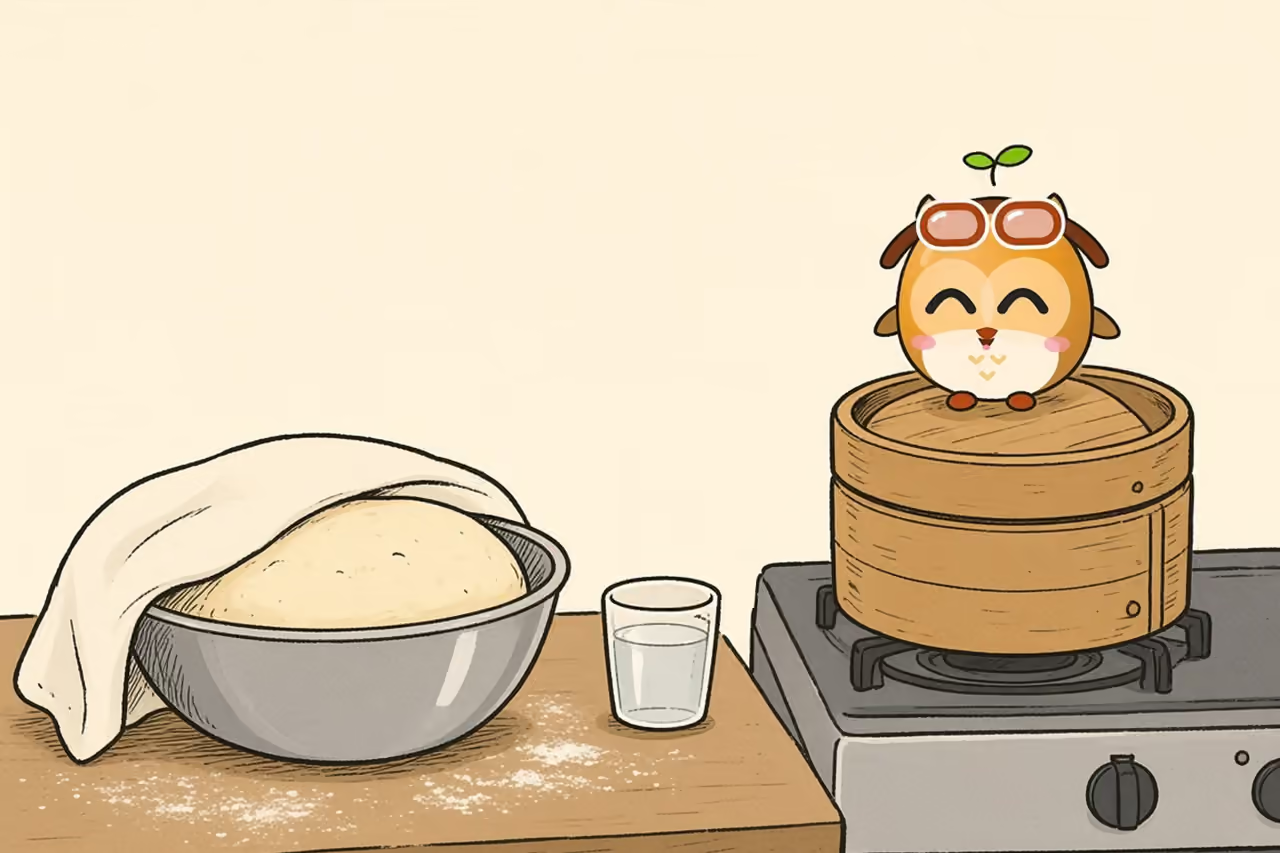
Grandma covered her bowl with a cloth in a warm corner, and Na set her lump beside it. Cú Bông guessed the warmth would puff both lumps up like a balloon in the sun.
An hour later, Grandma's dough had doubled, and when she cut it, it was full of tiny bubbles. Na's lump was exactly the same, though it sat right beside it, just as warm. Same flour, same warm spot, so why had only Grandma's risen?
Yeast is a tiny living thing, a fungus, which wakes up in warm water. The yeast feeds on the sugars in the flour and gives off a gas, carbon dioxide.
Kneaded with water, flour becomes a stretchy dough. The dough holds the gas in thousands of small bubbles, so the whole lump swells. Without yeast there is no gas, so the dough does not rise, however warm it is.
Press the three buttons to compare two bowls of dough: just kneaded, then an hour later with or without yeast. Which bowl has small bubbles of gas?
Yeast is a tiny fungus that wakes in warm water, feeds on flour sugars and gives off carbon dioxide. The stretchy dough holds the gas in thousands of small bubbles, so it swells.
Everything this chapter tells you rests on at least two trustworthy sources, retold in the book's own words.
Cú Bông's books are open to everyone who signs in: read page by page like a paper book, with a small experiment right on the page.
All it takes is a Google account — no new password.