
Chapter 6
Why does an egg white set when it cooks?
Crack an egg into a hot pan, and the clear, runny white suddenly turns thick and white. Why does an egg white set when it cooks?
10 pages · about 5 minutes
Why does an egg white set when it cooks?
Chapter 6
Crack an egg into a hot pan, and the clear, runny white suddenly turns thick and white. Why does an egg white set when it cooks?
10 pages · about 5 minutes
Page 1 of 10
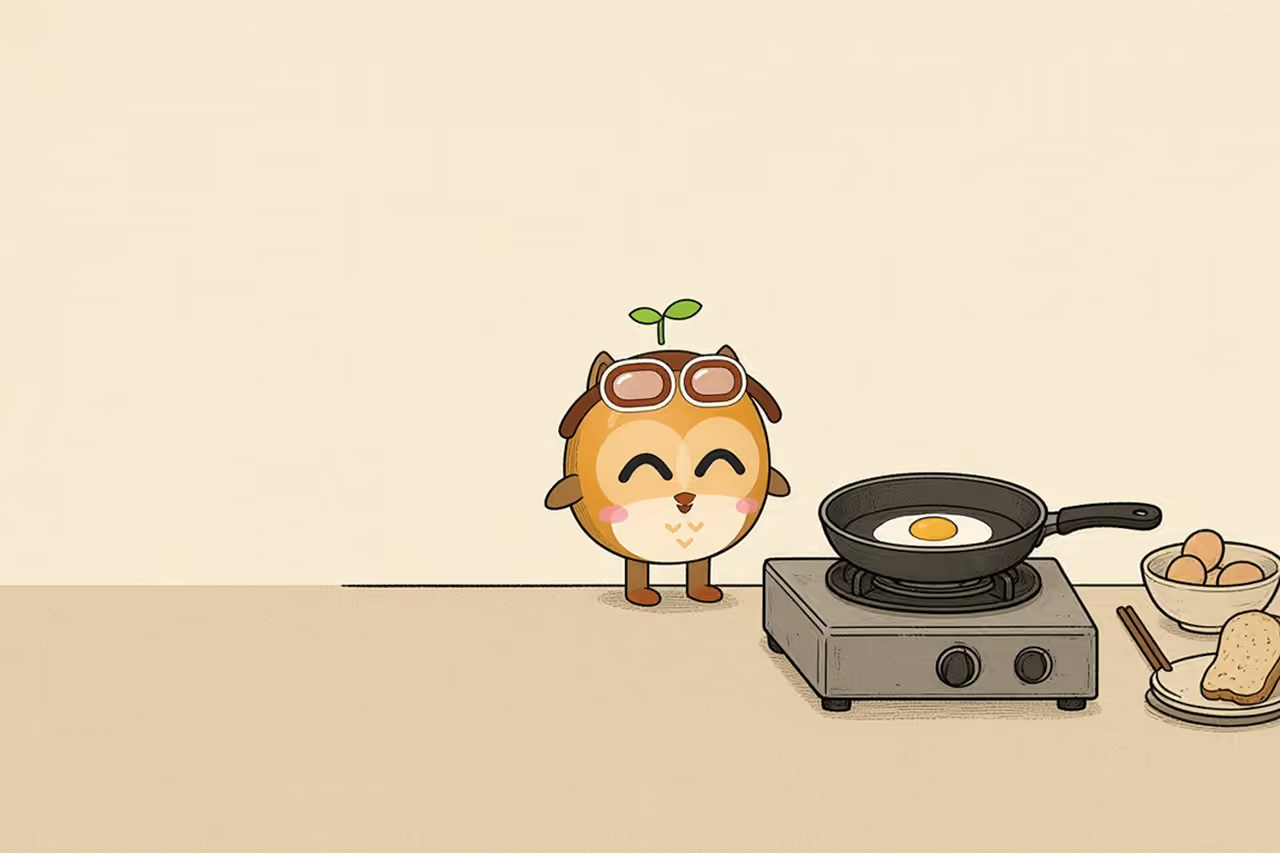
This morning Grandma was frying eggs for the family to eat with bread, and Na watched by the stove. Grandma cracked an egg into the pan, and the clear white spread out round the yolk.
In no time, the white thickened and turned white from the edge inwards. Cú Bông guessed the heat had dried the white out, like the crust of rice in a pot.
Na pressed the cooked white with her chopsticks: it was soft and moist, with a little water seeping out. It was not dry at all, and yet it was no longer runny either. Not dried out, so how had the white set?
Raw egg white is water with many proteins drifting in it. Each protein is a long chain, folded and curled up like a tiny ball of wool.
Heat jostles the balls and breaks the weak bonds that keep them curled up. The chains open out and join on to one another in a net, so the white sets. The water stays held inside the net, so the newly set white is still moist.
Press the three buttons to see the white of one egg raw, setting and fully set. What are the proteins doing at each stage?
In raw egg white, curled-up proteins drift in water. Heat jostles them and breaks their weak bonds; they open out and join in a net, so the white sets. The water stays inside the net, so the newly set white is still moist.
Everything this chapter tells you rests on at least two trustworthy sources, retold in the book's own words.
Cú Bông's books are open to everyone who signs in: read page by page like a paper book, with a small experiment right on the page.
All it takes is a Google account — no new password.