
Chapter 3
Why won't cooking oil mix with water?
Sugar and salt both dissolve in water, but cooking oil sits on top in a film. Why won't oil mix with water?
10 pages · about 5 minutes
Why won't cooking oil mix with water?
Chapter 3
Sugar and salt both dissolve in water, but cooking oil sits on top in a film. Why won't oil mix with water?
10 pages · about 5 minutes
Page 1 of 10
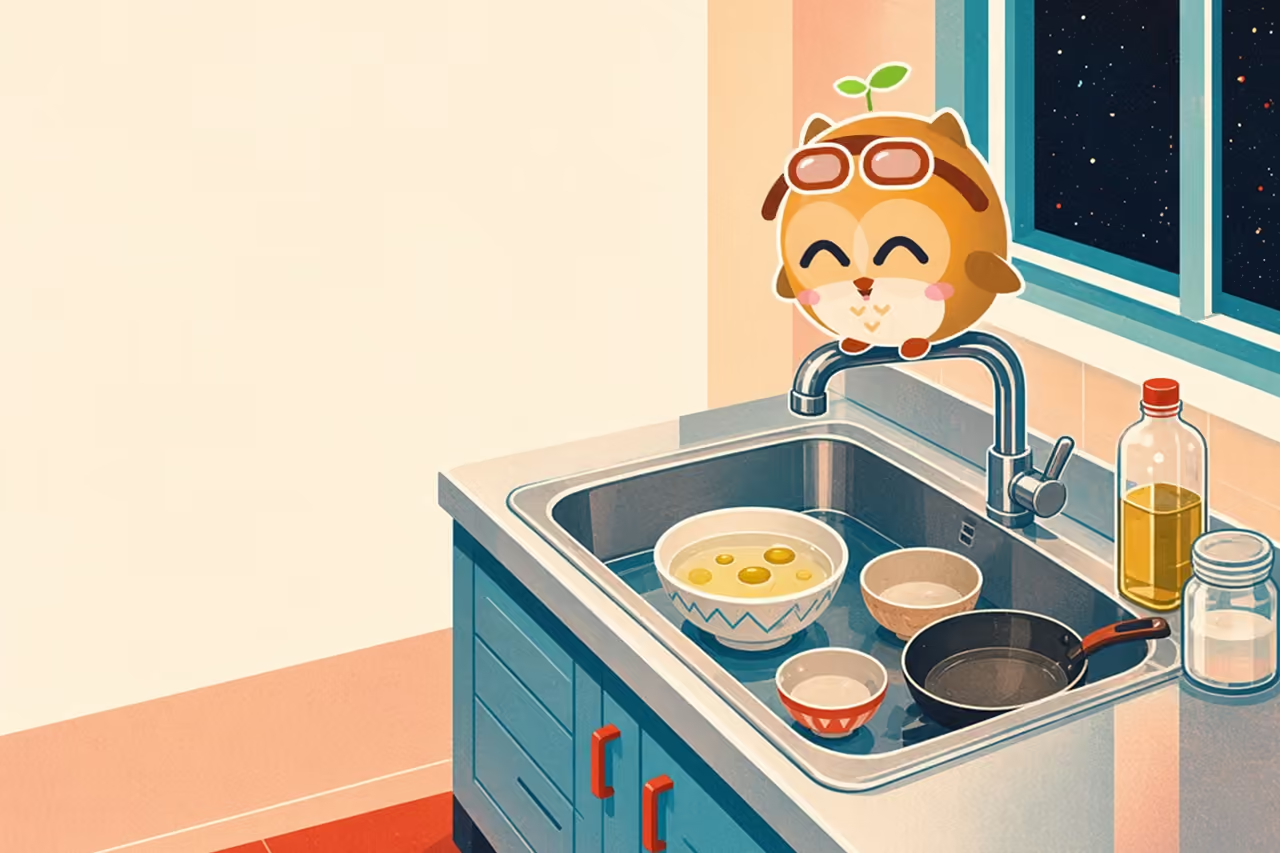
After dinner, Na helped Mum with the washing-up, pouring water into the pan they had fried fish in. A yellow film rose to the top, with round drops of oil like little beads.
Cú Bông guessed the oil floated only because it was light, so a hard stir would dissolve it. Na poured some water and oil into a glass jar, closed the lid and shook it hard.
The jar turned cloudy, full of tiny drops of oil. But in a moment the drops rose again and gathered into a yellow layer, as before. Na had shaken it that hard, so why had the oil still not mixed in?
Water mixes with sugar or salt because it can pull on their tiny parts. Oil's tiny parts are of a different kind: water does not pull on them. So oil and water stay apart: shaking only breaks the oil into drops, which do not mix in.
Oil floats on top because a drop of oil is lighter than a drop of water the same size. So two different things are going on: lighter, so it floats; a different kind, so it will not mix.
Press the three buttons to see one jar of water and oil: left still, just shaken, then after a while. After the shaking, where does the oil go?
Oil floats because a drop of it is lighter than a same-sized drop of water. It will not mix for another reason. Oil's tiny parts are of a different kind; water does not pull on them, so oil and water stay apart.
Everything this chapter tells you rests on at least two trustworthy sources, retold in the book's own words.
Cú Bông's books are open to everyone who signs in: read page by page like a paper book, with a small experiment right on the page.
All it takes is a Google account — no new password.