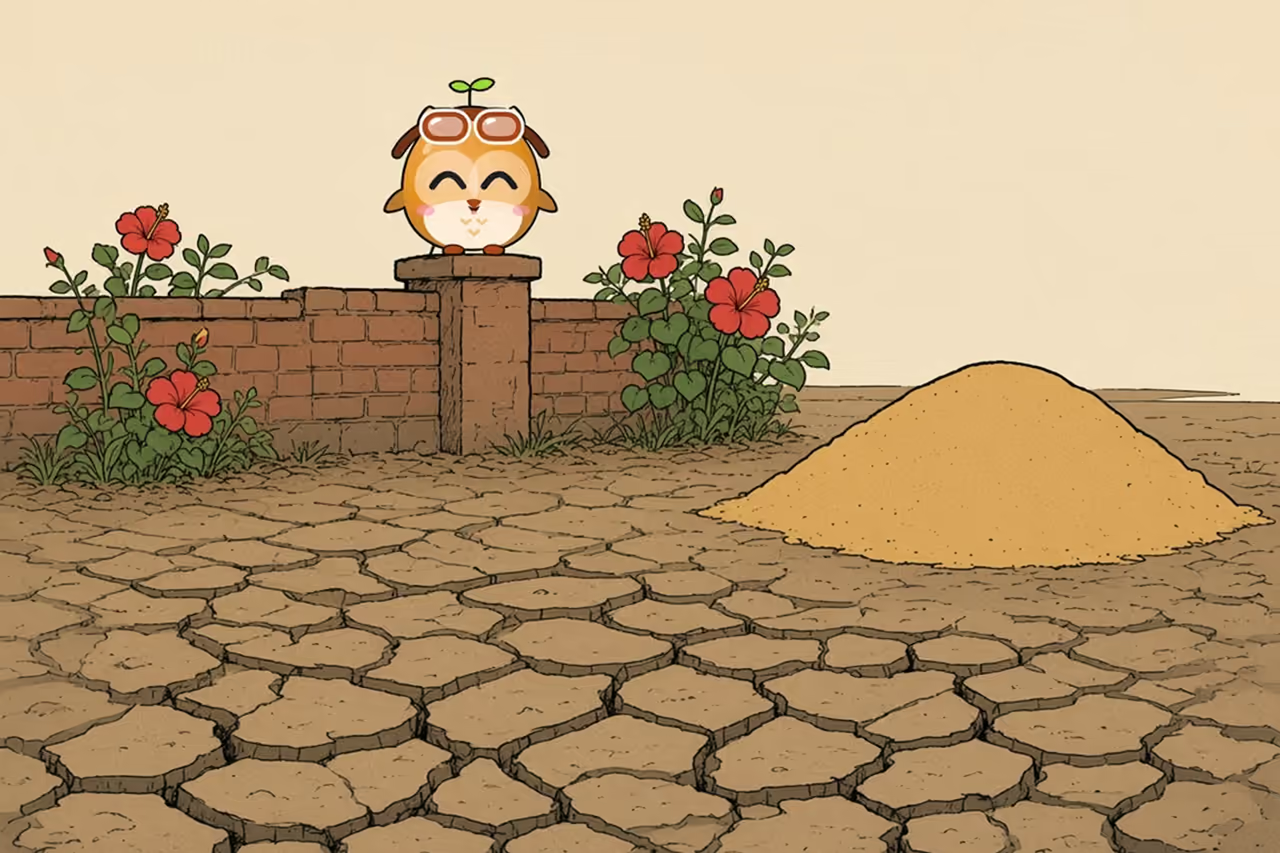
After days of rain last week, the earth yard by Grandma's gate was sticky and clung to Na's sandals. After a dry, sunny week, the yard had split into plates, the gaps a finger wide.
Each sunny day the gaps grew wider, so Cú Bông guessed the sun had burnt the ground open. Yet Grandpa's heap of building sand beside it had sat in the sun all week without a crack.
Grandma showed Na one hard, dry plate: it had shrunk, leaving a wide gap all round it. In the same sun, why did the clay crack and the sand not?
Clay is made of very fine bits, and it holds a great deal of water. When it rains, clay soaks up water and swells, which is why it turns so sticky and heavy.
After days of sun, clay slowly loses its water and shrinks. As the ground shrinks, it pulls apart into plates, leaving cracks between them. Sand lets water drain away quickly and barely shrinks as it dries, so it forms very few cracks.
Step through a tray of wet clay and a tray of wet sand drying side by side in the sun. Which tray cracks?
- Wet clay is sticky and heavy, but once it dries right out it can be as hard as concrete.
Clay soaks up a lot of water and swells; drying, it loses that water, shrinks and pulls apart into plates. Sand lets water drain away quickly and hardly shrinks, so even after a sunny spell it barely cracks.