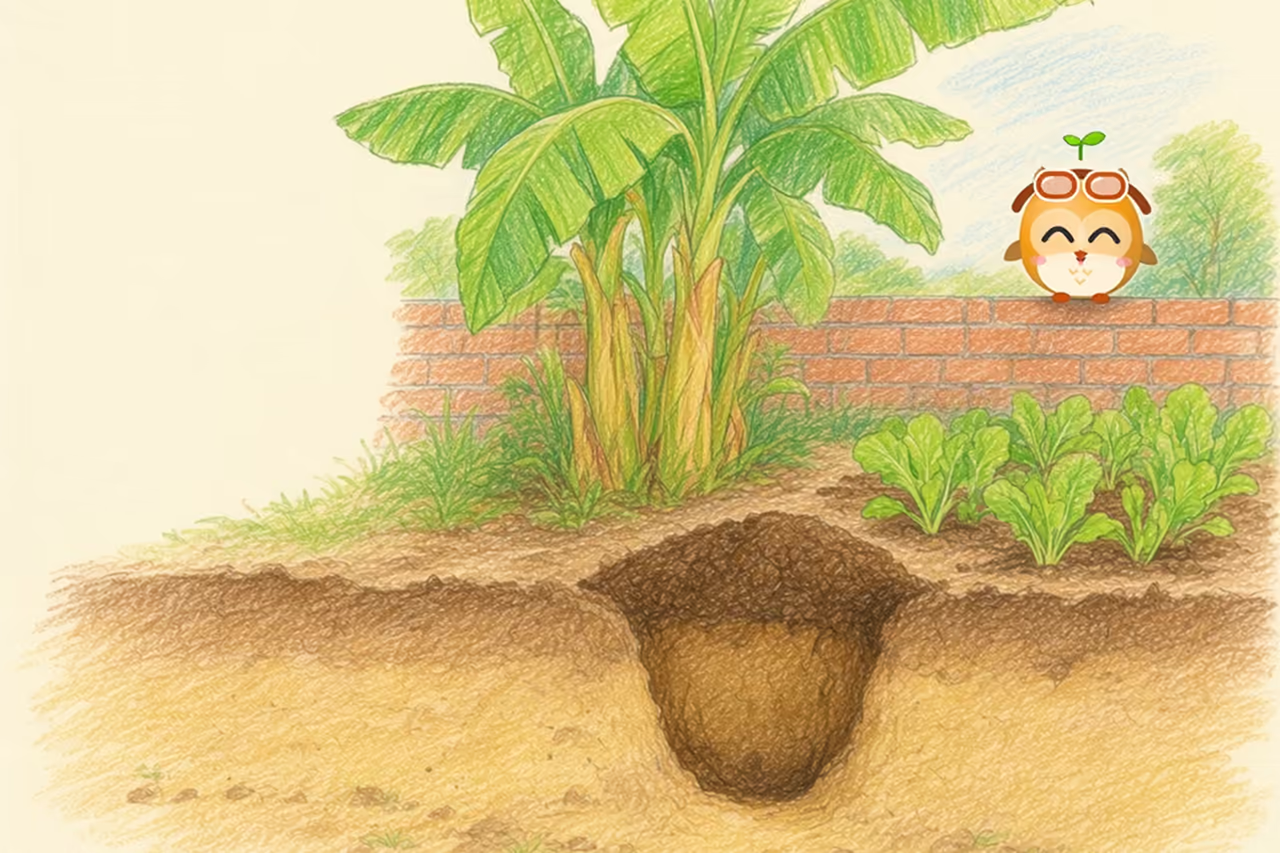
Next morning, Na crouched at the edge of the banana hole. Its side looked like a two-layer cake. The top layer was dark brown and about a hand's span thick; underneath, the soil was pale yellow.
The ground was still damp from yesterday's watering, so Cú Bông guessed the top was dark only from being wetter. So Na took a handful from each layer and spread them on a bamboo tray in the sun.
By the afternoon both handfuls were dry and crumbled when she squeezed them. Yet the top soil was still dark brown, and the lower soil still pale yellow. So where does the dark colour come from?
Dead leaves, roots, insects and other remains near the surface slowly rot. They turn into a dark material, mixed into the top layer of soil, called humus. Topsoil rich in humus is usually darker than the soil below.
Deeper down, few leaves and bits of plant reach, so the soil is usually paler. Their colour comes mostly from iron in the minerals, so the soil is usually yellower or redder.
Press the two buttons to compare the handfuls just dug and after drying in the sun. Once dry, which one is still darker?
- Most of the food people and animals need is grown in the topsoil.
- Clay dug from the layers under the topsoil is used to make bricks.
Dead leaves, roots, insects and other remains rot into dark humus, mixed into the topsoil. Deeper there is little humus, so soil is usually paler, yellower or redder, mostly from iron in its minerals.