
Chapter 9
What do earthworms do underground?
Every swing of the hoe turned up a few wriggling earthworms, yet Grandpa did not remove a single one. What do earthworms do underground?
10 pages · about 5 minutes
What do earthworms do underground?
Chapter 9
Every swing of the hoe turned up a few wriggling earthworms, yet Grandpa did not remove a single one. What do earthworms do underground?
10 pages · about 5 minutes
Page 1 of 10
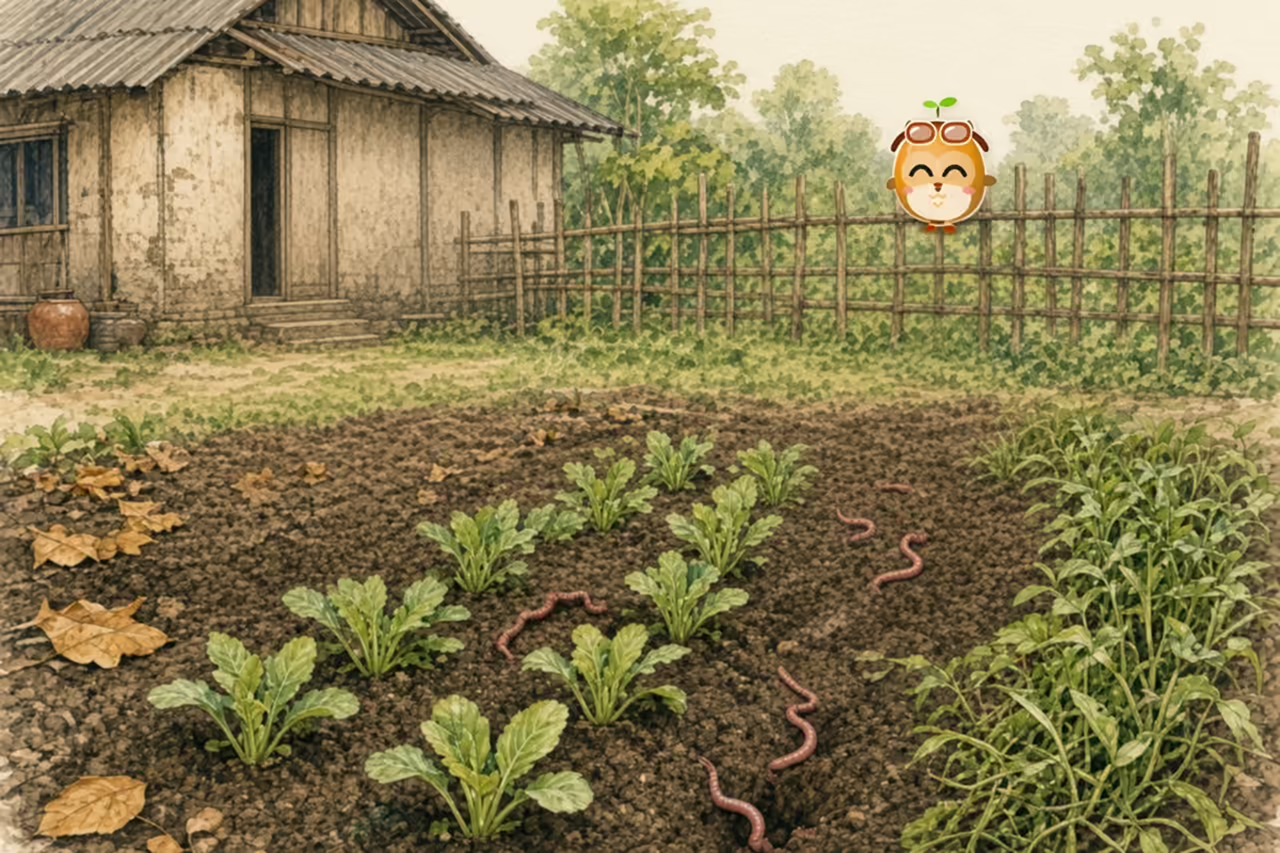
Early in the morning, Na helped Grandpa loosen the soil round a bed of young mustard greens. Every time the hoe turned the soil, a few pink earthworms wriggled and hurried back into the dark.
The worms lived right under the greens, so Cú Bông guessed they chewed the roots and should all be removed. But Grandpa said this bed was full of worms every year, and its greens still grew well.
He showed Na dry jackfruit leaves pulled halfway into small holes in the bed. Round each hole lay crumbly heaps of soil, each bit no bigger than a grain of rice. Who had pulled the leaves down, and what were those little heaps?
Earthworms do not eat living roots: they eat soil and dead plant matter such as fallen leaves. Some worms even drag fallen leaves from the surface down into their burrows. Inside the worm, soil and leaves are mixed together, then passed out as crumbly heaps called worm casts.
Worm burrows are little tunnels that let air into the soil and let rain drain down through it. And worm casts are richer in plant food than the soil around them.
Step through a jar of layered soil with a few worms and some dry leaves on top. What happens to the layers?
Worms eat soil and fallen leaves; some drag leaves into their burrows and mix them into the soil as casts. Burrows let air in and rain drain through the soil; casts are richer in plant food than soil around them.
Everything this chapter tells you rests on at least two trustworthy sources, retold in the book's own words.
Cú Bông's books are open to everyone who signs in: read page by page like a paper book, with a small experiment right on the page.
All it takes is a Google account — no new password.