
Chapter 7
Why does a white crust build up inside a kettle?
The well water is perfectly clear, yet the bottom of Grandma's kettle is coated with white crust like chalk. Why does a white crust build up inside a kettle?
10 pages · about 5 minutes
Why does a white crust build up inside a kettle?
Chapter 7
The well water is perfectly clear, yet the bottom of Grandma's kettle is coated with white crust like chalk. Why does a white crust build up inside a kettle?
10 pages · about 5 minutes
Page 1 of 10
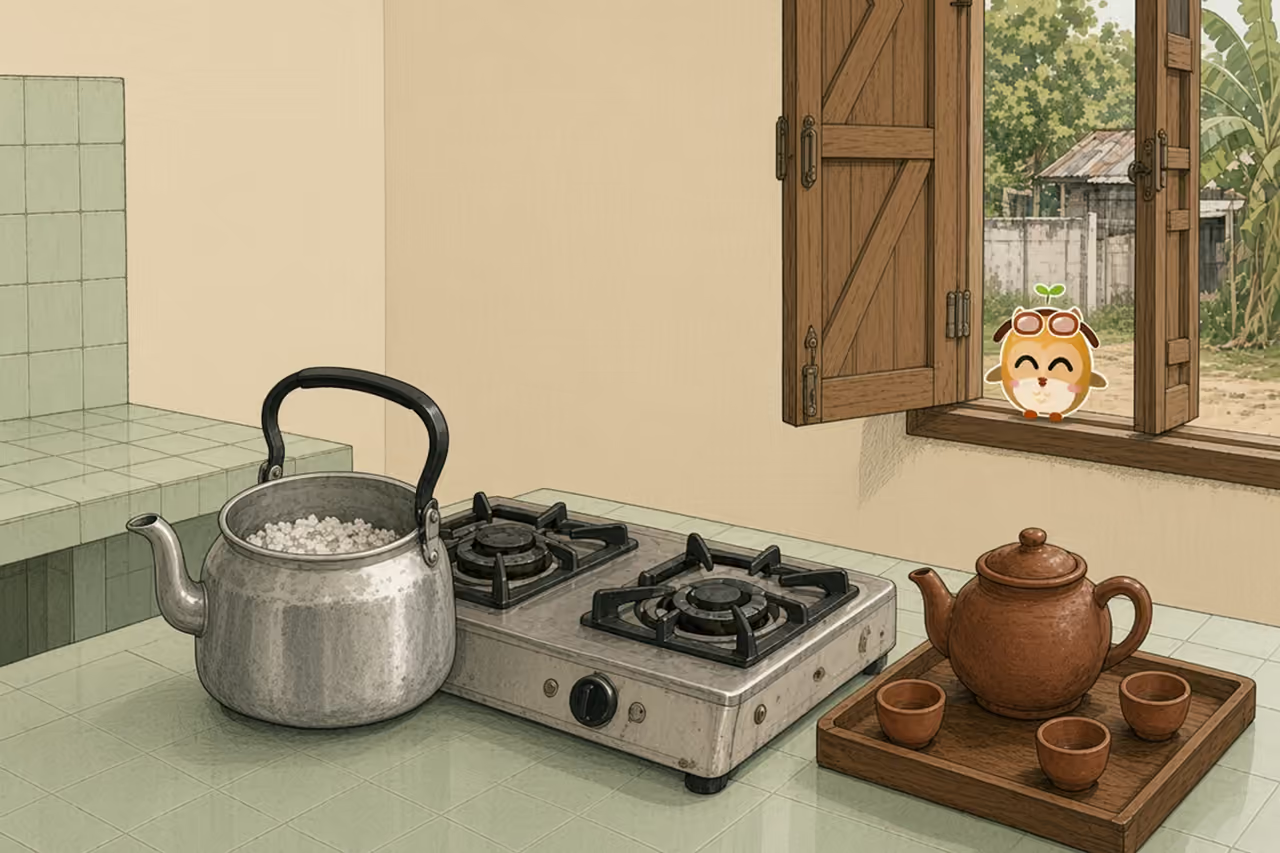
Every afternoon Grandma boiled a kettle of well water for tea in her old aluminium kettle. When it had cooled, Na lifted the lid: the bottom was coated with something white and rough, like chalk.
It looked like dried soap suds, so Cú Bông guessed it was soap left over from washing the kettle. But Grandma said the kettle was only ever rinsed with well water, and had never been washed with soap.
She scraped at it with a spoon: the white layer was hard as stone and came off in small flakes. The water poured in was perfectly clear, so where did the white stone come from?
This well water has seeped through soil and rocks such as limestone and chalk, picking up dissolved calcium and magnesium. They dissolve like sugar, unseen; and well water often carries more calcium than other water. Water with a lot of dissolved calcium and magnesium is called hard water.
When hard water is boiled, those dissolved minerals come out of the water as a white solid. They stick to the bottom and sides of the kettle, a little thicker with every boil, as scale.
Press the two buttons to put a drop of water, then a drop of vinegar, on a flake of scale. Which drop makes it fizz?
Water seeping through soil and rock carries calcium and magnesium dissolved in it, unseen. Boil hard water and those minerals come out as white scale on the kettle.
Everything this chapter tells you rests on at least two trustworthy sources, retold in the book's own words.
Cú Bông's books are open to everyone who signs in: read page by page like a paper book, with a small experiment right on the page.
All it takes is a Google account — no new password.