
Chapter 2
Why does a puddle on soil vanish sooner than one on tiles?
A shower left two puddles in the yard, and one was gone in no time. Why does a puddle on soil vanish sooner than one on tiles?
10 pages · about 5 minutes
Why does a puddle on soil vanish sooner than one on tiles?
Chapter 2
A shower left two puddles in the yard, and one was gone in no time. Why does a puddle on soil vanish sooner than one on tiles?
10 pages · about 5 minutes
Page 1 of 10
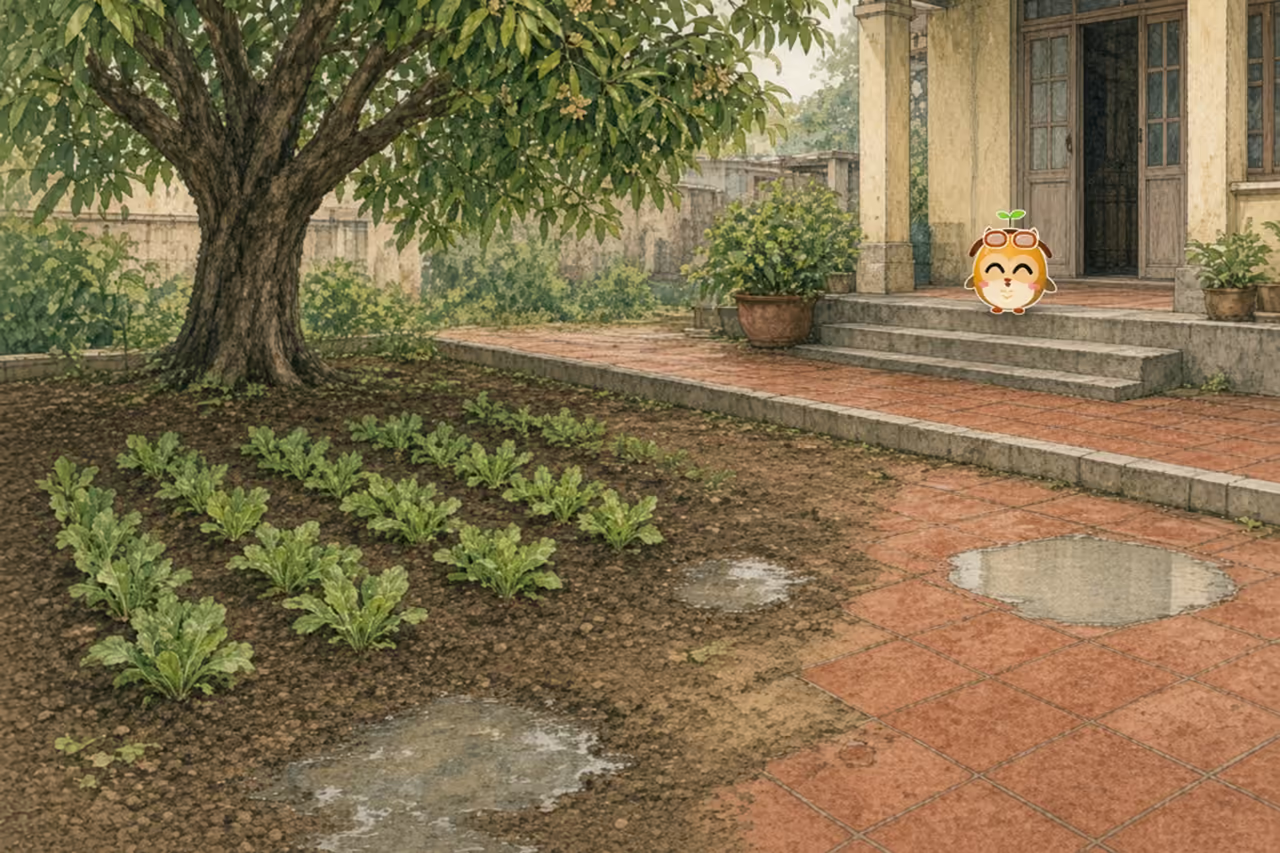
On Saturday afternoon a shower passed over and left two puddles in Na's yard. One lay on the bare vegetable patch, the other on the tiles in front of the porch.
Within the hour, the puddle on the soil had gone. The one on the tiles was still there. Cú Bông guessed the sun shone more on the soil, so the water there evaporated faster.
But the whole yard lay in the shade of the longan tree, so no spot had more sun. Na poked a stick into the place where the puddle had been. The soil was dark and wet, wetter the deeper she went. So where had the water gone?
Soil looks solid, but there are countless tiny spaces between its grains. Rainwater slips through those spaces and seeps down into the ground, so the puddle on Na's patch soon went.
Tiles, brick, concrete and roofs let almost no rain soak through. Water on tiles can only run off somewhere else, or lie there until it evaporates into the air. That is why a puddle on tiles lasts much longer.
Press the three buttons to pour the same cup of water into sand, into clay and onto a tile. Where does the water reach the tray first?
Rain seeps down through the tiny spaces between soil grains, so a puddle on untrodden soil soon goes. Tiles and concrete let almost no water through, so it runs off or waits to evaporate, and lasts longer.
Everything this chapter tells you rests on at least two trustworthy sources, retold in the book's own words.
Cú Bông's books are open to everyone who signs in: read page by page like a paper book, with a small experiment right on the page.
All it takes is a Google account — no new password.