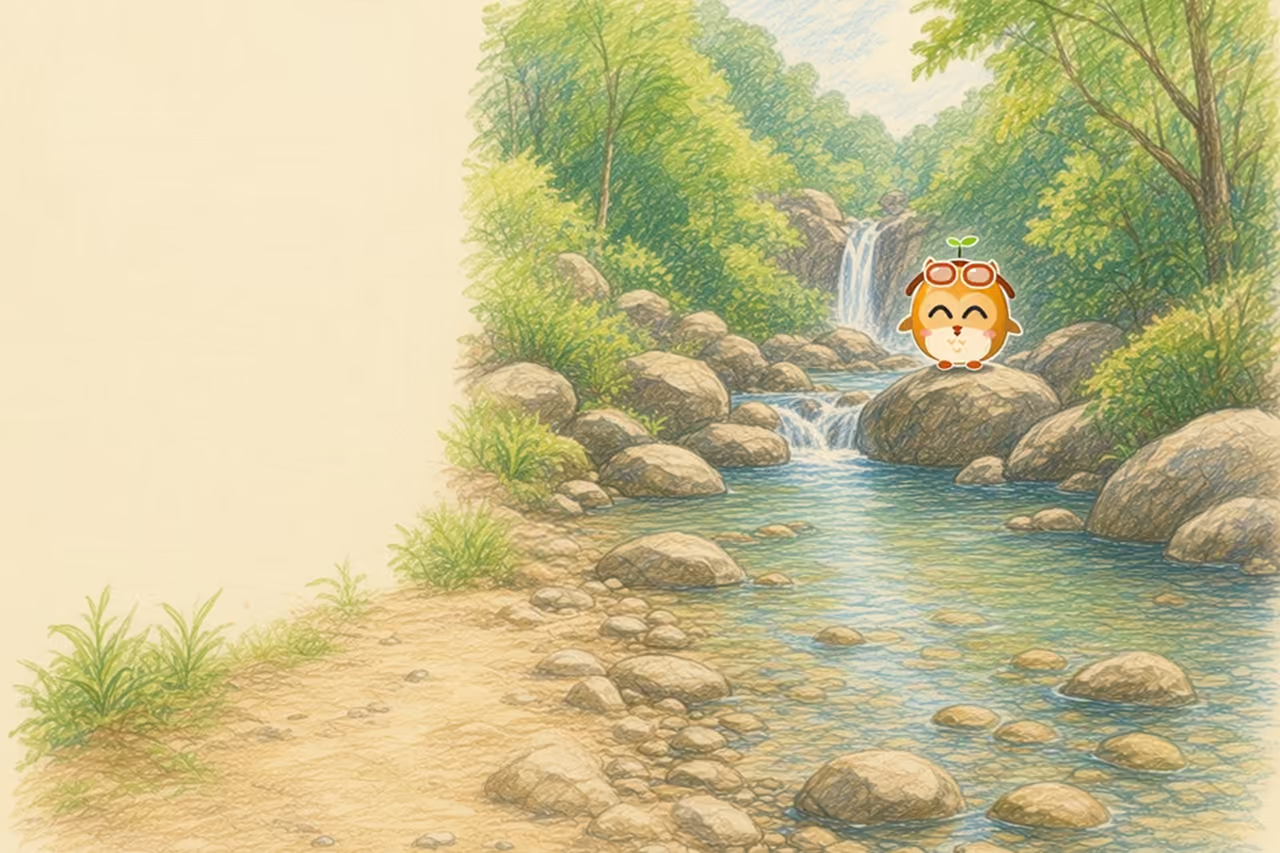
On Sunday, Dad took Na to a little stream running down a hill. Na waded in the shallows and picked up a handful of smooth round pebbles, cool in her hand.
Every one was as round as an egg, so Cú Bông guessed pebbles were simply born round. But the broken stones on the hillside path were sharp, and one nearly cut Na's sandal.
They walked up to a little waterfall, where stones had just fallen from the hillside into the stream. There the stones were still angular; downstream, where Na had waded, they were smaller and rounder. What had happened to the stones on the way?
The water rolls stones along the bed, knocking them together and rubbing them on the bottom. Sharp edges and corners wear away first; after that the whole stone slowly gets smaller.
The further a stone travels, the more it is worn, so pebbles downstream are usually smaller and rounder. A broken stone lying on the hillside has not been carried by water, so it stays sharp.
Step through the journey of one stone, from falling into the stream to being carried a long way. Which part of the stone goes first?
- On Mars, the rover Curiosity found rounded pebbles, a sign that flowing water once carried them a long way.
Water rolls stones along; they knock together and rub on the bed, and their sharp edges wear round. Stones water has not carried stay sharp; the further a stone goes, the smaller and rounder it usually gets.