
Chapter 7
Why does a pressure cooker cook food so fast?
Grandma's soup bones take all morning to turn tender; in Mum's pressure cooker they take about half an hour. Why does a pressure cooker cook food so fast?
10 pages · about 5 minutes
Why does a pressure cooker cook food so fast?
Chapter 7
Grandma's soup bones take all morning to turn tender; in Mum's pressure cooker they take about half an hour. Why does a pressure cooker cook food so fast?
10 pages · about 5 minutes
Page 1 of 10
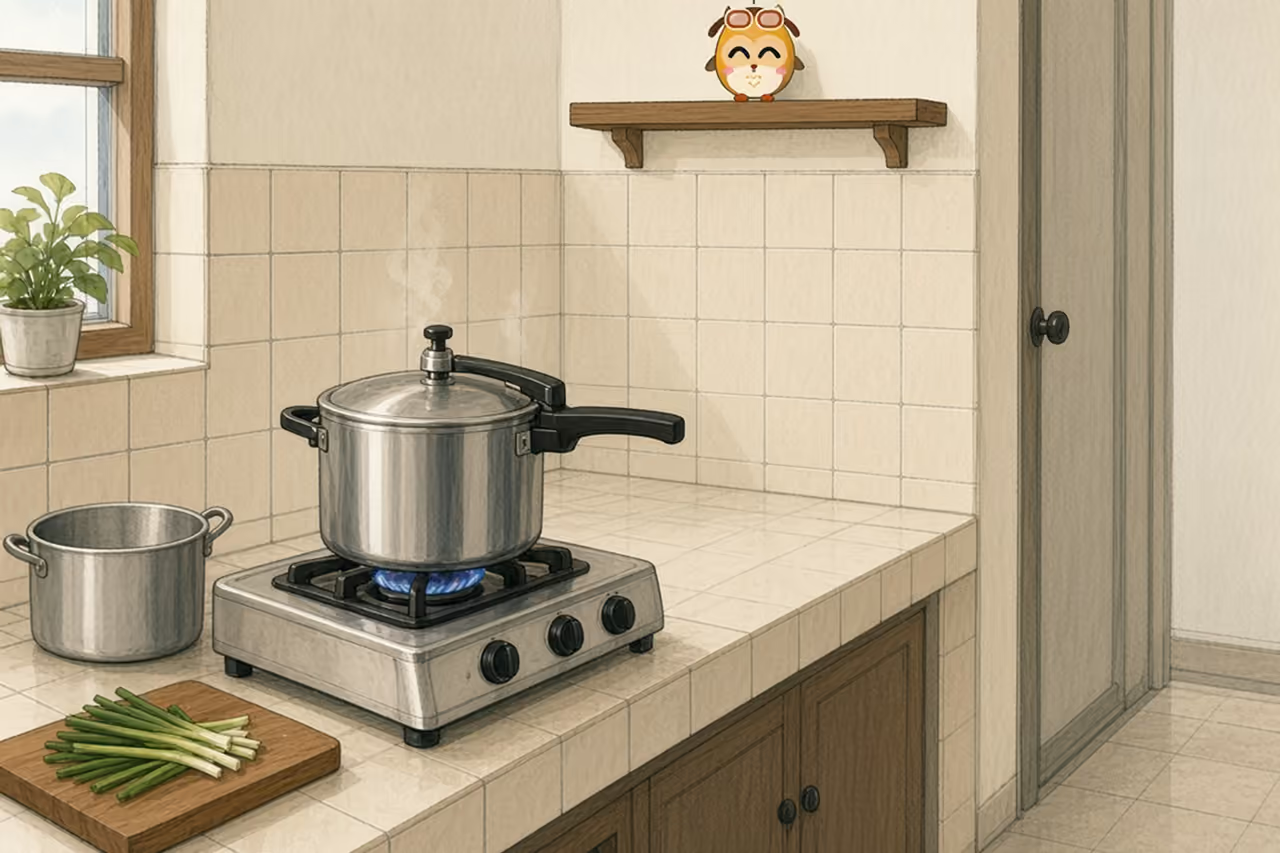
On Sunday, Mum put soup bones in the pressure cooker and locked the lid. She set it on a low flame and told Na to stand back.
Half an hour later Mum let the steam out, opened the lid, and the bones were tender. Cú Bông guessed she had turned the flame much higher than when Grandma simmered them. But the flame was small and blue, just like Grandma's.
Grandma said that once she simmered bones an extra hour, and they softened only very slowly. With the same flame, why does a pot with a locked lid cook so much faster?
In an ordinary pot, water boils at about 100 °C, and simmering soup stays near that. However long it simmers, the soup stays at about 100 °C and gets no hotter.
A pressure cooker's locked lid keeps the steam in, so the pressure builds. Under pressure, water must get hotter to boil, up to about 120 °C, so food cooks faster.
Press the two buttons to compare an open pot and a locked pressure cooker, each on a matching flame. Which pot keeps its steam in?
In an ordinary pot, water boils at about 100 °C, and simmering soup stays around there. A locked lid keeps steam in, pressure rises, water boils hotter, up to about 120 °C, so food cooks faster.
Everything this chapter tells you rests on at least two trustworthy sources, retold in the book's own words.
Cú Bông's books are open to everyone who signs in: read page by page like a paper book, with a small experiment right on the page.
All it takes is a Google account — no new password.