
Chapter 3
Why do you feel hotter in a dark shirt than in a white one?
Standing in the same sun, the child in black feels a baking-hot back, the child in white feels fine. Why?
10 pages · about 5 minutes
Why do you feel hotter in a dark shirt than in a white one?
Chapter 3
Standing in the same sun, the child in black feels a baking-hot back, the child in white feels fine. Why?
10 pages · about 5 minutes
Page 1 of 10
One Saturday morning, Na's school held its sports day. Na wore a black T-shirt; Bin, standing next to her, wore a white one. The whole school stood in lines in the sunny yard for the head teacher's opening speech. Cú Bông perched on Bin's shoulder to listen too.
Before long, the back of Na's shirt was baking hot, while Bin felt fine. Cú Bông guessed the black shirts were made of thicker cloth than the white ones.
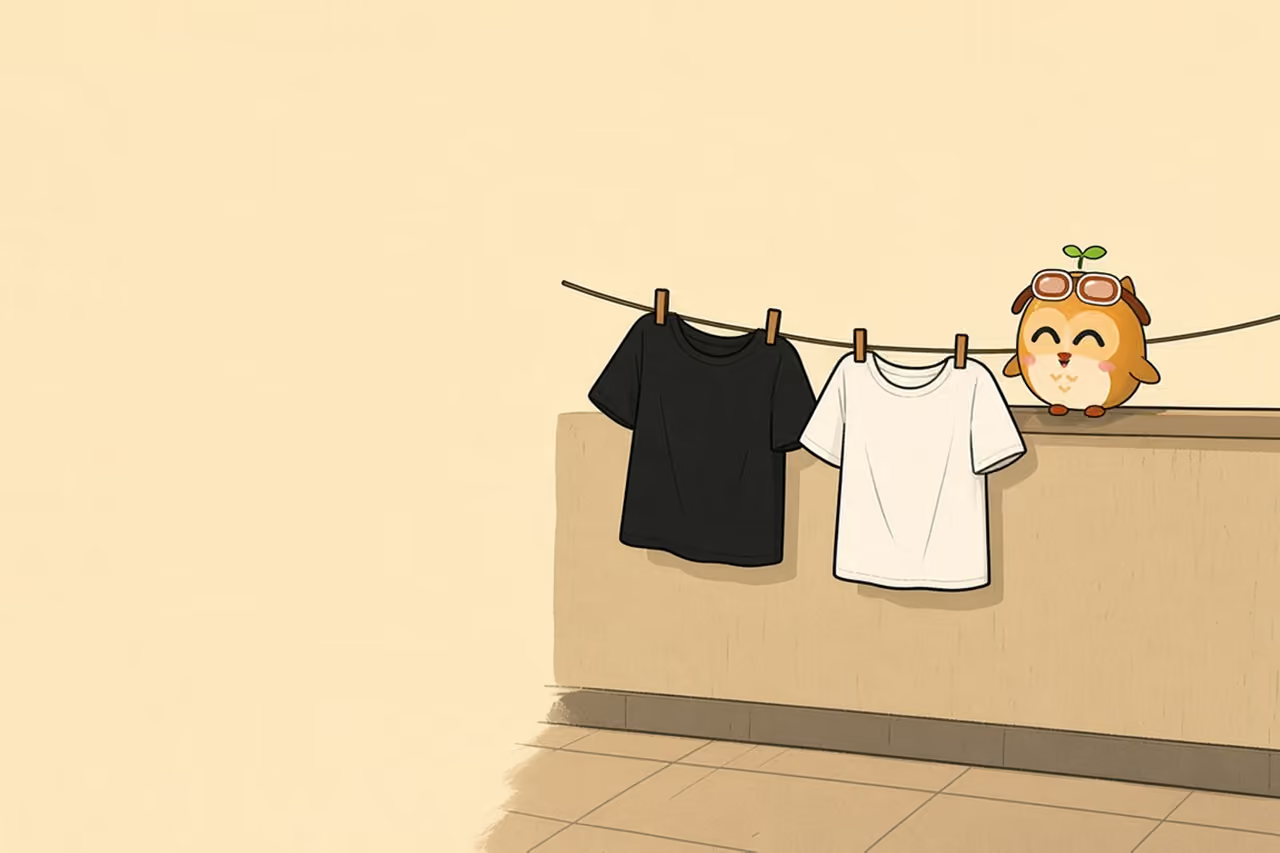
At the break, Na and Bin held their shirts side by side: the same thin cotton, the same size. The two shirts differed only in colour. Same cloth, so why was the black shirt hotter than the white?
When sunlight falls on something, part of it is absorbed and the rest is reflected. The light that is absorbed turns into heat and warms the thing up.
Dark things absorb more sunlight, so they heat up more. White and light-coloured things reflect more sunlight, so they heat up less. That is why, in the sun, a dark shirt makes you hotter than a white one.
Press the two buttons to lay the black shirt, then the white one, in the same patch of sun. Watch whether the sunlight is mostly absorbed or mostly reflected.
Sunlight absorbed by something turns into heat. A dark shirt absorbs more sunlight than a white one, so you feel hotter wearing it in the sun.
Everything this chapter tells you rests on at least two trustworthy sources, retold in the book's own words.
Cú Bông's books are open to everyone who signs in: read page by page like a paper book, with a small experiment right on the page.
All it takes is a Google account — no new password.