
Chapter 10
Why can a lighter child lift a heavier one on a seesaw?
The heavier child is lifted high by the lighter one. Why can a lighter child lift a heavier one on a seesaw?
10 pages · about 5 minutes
Why can a lighter child lift a heavier one on a seesaw?
Chapter 10
The heavier child is lifted high by the lighter one. Why can a lighter child lift a heavier one on a seesaw?
10 pages · about 5 minutes
Page 1 of 10
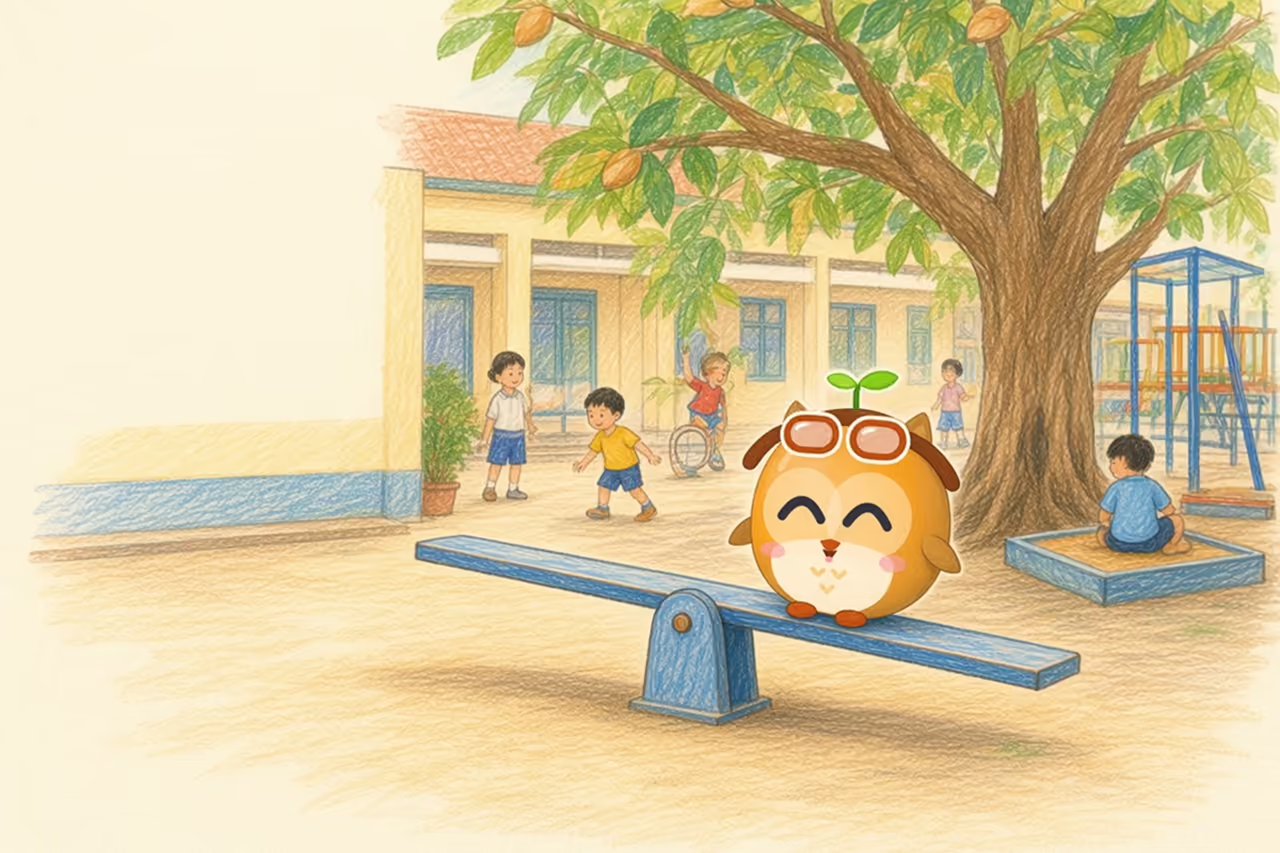
At break, Na and Bin ran to the wooden seesaw in the corner of the school playground. Na sat at one end and Bin at the other; Bin's end sank, leaving Na stuck up in the air.
Bin was bigger and heavier than Na. Cú Bông guessed the heavier child always stayed down, so Na was too light ever to lift Bin.
Bin shuffled towards the middle, and Na's end slowly came down. A little further, and Na touched the ground while Bin rose high in the air. Bin was still heavier, so how could Na lift him now?
A seesaw turns about its pivot. A push turns it more the farther from the pivot it acts. The same push close to the pivot turns it much less.
A seesaw balances when weight times distance from the pivot is the same on both sides. So, at suitable distances, the lighter child further out and the heavier one closer in balance it. If the heavier child moves closer still, the lighter one can even lift them.
Step through three pictures: Bin sits at the end, then shuffles towards the pivot. Watch which end goes down at each step.
The further from the pivot a push acts, the more it turns the seesaw. At suitable distances, a lighter child further out and a heavier one closer in balance the seesaw. If the heavier child moves closer still, the lighter one can lift them.
Everything this chapter tells you rests on at least two trustworthy sources, retold in the book's own words.
Cú Bông's books are open to everyone who signs in: read page by page like a paper book, with a small experiment right on the page.
All it takes is a Google account — no new password.