
Chapter 3
Why do soaked beans sprout?
Grandma soaked mung beans overnight; by morning many had split their skins, and some showed a white tip. Why do soaked beans sprout?
10 pages · about 5 minutes
Why do soaked beans sprout?
Chapter 3
Grandma soaked mung beans overnight; by morning many had split their skins, and some showed a white tip. Why do soaked beans sprout?
10 pages · about 5 minutes
Page 1 of 10
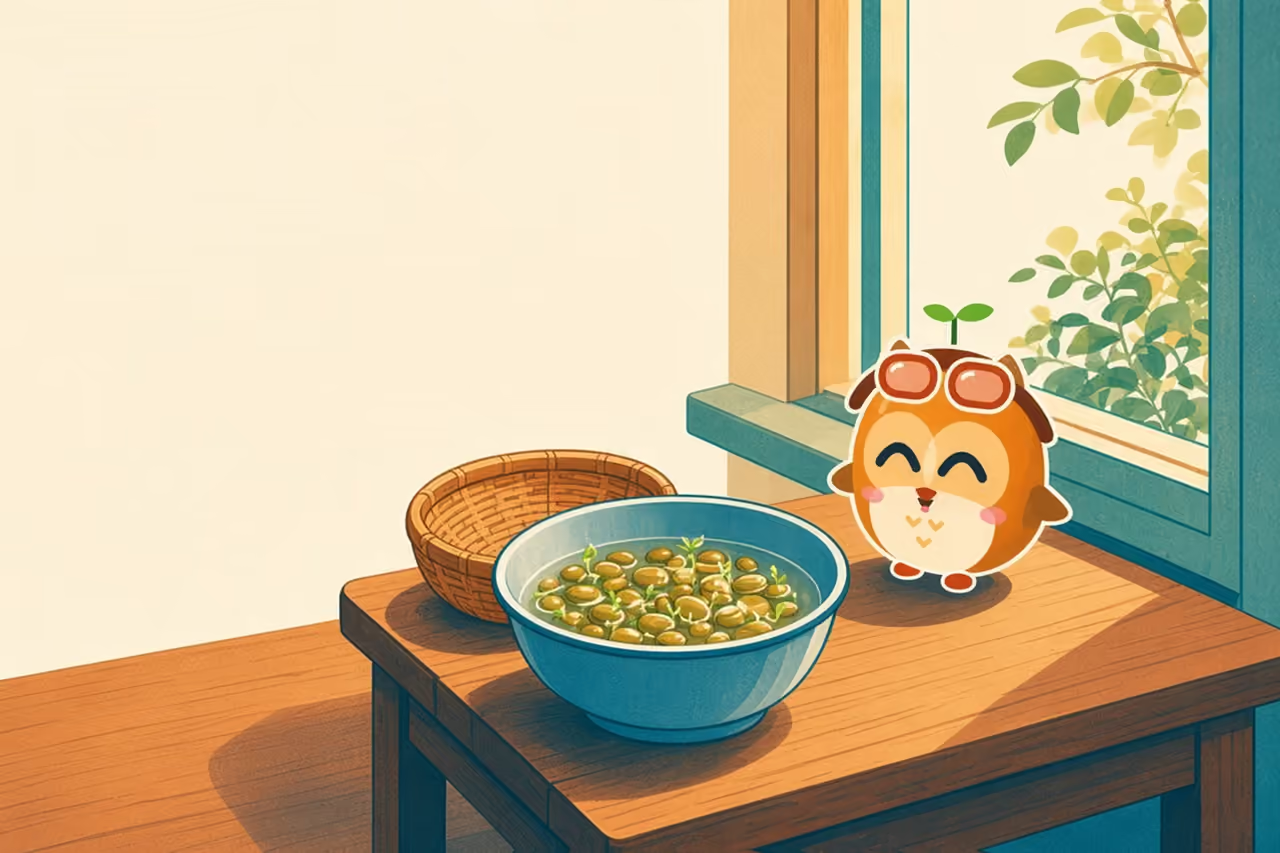
Last night, Grandma tipped some mung beans into a bowl of water to grow bean sprouts. This morning, Na saw every bean plump and much bigger than yesterday, and many had split their skins.
Cú Bông guessed the beans would have to be planted in soil before they could grow. Grandma just smiled, spread them on a wet cloth in a basket, and covered them to keep them dark.
Three days later, she lifted the cloth: the basket was full of white sprouts, long roots pointing down. No soil and no sunlight, yet the beans had sprouted. Where did they find the strength to grow?
Each bean holds a tiny young plant and a store of food, wrapped in a seed coat. Soaked, the seed coat takes in water, swells and splits, letting water and air inside. The young plant grows on that store of food, so at first it needs no soil.
The first thing to come out of the bean is the root. Then the shoot grows upwards, towards the light, while the root grows down. Seeds need the right water, air and warmth to sprout, and most seeds sprout best in the dark.
Step through four pictures to follow one bean from a dry seed to a sprout. What comes out of the bean first?
Soaked, the seed coat takes in water and splits; at first the young plant lives on its stored food. The root comes out first and grows down, then the shoot grows up.
Everything this chapter tells you rests on at least two trustworthy sources, retold in the book's own words.
Cú Bông's books are open to everyone who signs in: read page by page like a paper book, with a small experiment right on the page.
All it takes is a Google account — no new password.