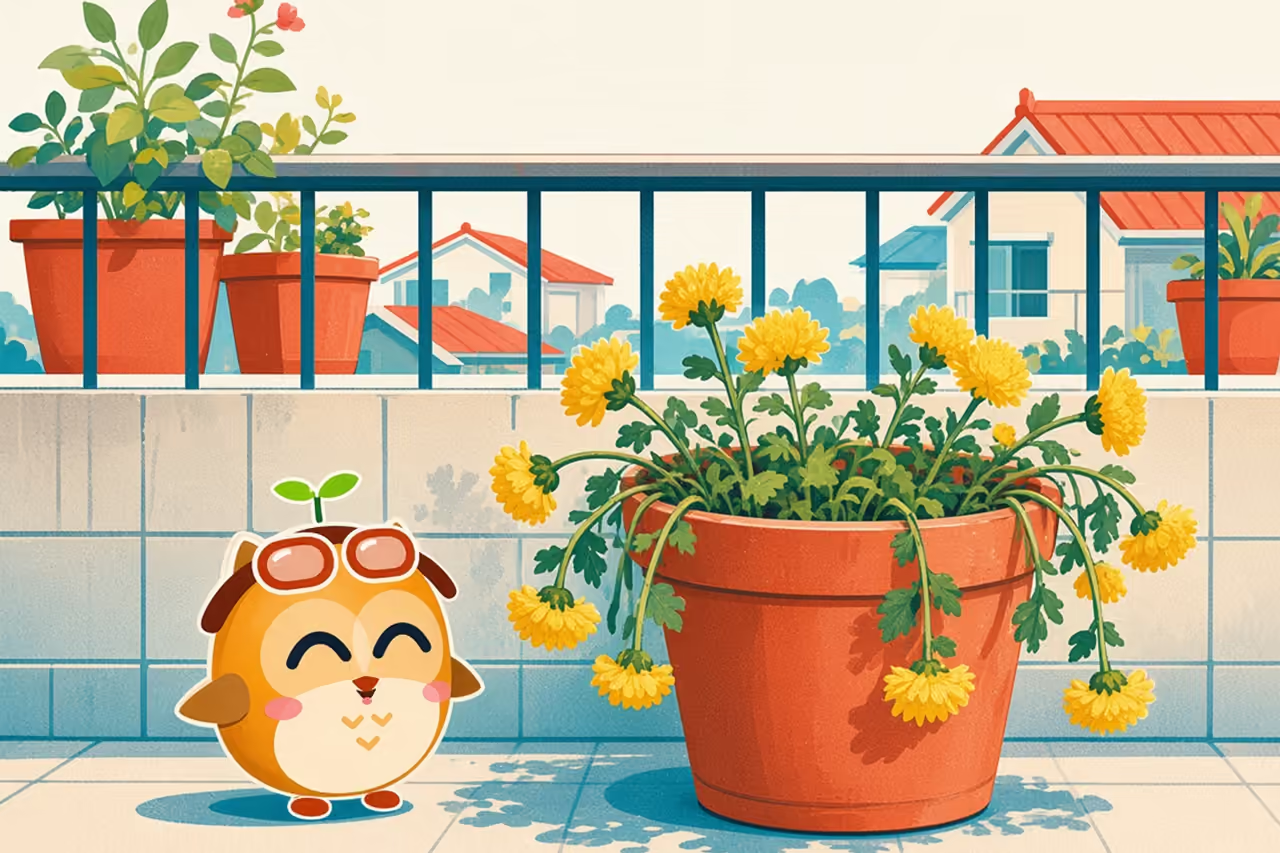
Na went to the countryside for three days and forgot to ask anyone to water the balcony chrysanthemums. When she came back, the soil was dry and hard, the leaves hung limp and the tops had flopped over.
Cú Bông looked glum and guessed that a plant drooping like that must be dead. Na fetched the watering can anyway and watered slowly, so the water soaked evenly into the soil.
A few hours later, the leaves had firmed up and the tops stood straight again. The chrysanthemums were alive after all. Fresh again in just a few hours: what had the water done?
A plant is made of countless tiny parts called cells. With enough water, the cells are plump and firm, so the stems and leaves stand up. Short of water, the cells dry out, shrink and go floppy, and the plant wilts.
A plant wilts when its leaves lose water faster than its roots can take it in. Once the soil has dried out, only watering or rain brings it back, giving the cells enough water. But if the soil stays dry too long, a plant may not recover at all.
Press the three buttons to compare the chrysanthemum with enough water, short of water, and after watering. How do the leaves and the tops change?
- On a hot day a squash plant may wilt in moist soil, and recover by evening or the next morning.
Water keeps a plant's cells plump and firm, so its stems and leaves stand up. When leaves lose water faster than roots can take it up, the plant wilts. Watered in time, its cells have enough water again and it perks up.