
Chapter 5
Why do we see lightning before we hear thunder?
The sky outside flashes, and only seconds later comes the boom. Why do we see lightning before we hear thunder?
10 pages · about 5 minutes
Why do we see lightning before we hear thunder?
Chapter 5
The sky outside flashes, and only seconds later comes the boom. Why do we see lightning before we hear thunder?
10 pages · about 5 minutes
Page 1 of 10
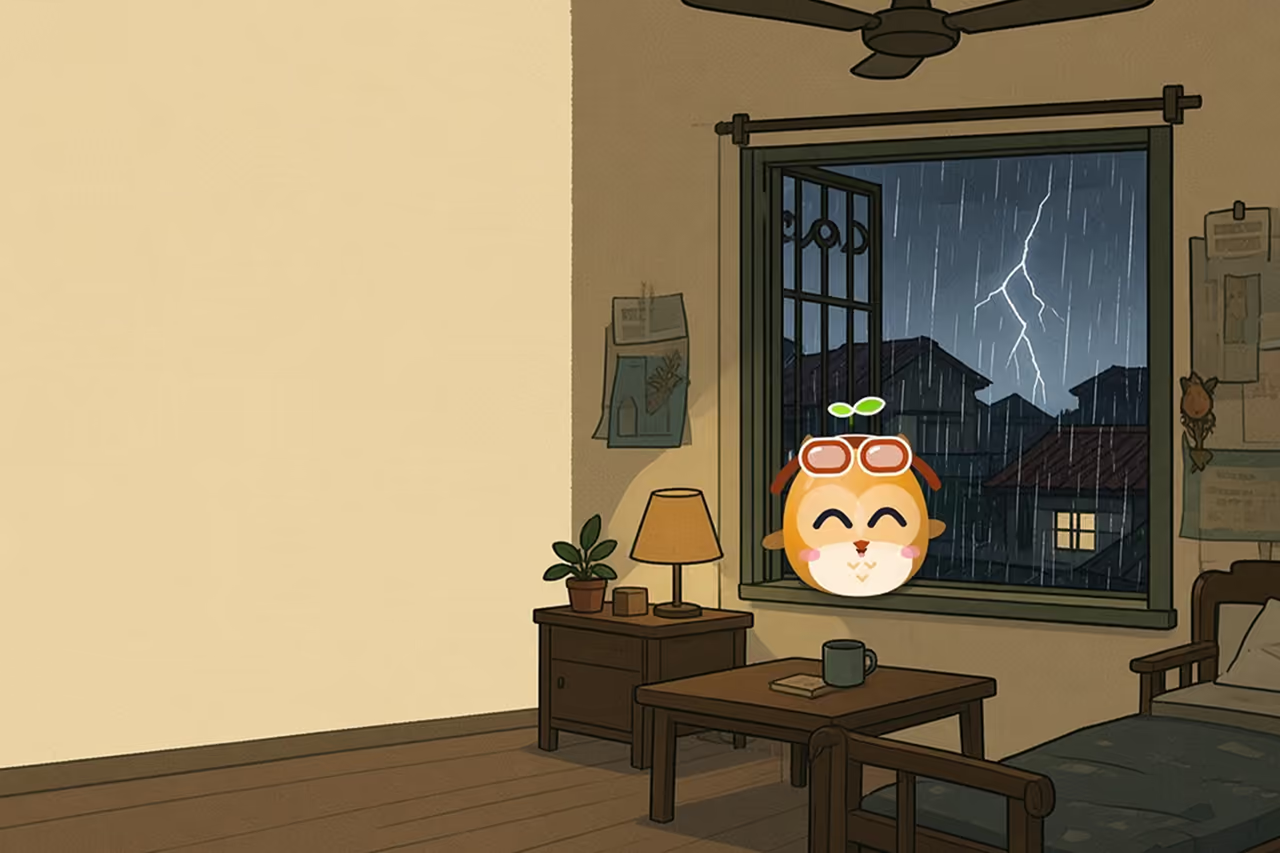
One summer evening, a thunderstorm rolled in over the rooftops of Hà Nội. The family shut the windows and sat round the table in the living room. Each time the sky flashed outside the glass, the thunder came a little while later.
Dark clouds piled up, and the thunder rolled as if heavy things were crashing together. Cú Bông guessed the flash came first, and then the clouds crashed into each other to make the thunder.
Dad told Na to count from flash to thunder. For a faraway flash, Na counted for a long time before a soft rumble came. Later a flash came very close, and the thunder cracked almost at the same moment. If clouds crashed after the flash, why did a close one come almost with its thunder?
Lightning is a giant spark of electricity. In an instant it heats the air along its path to about five times hotter than the Sun's surface. The heated air expands so fast that it makes the sound we call thunder.
Lightning and thunder are made at the same moment. But light travels far faster than sound, so the flash reaches our eyes almost at once. Thunder takes about 3 seconds for every kilometre, so we hear it later.
Step through the three pictures to follow the flash and the thunder from the storm to the house. Watch which arrives first, and how long the thunder takes to travel.
Lightning heats the air, and the air expands so fast that it makes thunder. They are made together, but light is faster, so we see the flash first and hear the thunder later.
Everything this chapter tells you rests on at least two trustworthy sources, retold in the book's own words.
Cú Bông's books are open to everyone who signs in: read page by page like a paper book, with a small experiment right on the page.
All it takes is a Google account — no new password.