
Chapter 7
How does a typhoon form?
The weather forecast says a typhoon is heading for the coast. How does a typhoon form?
10 pages · about 5 minutes
How does a typhoon form?
Chapter 7
The weather forecast says a typhoon is heading for the coast. How does a typhoon form?
10 pages · about 5 minutes
Page 1 of 10
That autumn, Na was staying with her grandparents outside Huế. That evening, the television said a typhoon over the East Sea was slowly heading for the coast. Grandpa and Dad tied down the metal roof, and Mum carried the potted plants in from the yard.
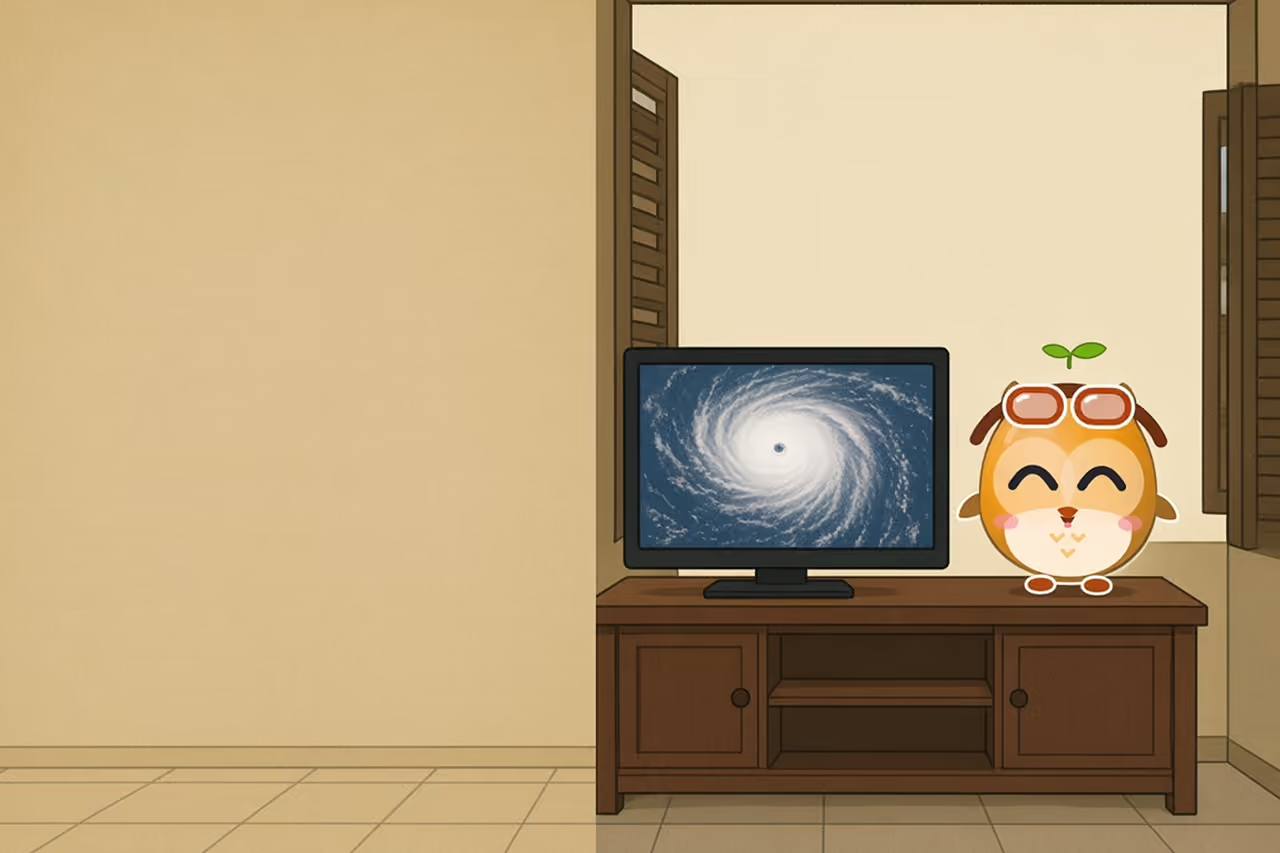
On the screen, the typhoon's clouds were turning round a centre. Cú Bông guessed a typhoon was just a fierce cloud, as strong far inland as out at sea.
That night the wind howled and rain lashed the windows; the family stayed indoors together. Next morning, the news said it had reached the coast, then weakened inland. On the map, its path began far out at sea. So what does the sea have that makes typhoons, and why do they weaken on land?
These storms form only over warm tropical seas. There, the water is above about 26 °C down to about 50 metres. Warm, moist air over the sea rises, cools, and forms clouds and thunderstorms. As vapour turns to drops, it gives off heat that feeds the storm.
Air from all around rushes in to take its place, warms, picks up moisture and rises too. The whole mass of cloud and wind turns round a centre. Over land, the typhoon loses the heat and moisture of the warm sea, so it usually weakens.
Step through four pictures to follow a typhoon from its birth over the warm sea to the coast. Notice where the typhoon forms, and what happens when it reaches land.
A typhoon forms over a warm tropical sea, where warm, moist air rises, cools and forms storm clouds. Air rushes in to take its place, and the cloud and wind turn round a centre. On land it loses the heat and moisture of the warm sea, so it usually weakens.
Everything this chapter tells you rests on at least two trustworthy sources, retold in the book's own words.
Cú Bông's books are open to everyone who signs in: read page by page like a paper book, with a small experiment right on the page.
All it takes is a Google account — no new password.