
Chapter 6
Where does wind come from?
We cannot see the wind, but we see kites fly, flags flutter and trees bend. Where does wind come from?
10 pages · about 5 minutes
Where does wind come from?
Chapter 6
We cannot see the wind, but we see kites fly, flags flutter and trees bend. Where does wind come from?
10 pages · about 5 minutes
Page 1 of 10
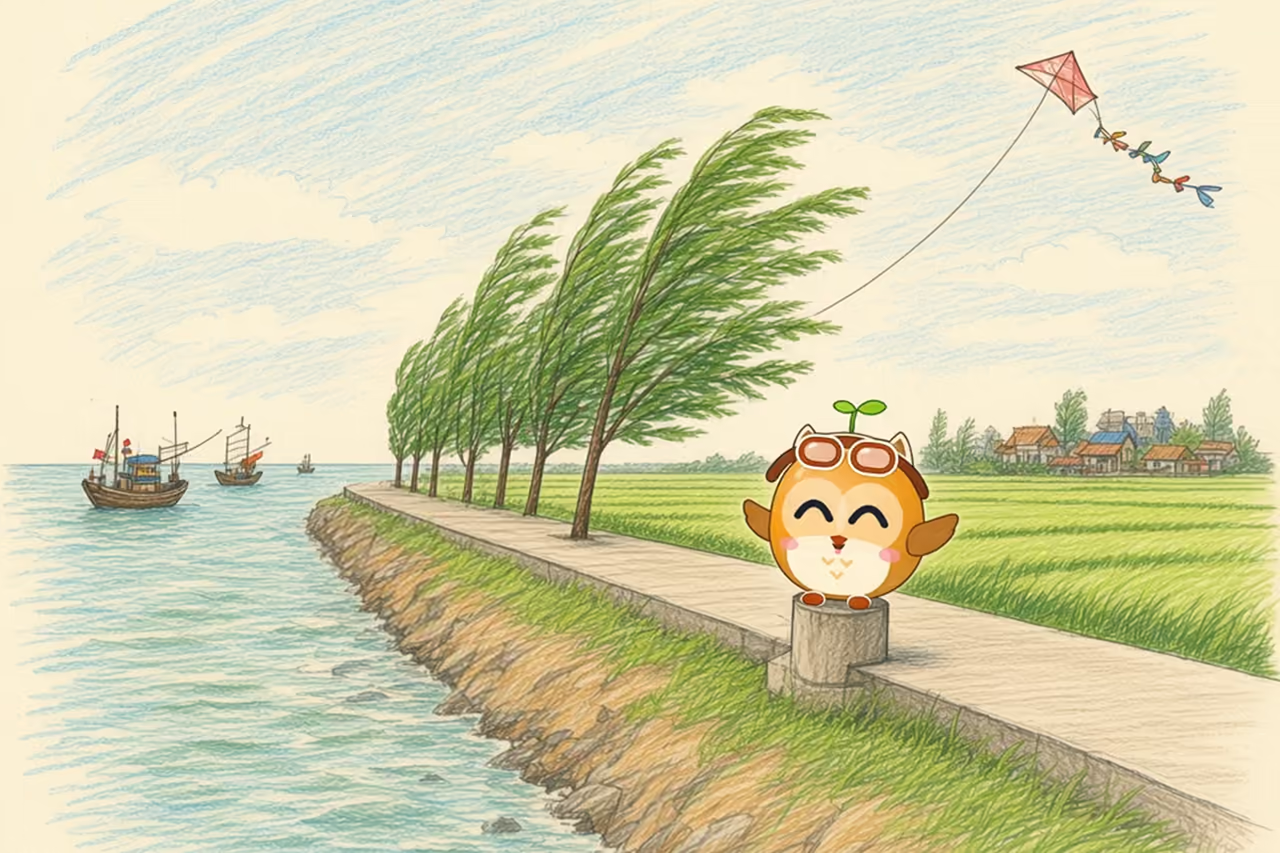
That summer, Na stayed with her mother's parents at Hải Hậu, at the foot of the sea dyke. In the morning the air was still, and the casuarina trees on the dyke stood perfectly still. Na's paper kite went up, then nosedived into the grass.
Towards noon, Na saw the casuarinas begin to sway and heard them rustling in the wind. Cú Bông guessed the trees were waving their branches to fan up the wind: wherever they leaned, the wind arrived.
Na climbed the dyke and looked out to sea: no trees out there, yet the water rippled. A cool wind blew in from the sea, the boats' flags flapped and the kite shot up. Still in the morning, windy at noon: where does wind come from, and why from the sea?
Wind is air on the move. On a sunny day, the land heats up faster than the sea. The warmed land warms the air above it, and that warmer, lighter air rises.
Cooler sea air flows in to take the place of the rising warm air. That flow is the sea breeze, blowing from sea to shore. Winds everywhere arise as air rises where it is warmer and sinks where it is cooler.
Step through four pictures of the seashore, from early morning to noon. Watch the flag: when does it start to fly, and which way?
Wind is air on the move. Where it is warmer, air rises; cooler air flows in to take its place, and we have wind.
Everything this chapter tells you rests on at least two trustworthy sources, retold in the book's own words.
Cú Bông's books are open to everyone who signs in: read page by page like a paper book, with a small experiment right on the page.
All it takes is a Google account — no new password.