
For kids · Grades 2–4
Learning games for grades 2–4
21 activities for primary school: times tables and division, road safety and road signs, a sink-or-float experiment, the geography of Việt Nam on a map, and puzzles sorted by grade.
Numbers & mental maths
 Let them play
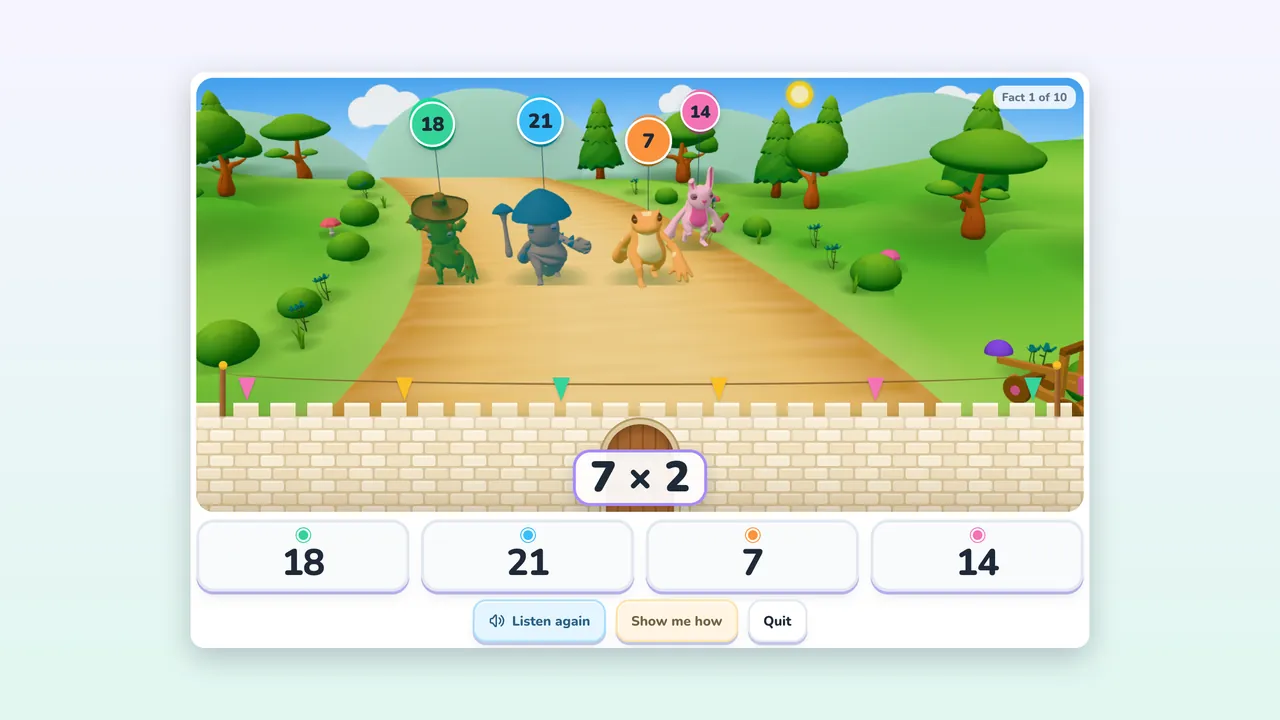
Times FortAges 7+
Knowing the tables is not chanting the whole thing at once; it is meeting each fact often enough, in the order the teacher gives it, and getting quicker each time.
 Let them play
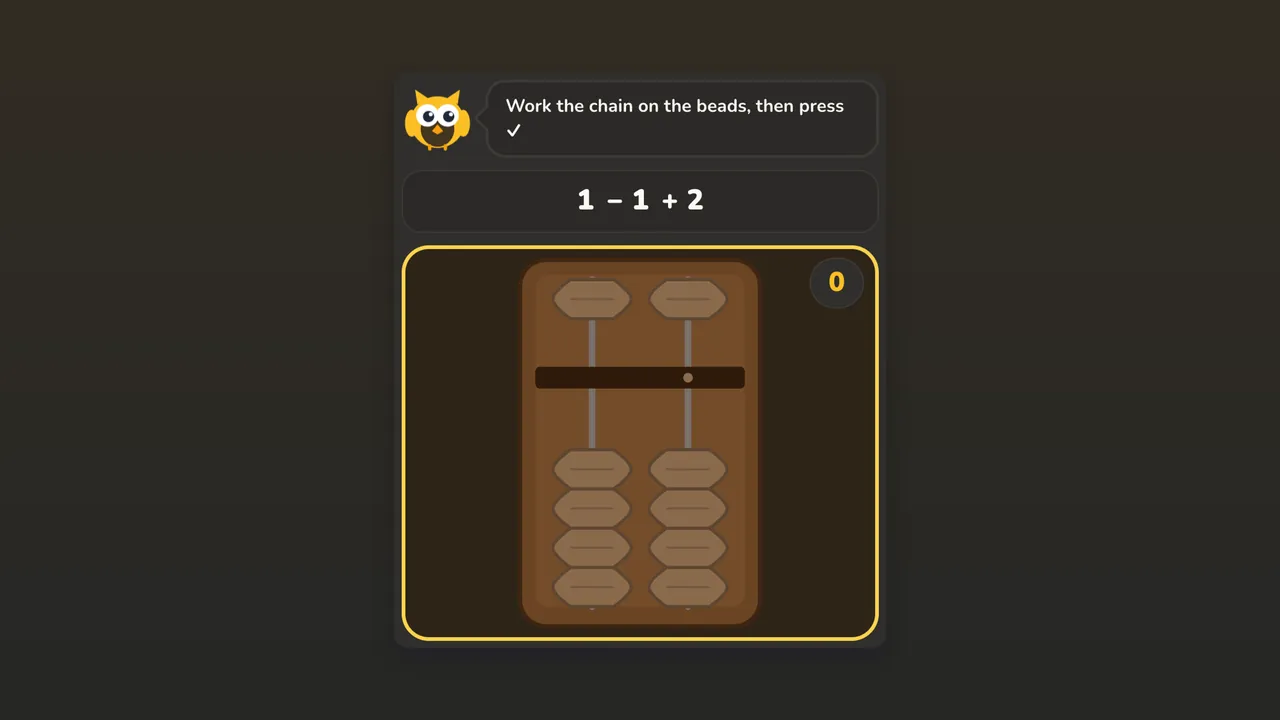
Magic AbacusAges 5+
Quick mental arithmetic is not magic but a path: from real beads under a finger, to faded beads, to an abacus held in the head.
 Let them play
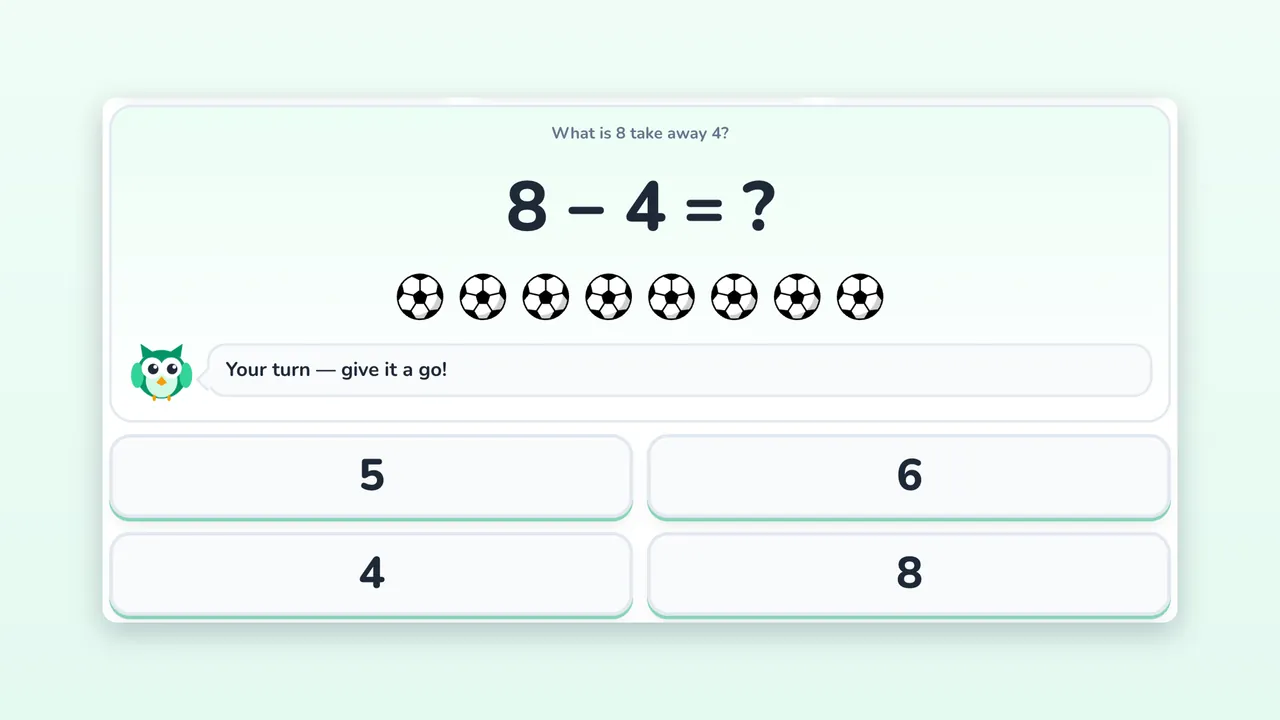
Math GardenAges 4+
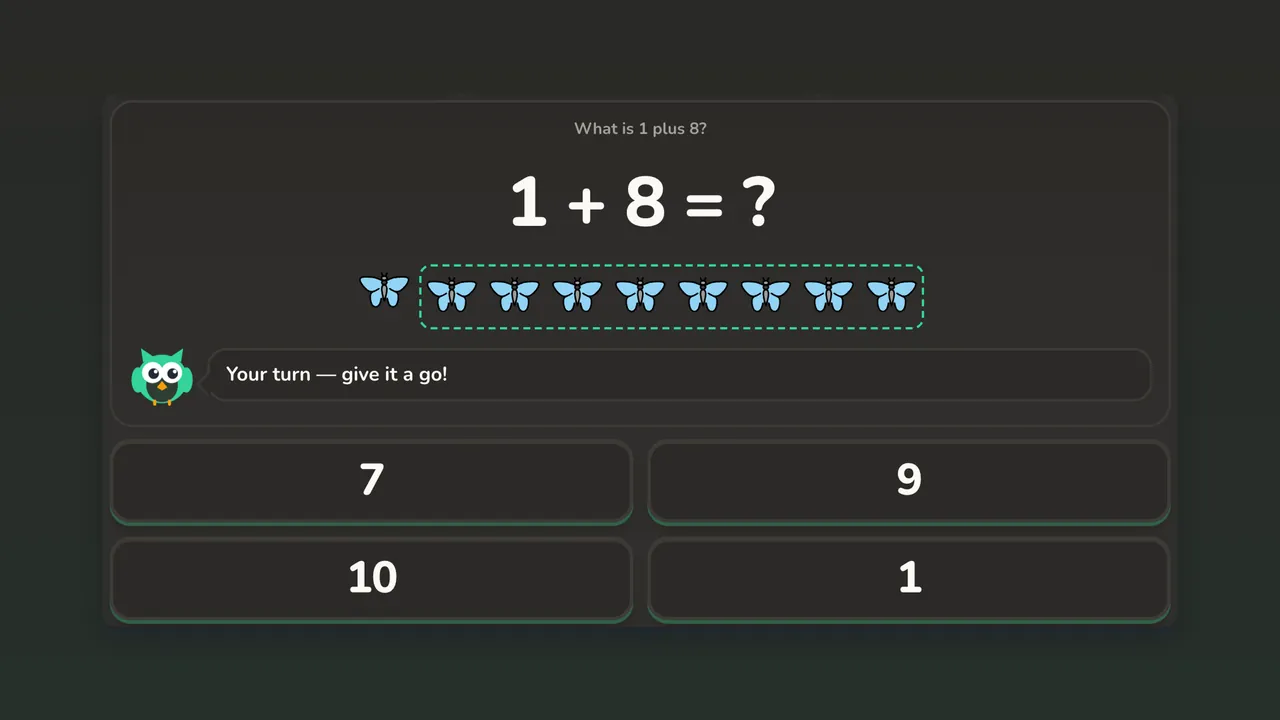
Numbers only mean something once a child can see them, so here adding is dropping fruit into a basket and taking away is lifting it out.
 Let them play
Math ExpressAges 6+
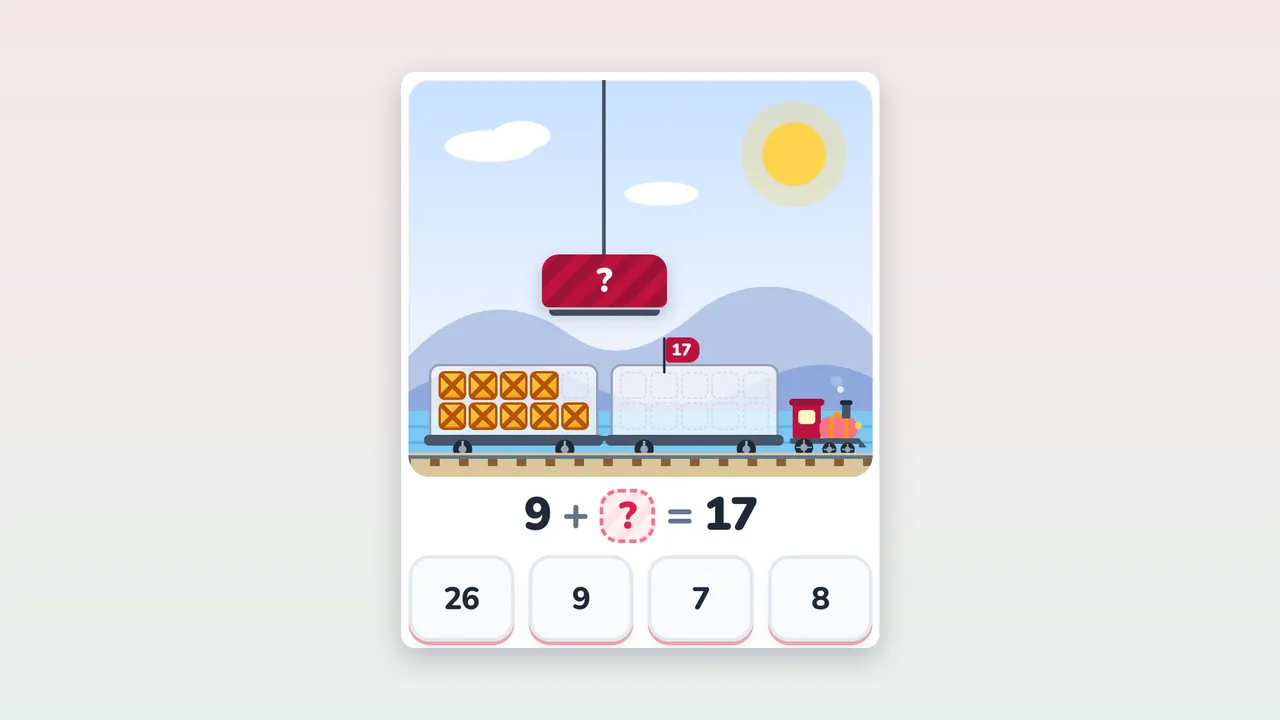
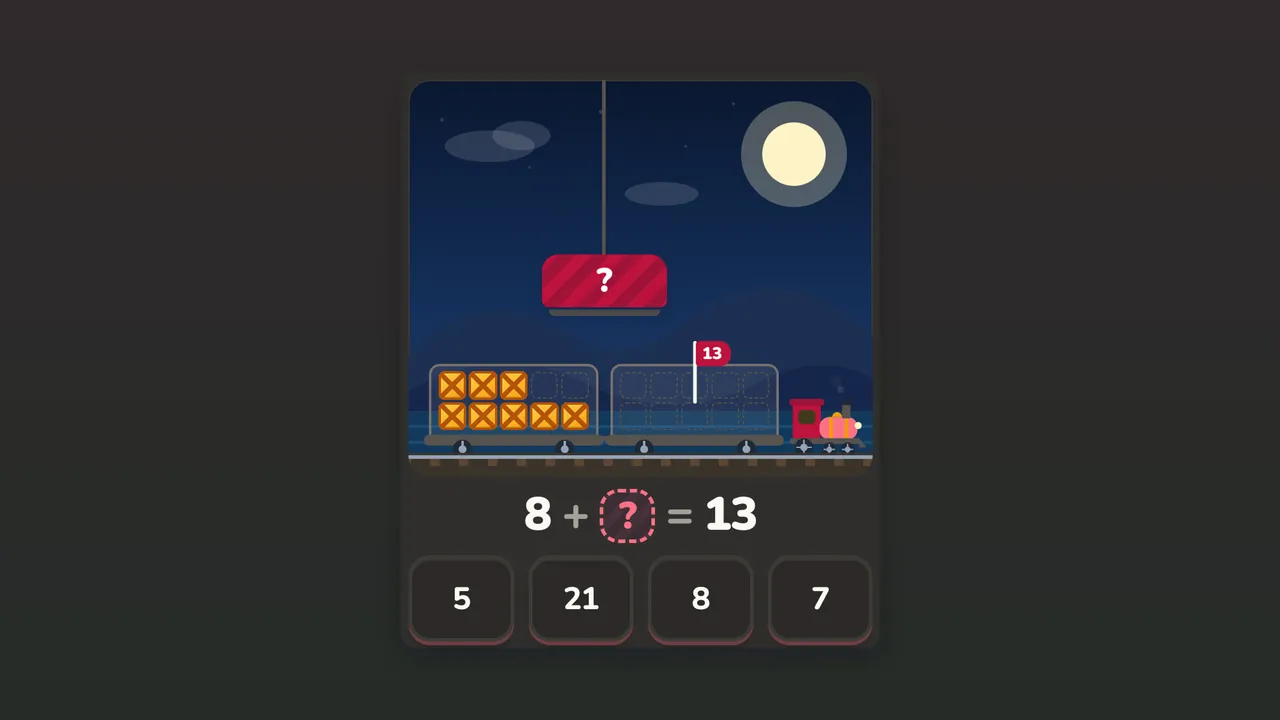
A sum has to be seen to be understood — each wagon holds exactly ten crates, and a full wagon becomes a ten.
Letters & language
 Let them play
ABC ZooAges 4+
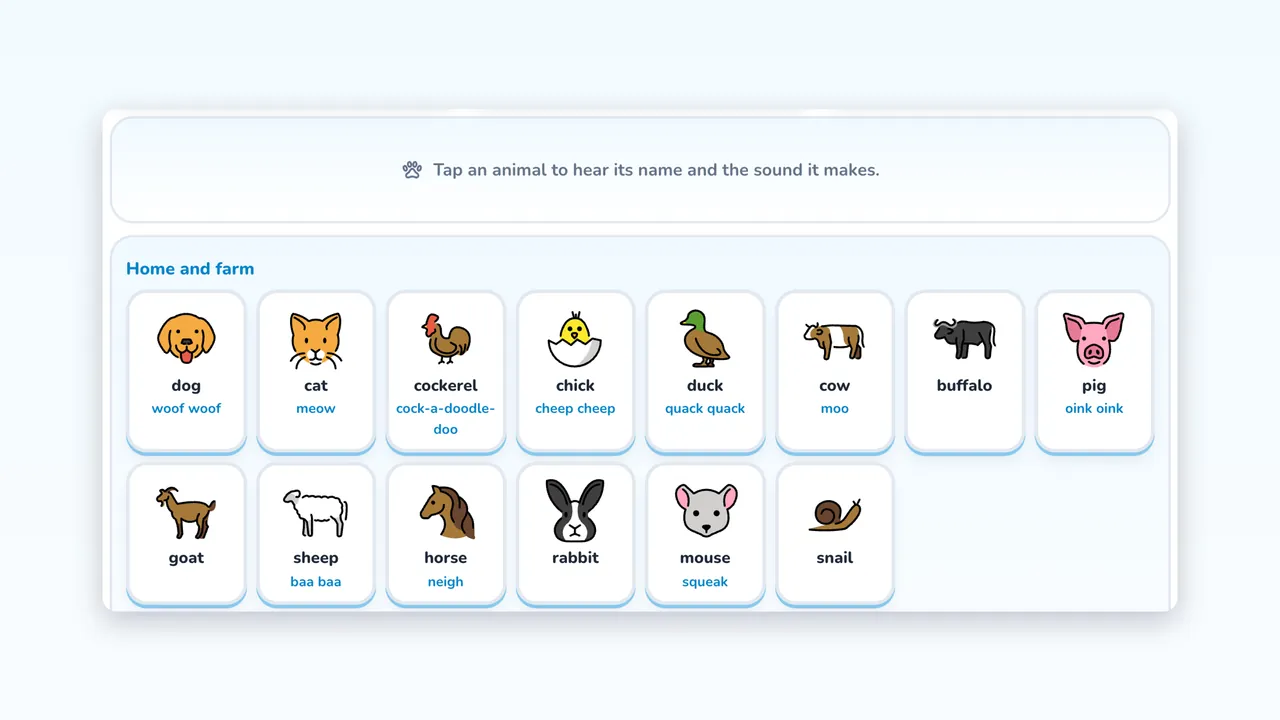
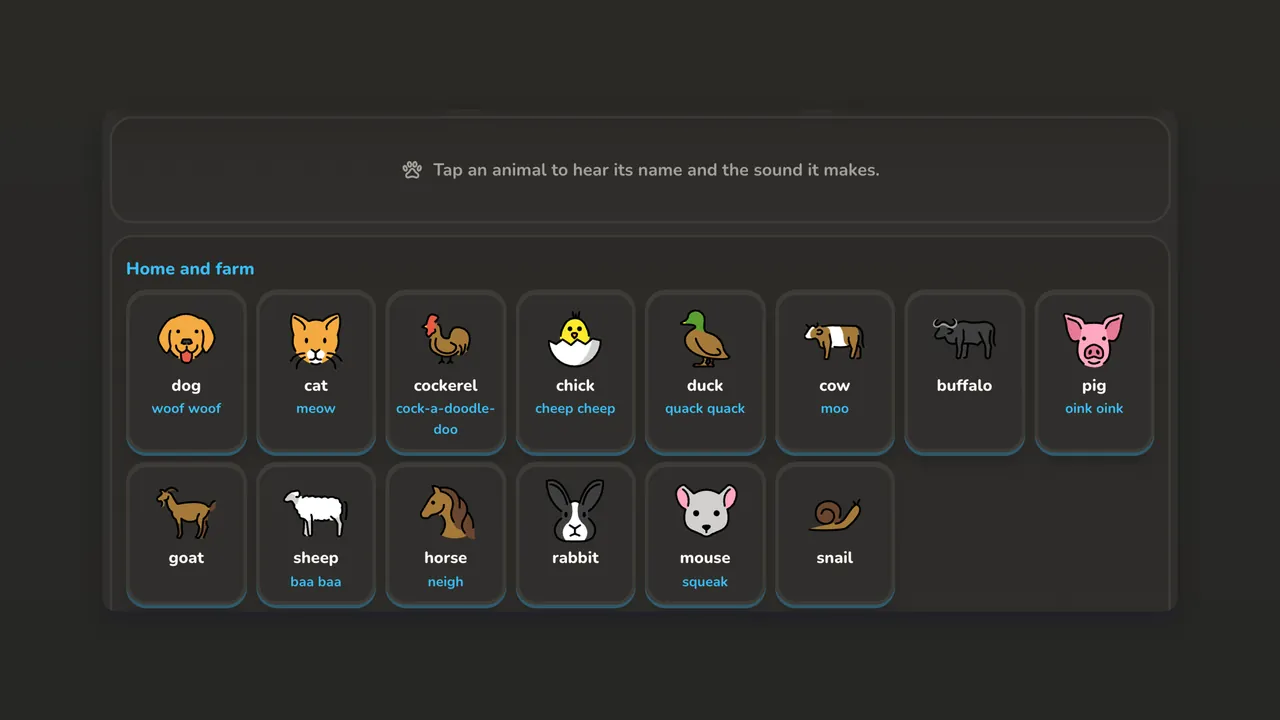
The letters learnt properly from day one — the name and the sound kept apart, as the classroom teaches them — with a picture to remember each one by.
 Let them play
Little TalkerAges 4+
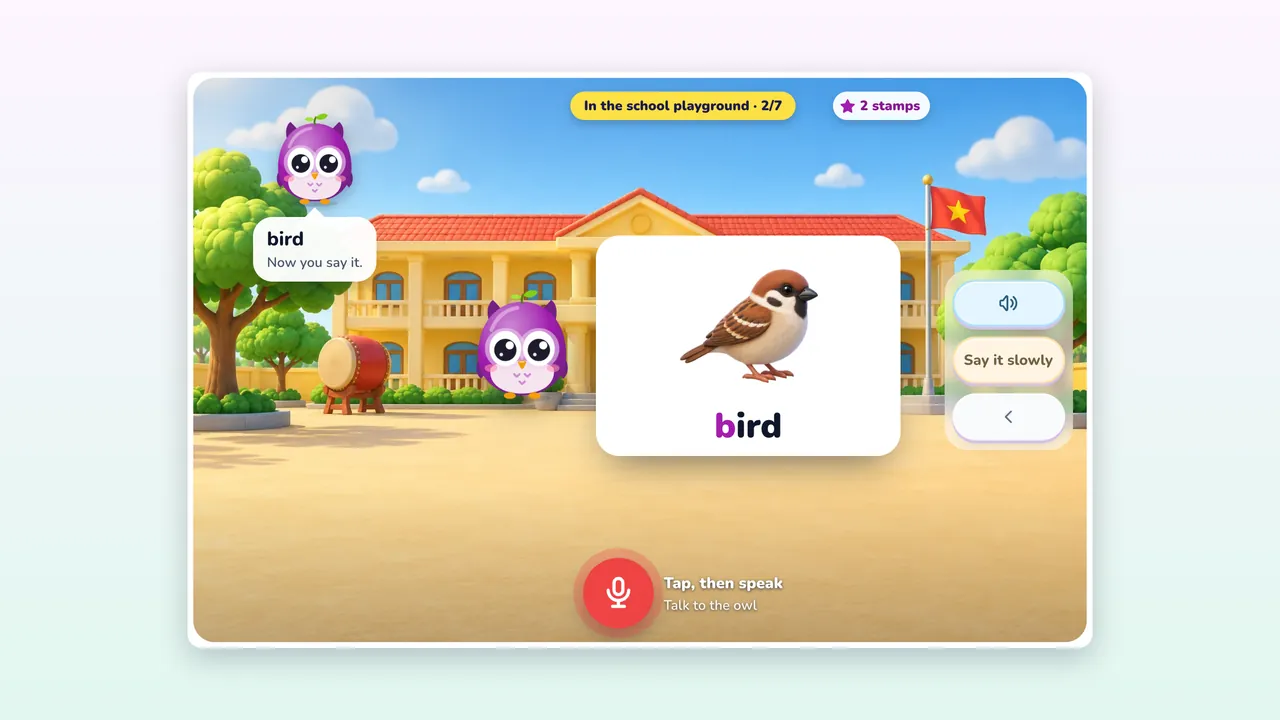
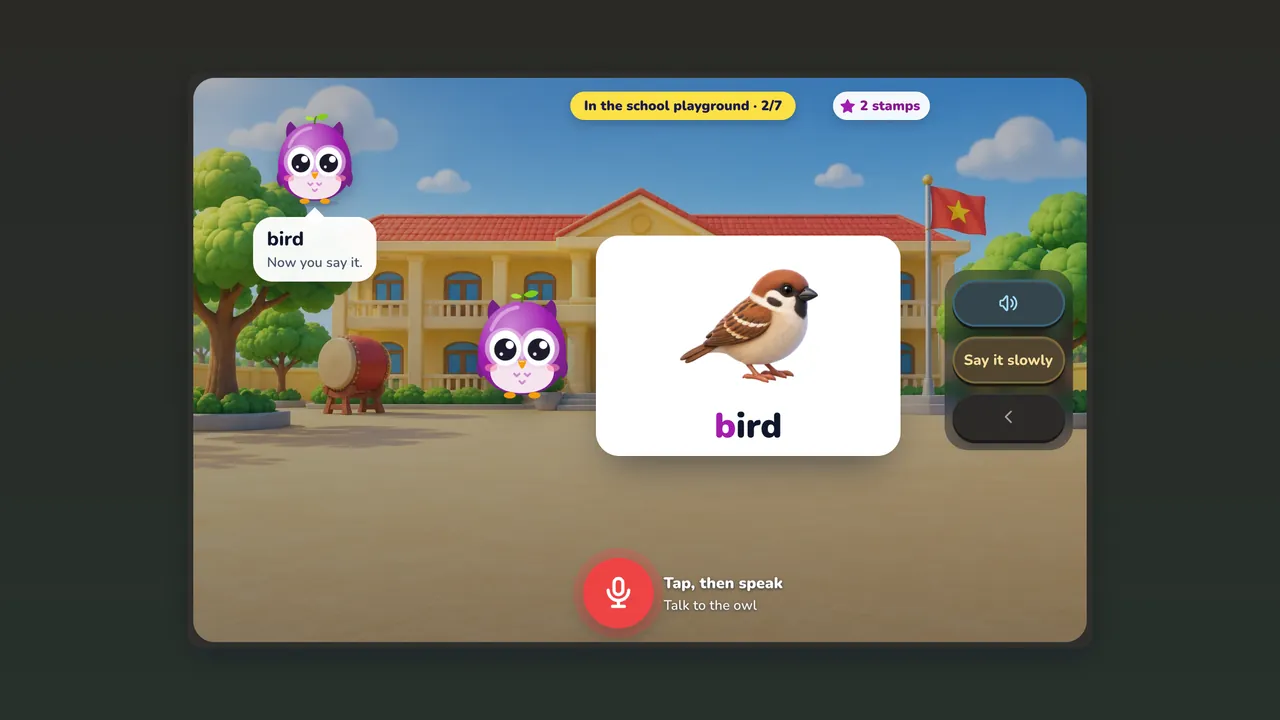
Practice in meeting English by ear and mouth first — listening, saying it back, chanting and answering a small conversation — on the words of the programme the child follows at school.
 Let them play
Little ReaderAges 6+
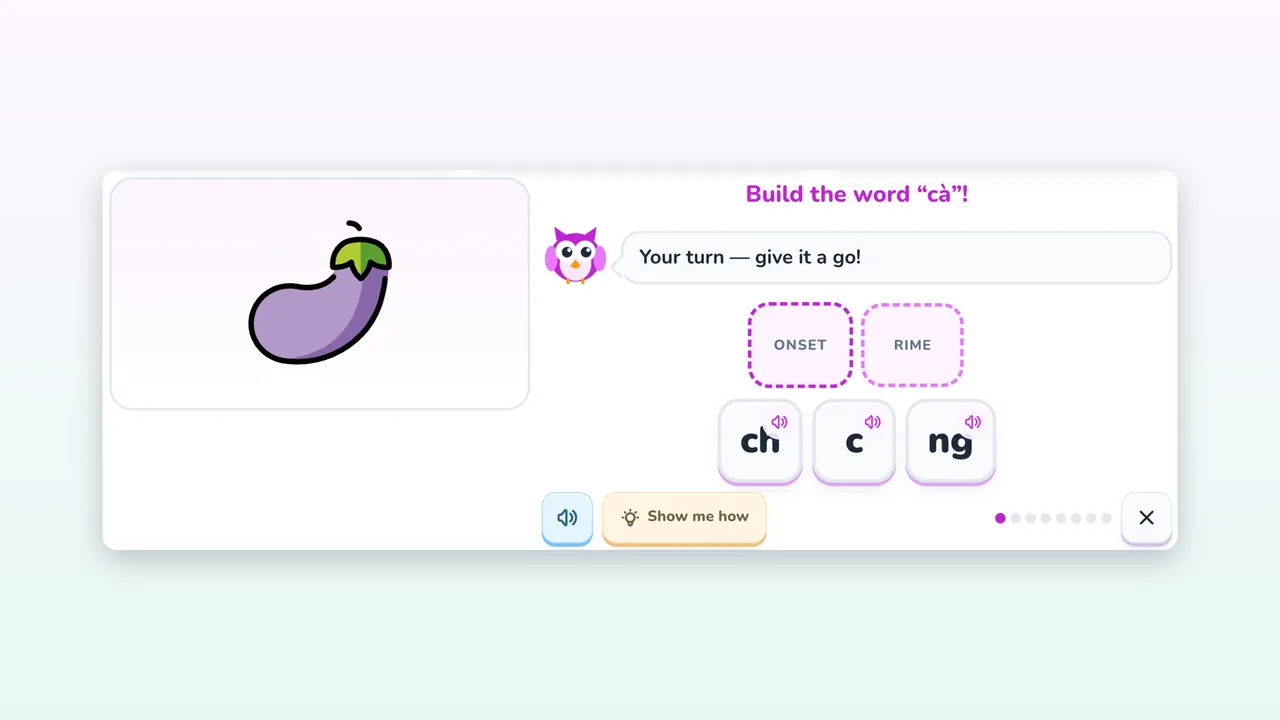
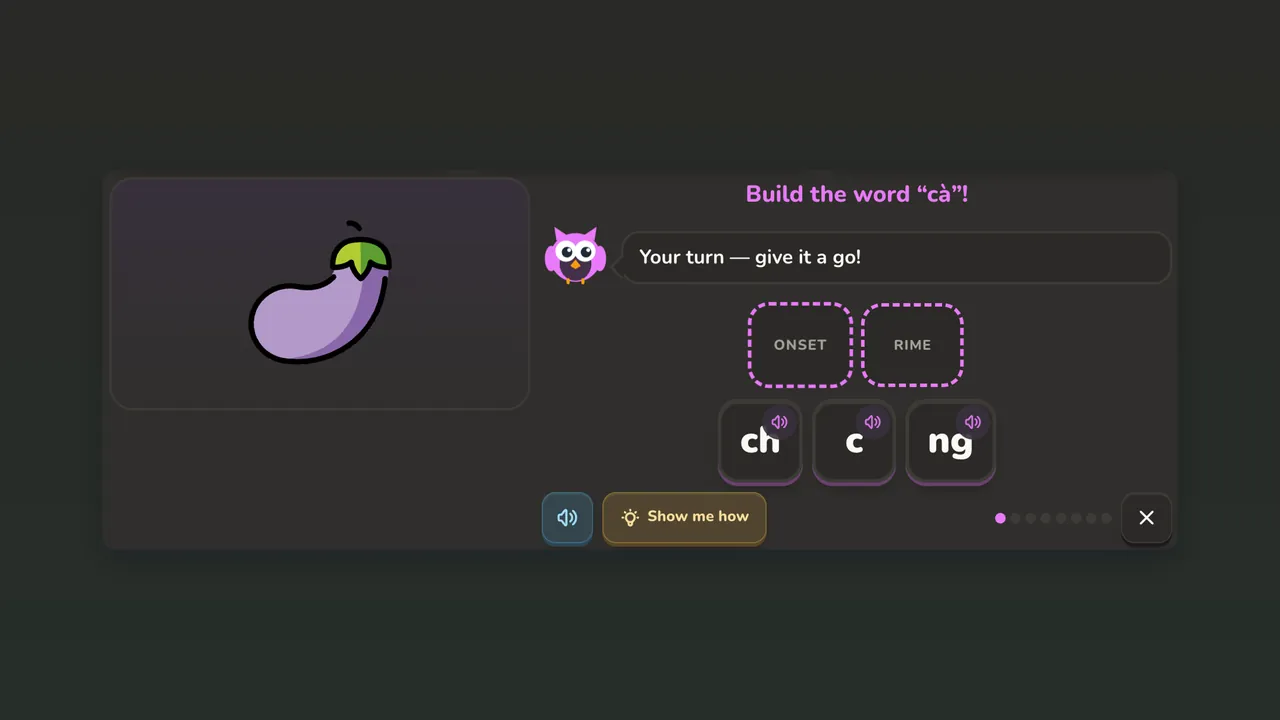
Reading starts with putting sounds together, so here your child builds every word with their own hands, one sound at a time.
Thinking & coding
 Let them play
Sink or FloatAges 7+
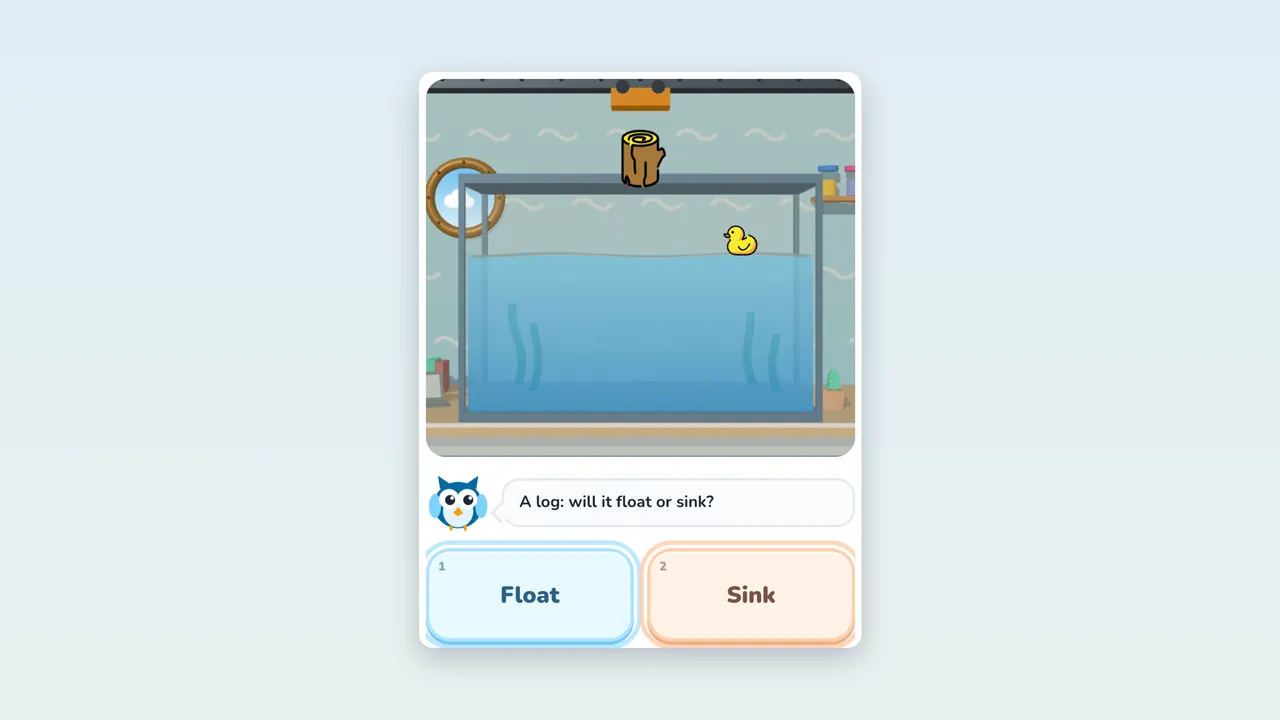
Science is learnt by predicting, then watching, then hearing why — not by watching and being quizzed afterwards.
 Let them play
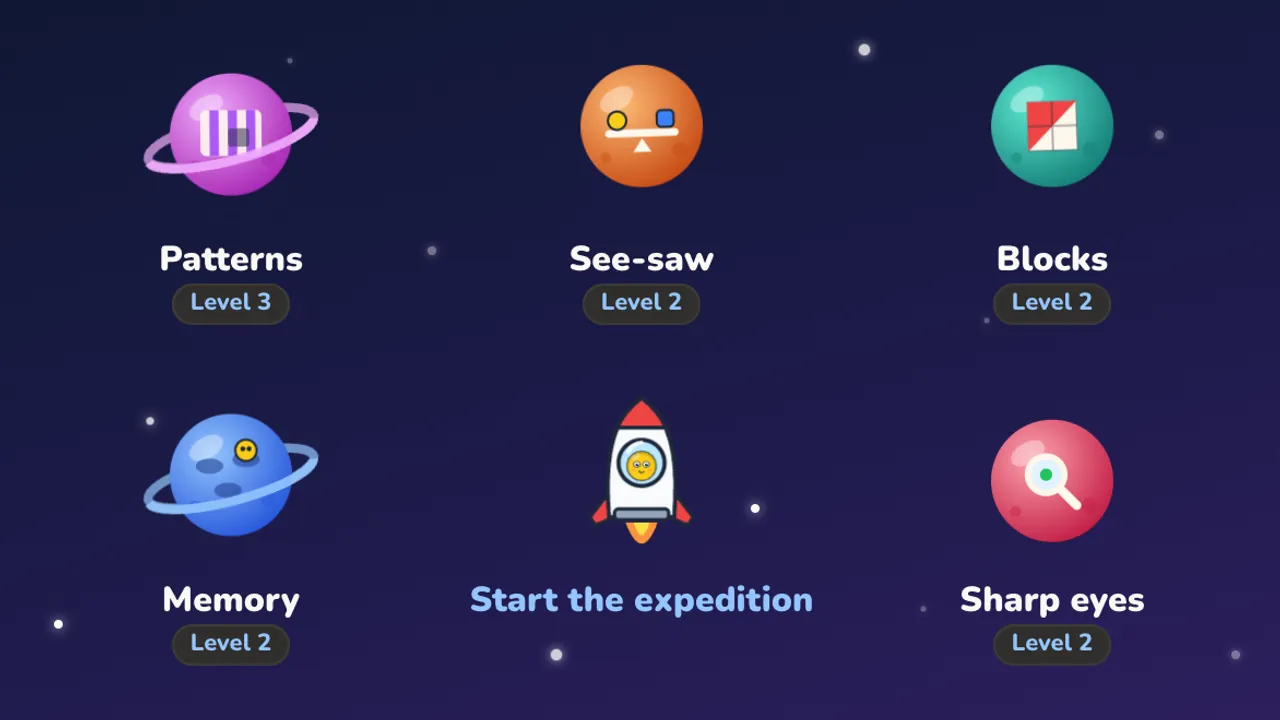
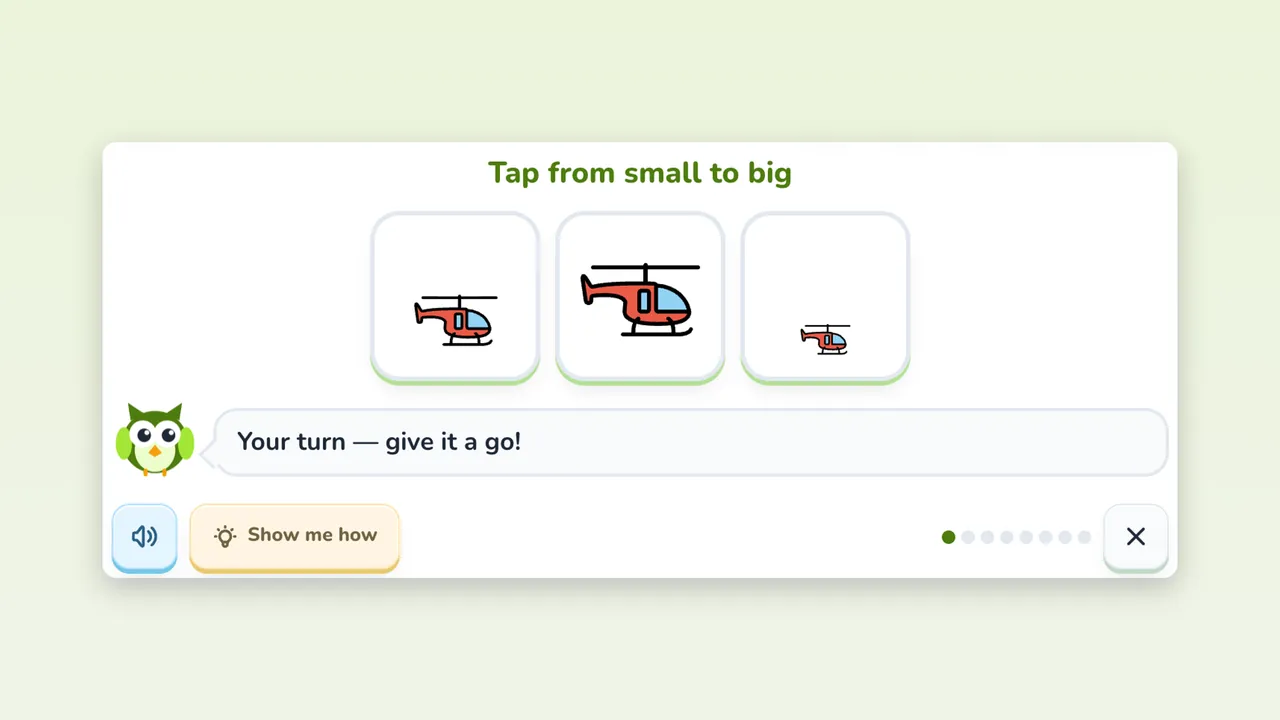
Mind PlanetsAges 5+
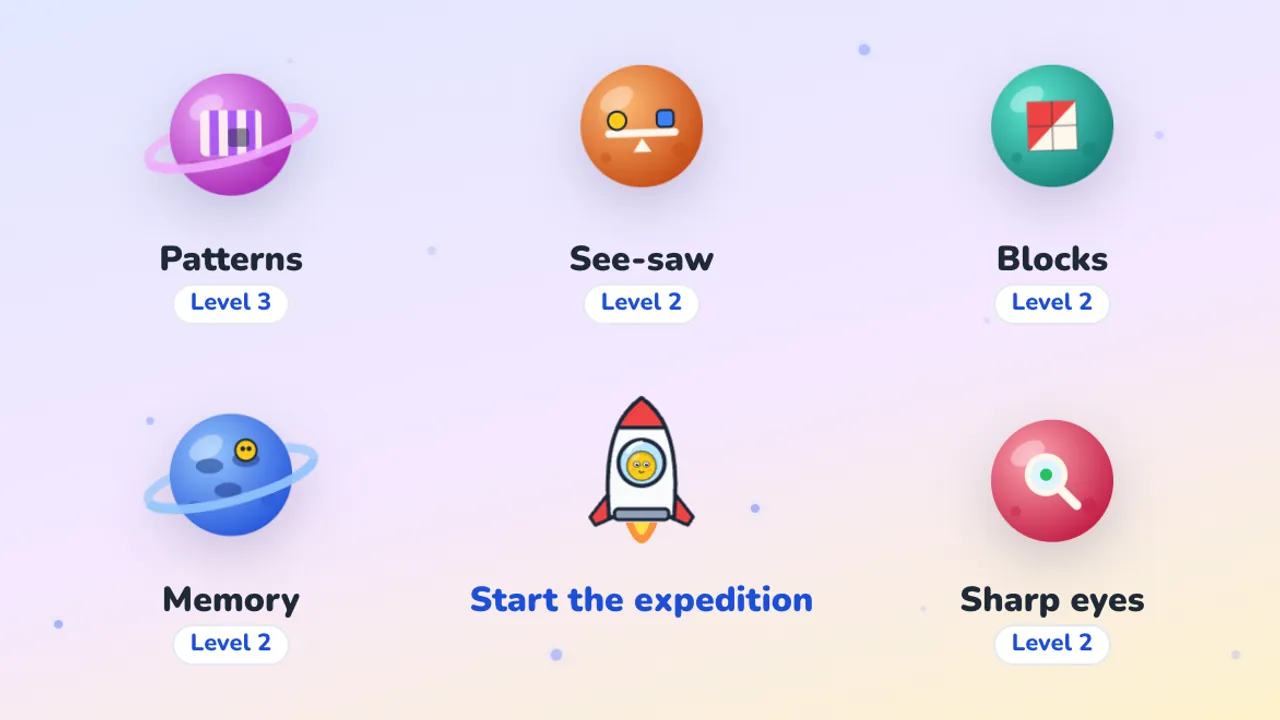
Your child meets the kinds of thinking that children's intelligence tests use, as a trip between planets rather than an exam.
 Let them play
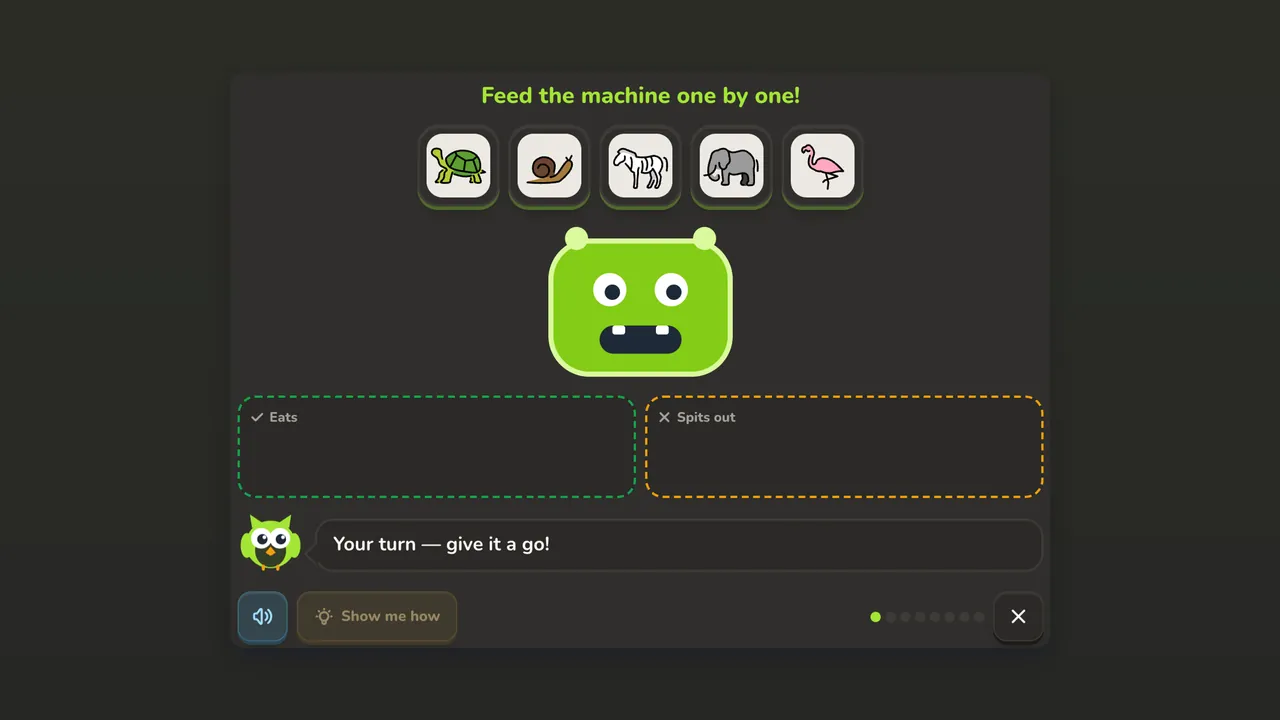
Logic GardenAges 4+
Reasoning need not wait for reading — children work things out with their eyes and hands, and understand it best when they explain it to someone else.
 Let them play
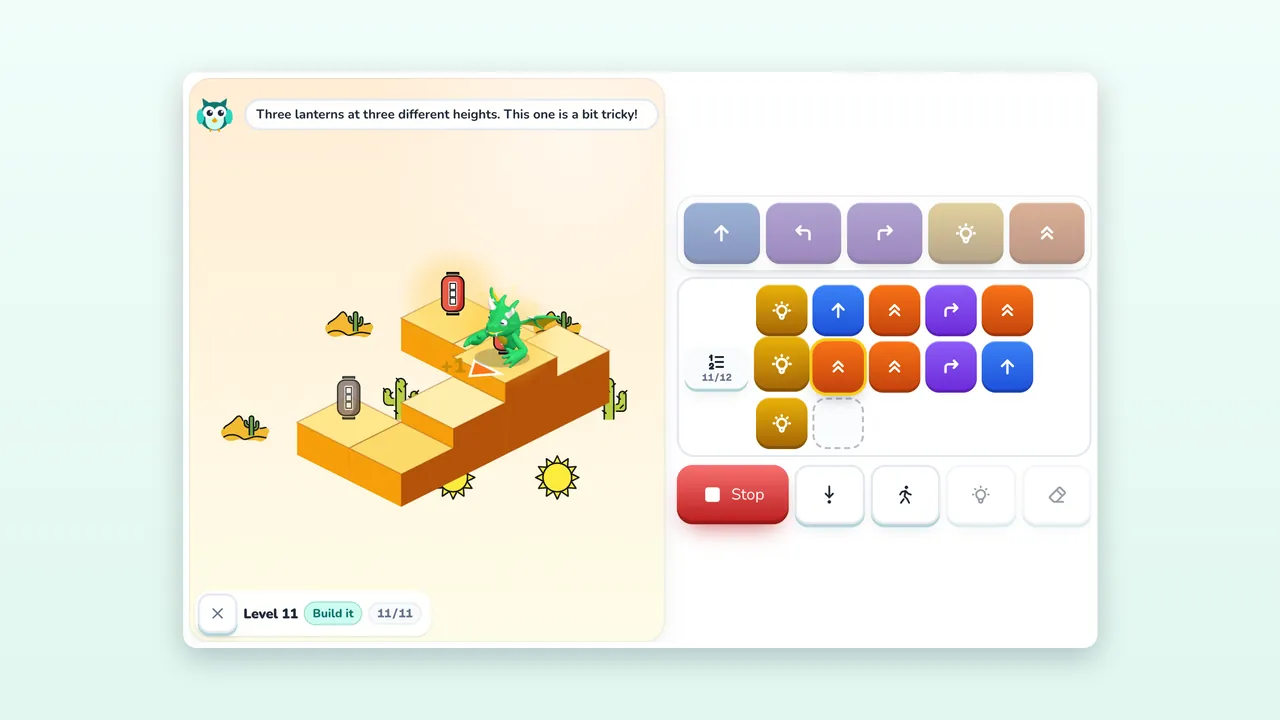
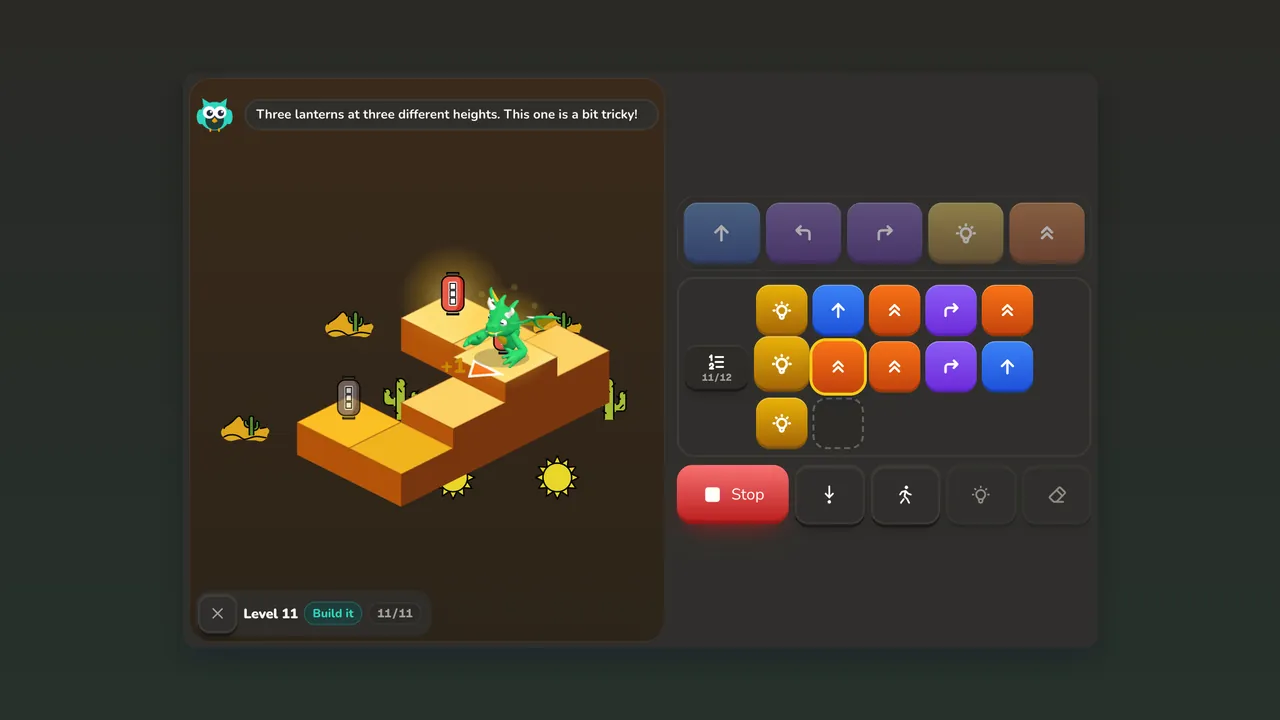
Little Dragon CodeAges 6+
Programming starts not with typing but with a way of thinking: break a job into steps, spot what repeats, and calmly track down the mistake.
Memory & focus
 Let them play
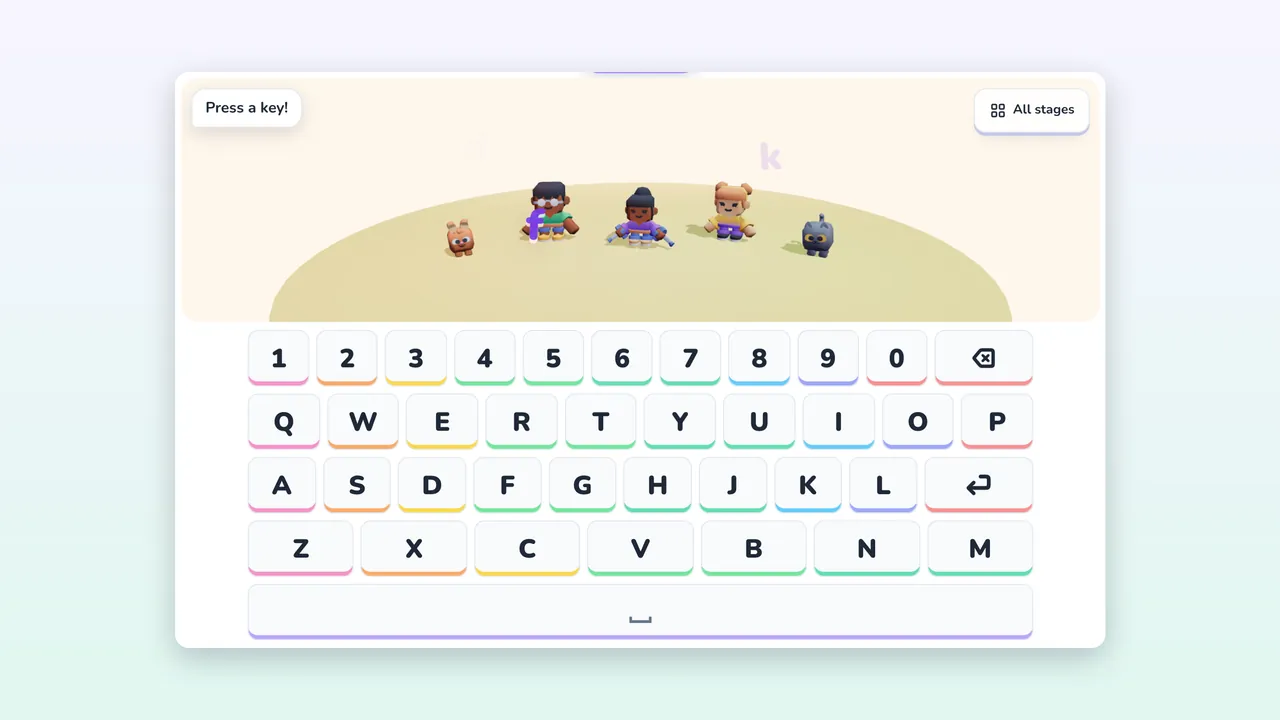
Key DanceAges 4+
A first go on a real keyboard should be pure fun, so here there is no such thing as a wrong key.
Visual & spatial
 Let them play
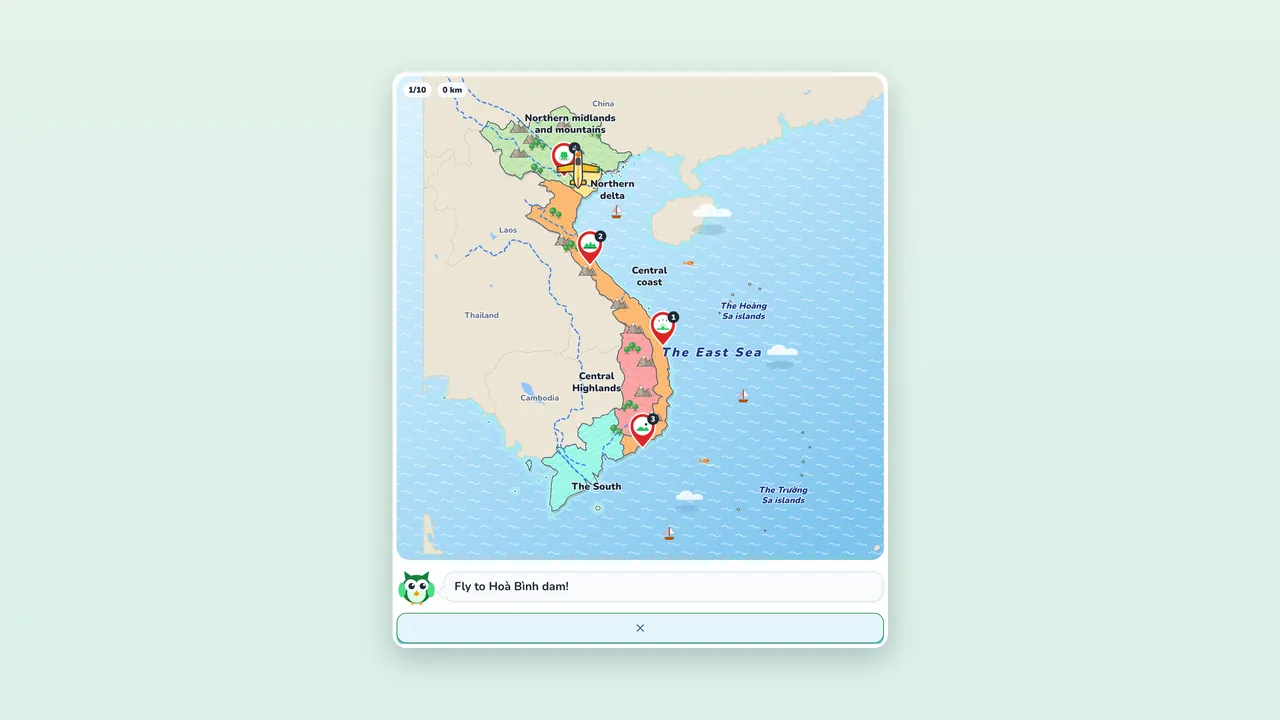
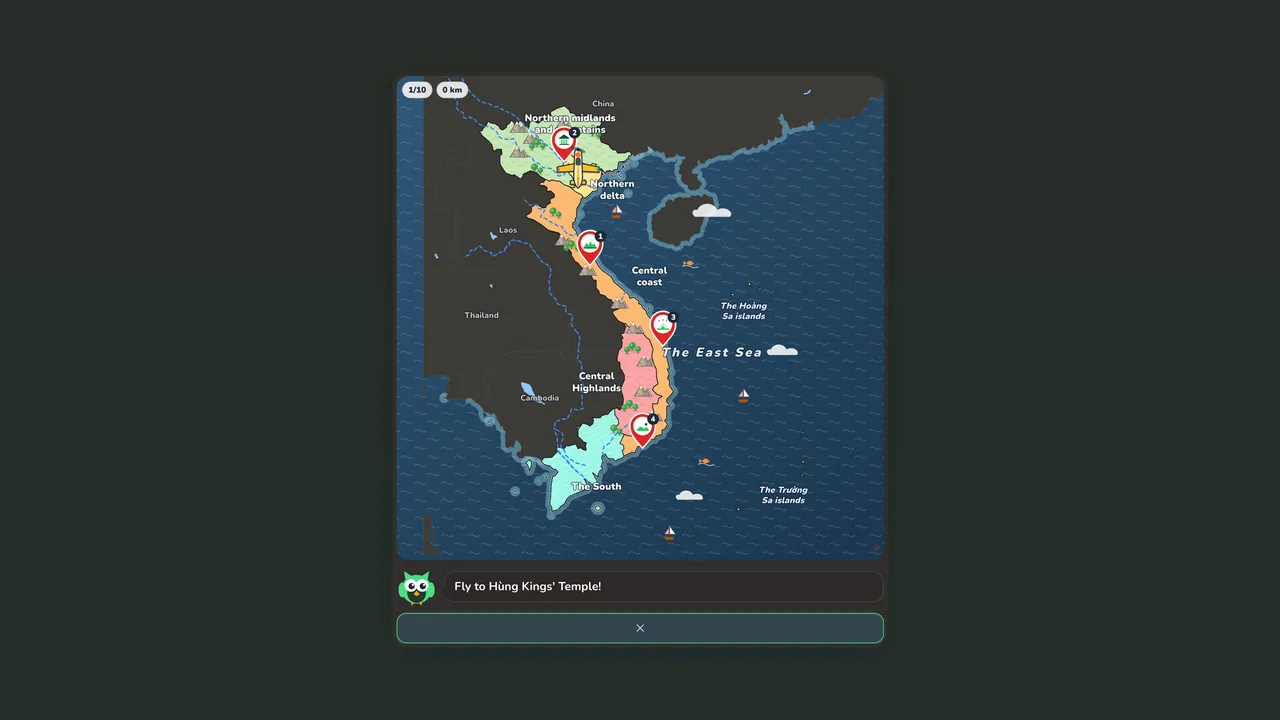
Map PlaneAges 8+
A child remembers a place on the map once they have flown there themselves, not once they have read its name in a table.
 Let them play
Tiny WorldAges 3+
Every five right answers add something to a world your child is building, and the questions keep pace with them as they go.
 Let them play
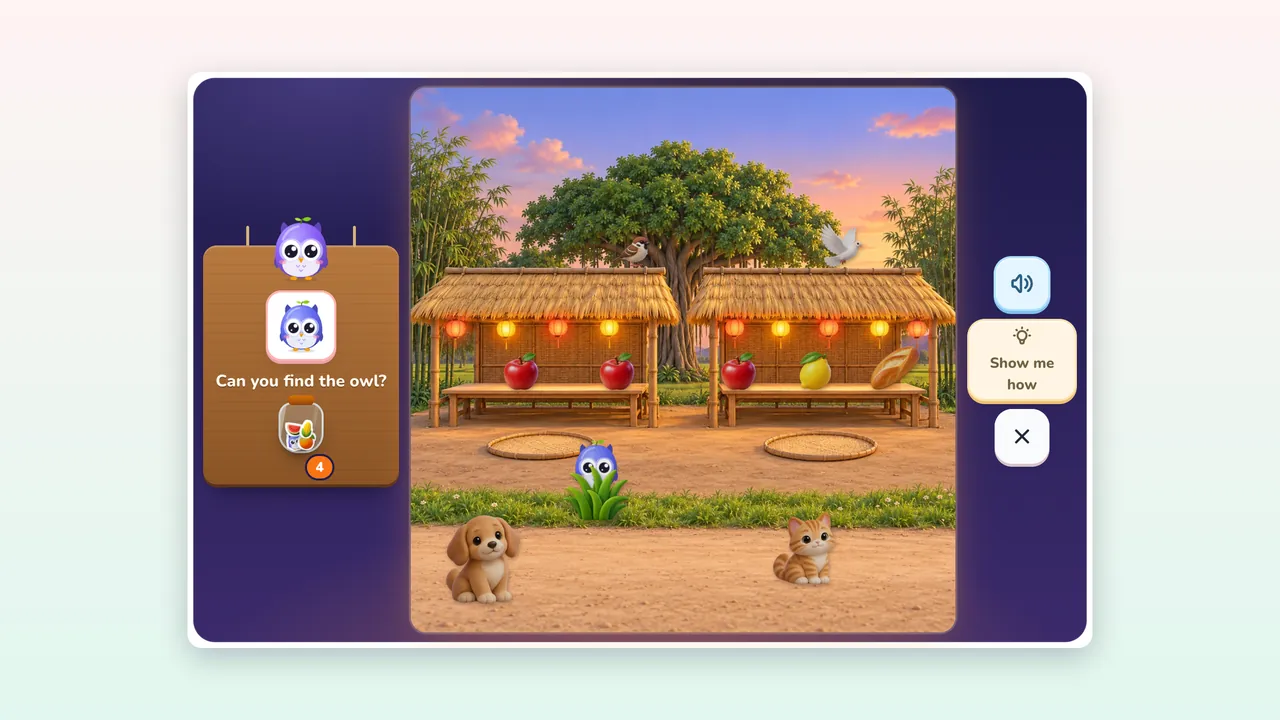
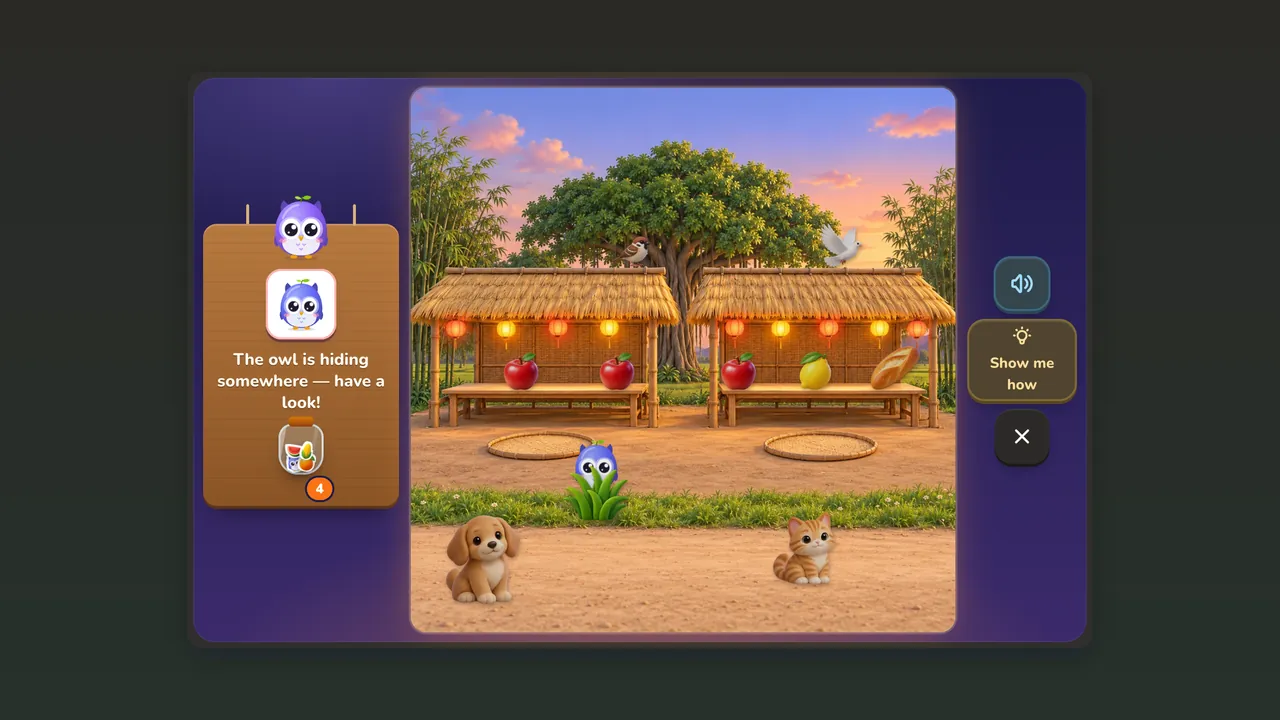
Picture HuntAges 3+
Practice in looking carefully at a busy picture and naming what is in it, with the everyday words a child hears at home.
Life skills
 Let them play
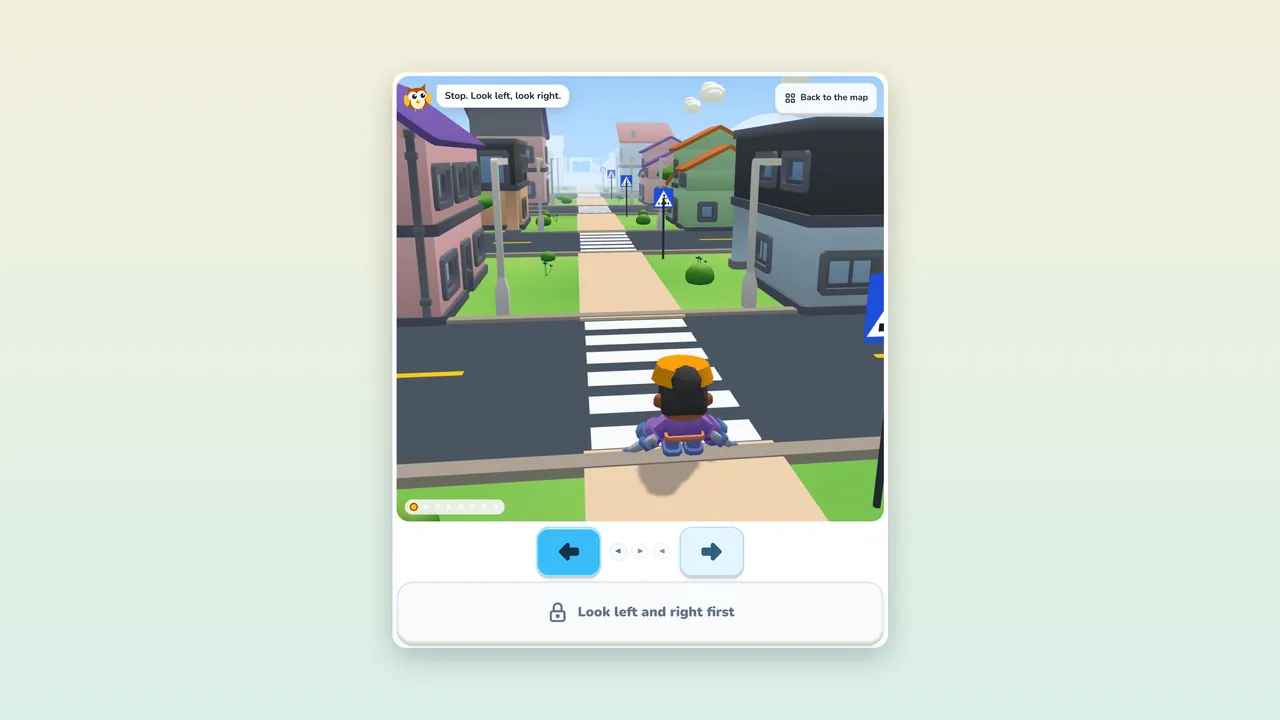
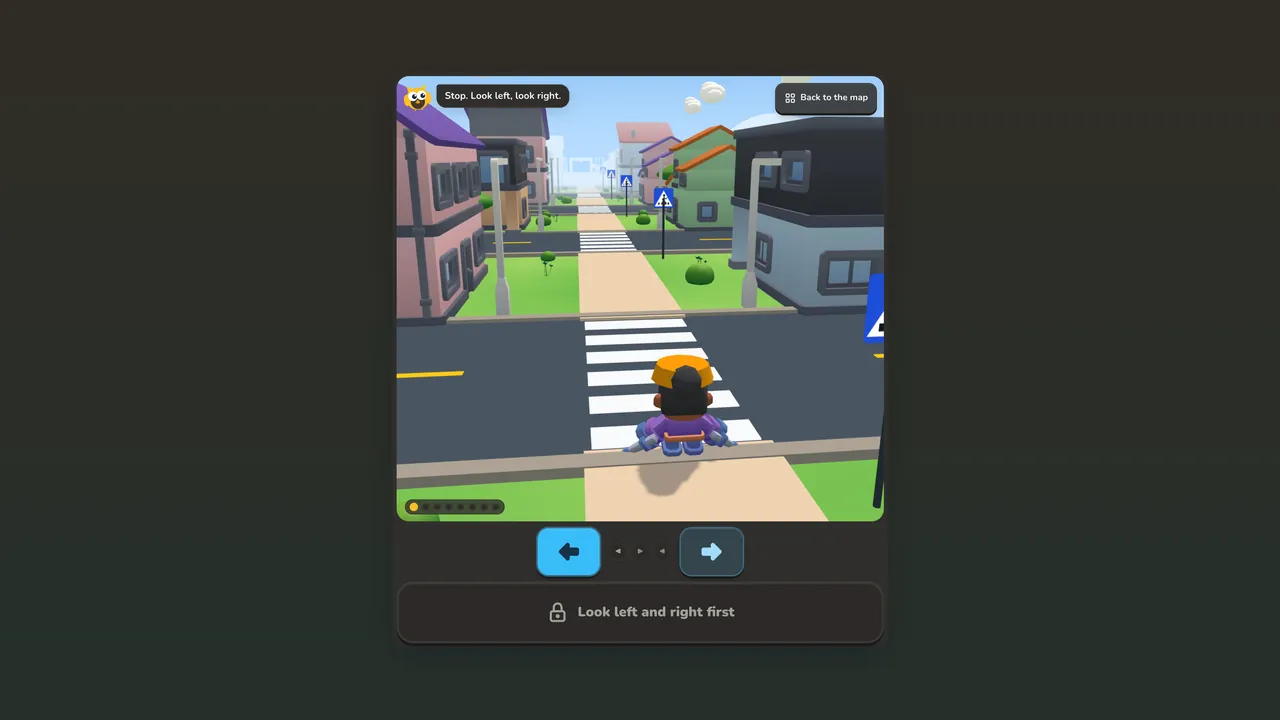
Safe CrossingAges 7+
A habit that saves lives is not learnt from a poster: the child has to stop, look left and right, and decide for themselves when to cross.
 Let them play
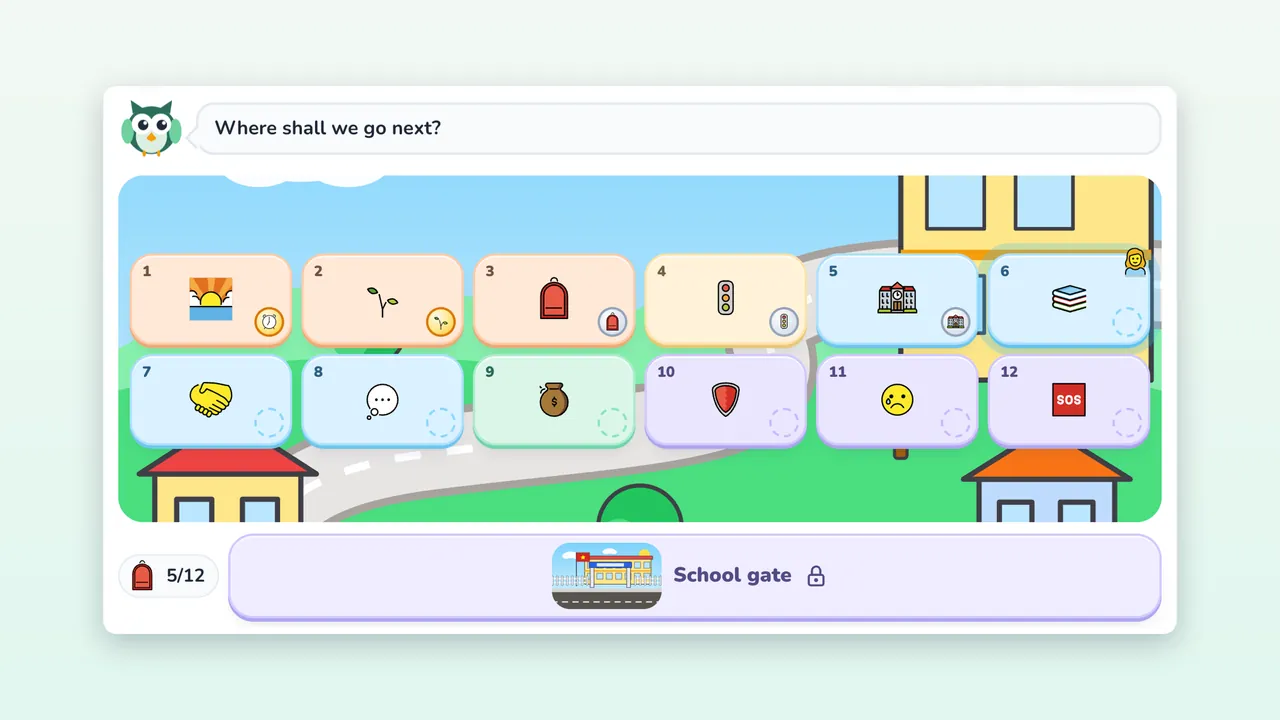
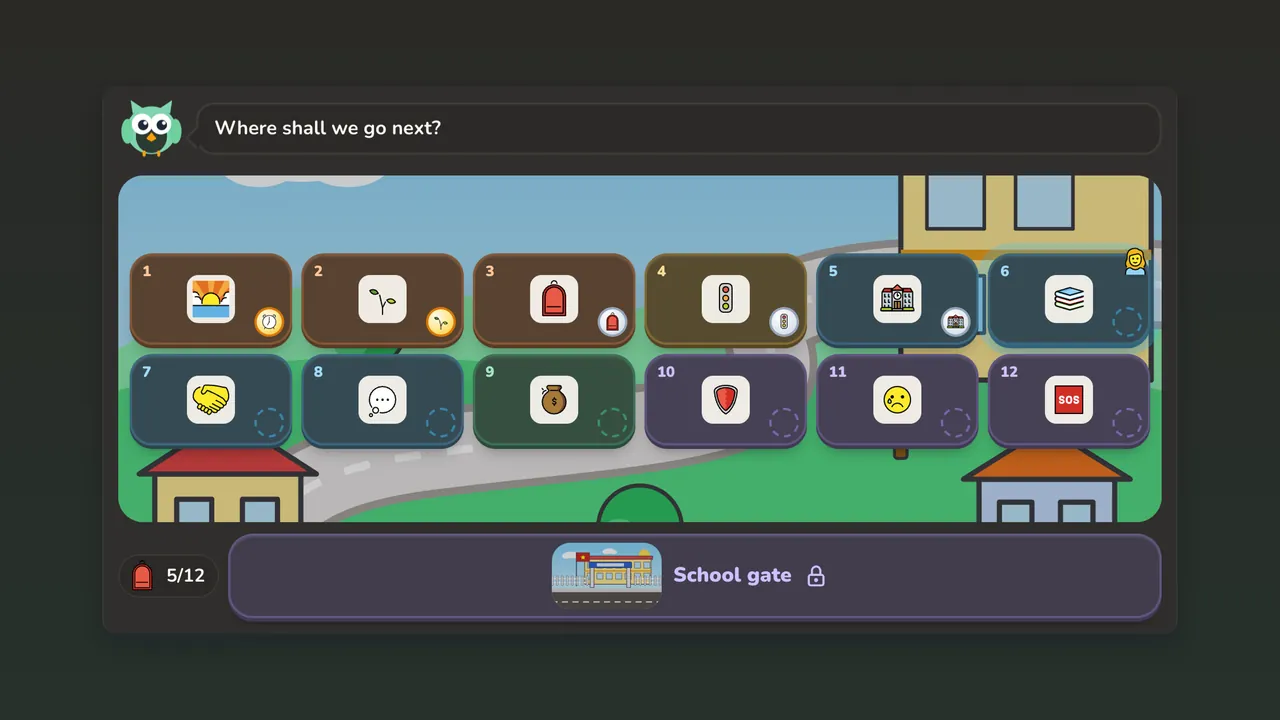
Ready for School!Ages 5+
Helps a child start grade 1 with confidence in the life skills parents worry about most: looking after themselves, getting on at school, staying safe and asking a grown-up at the right moment.
 Let them play
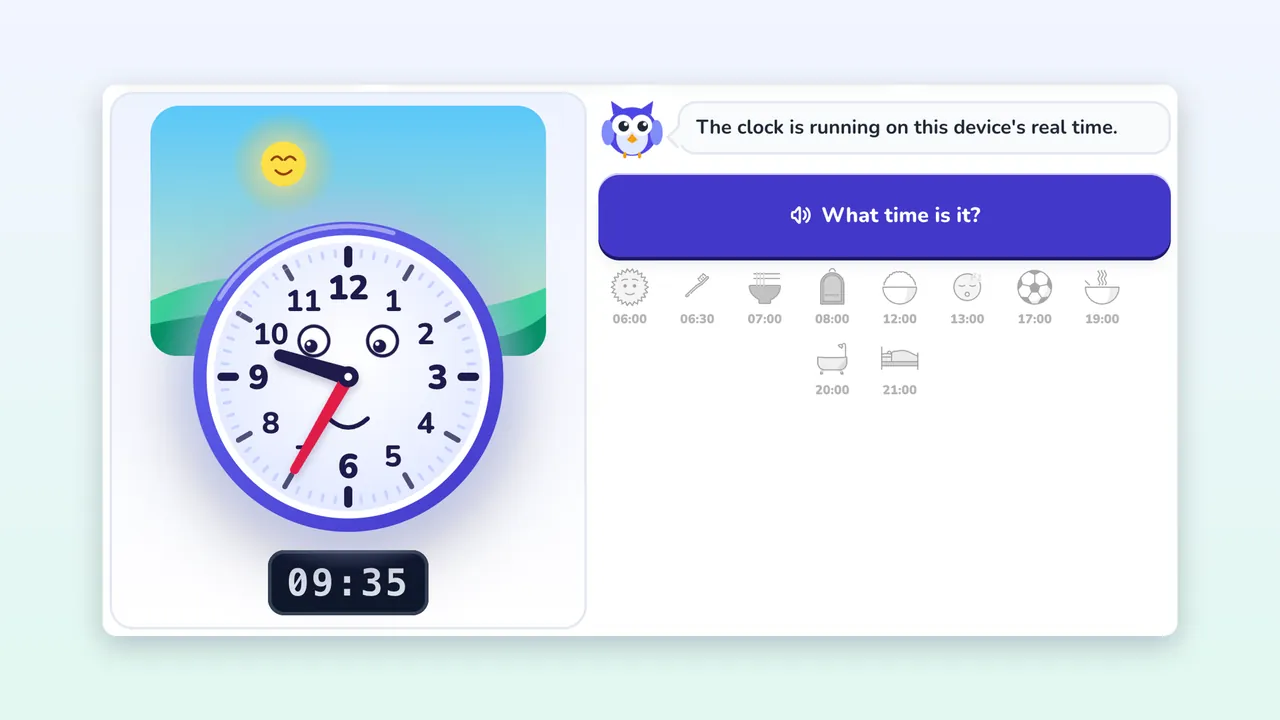
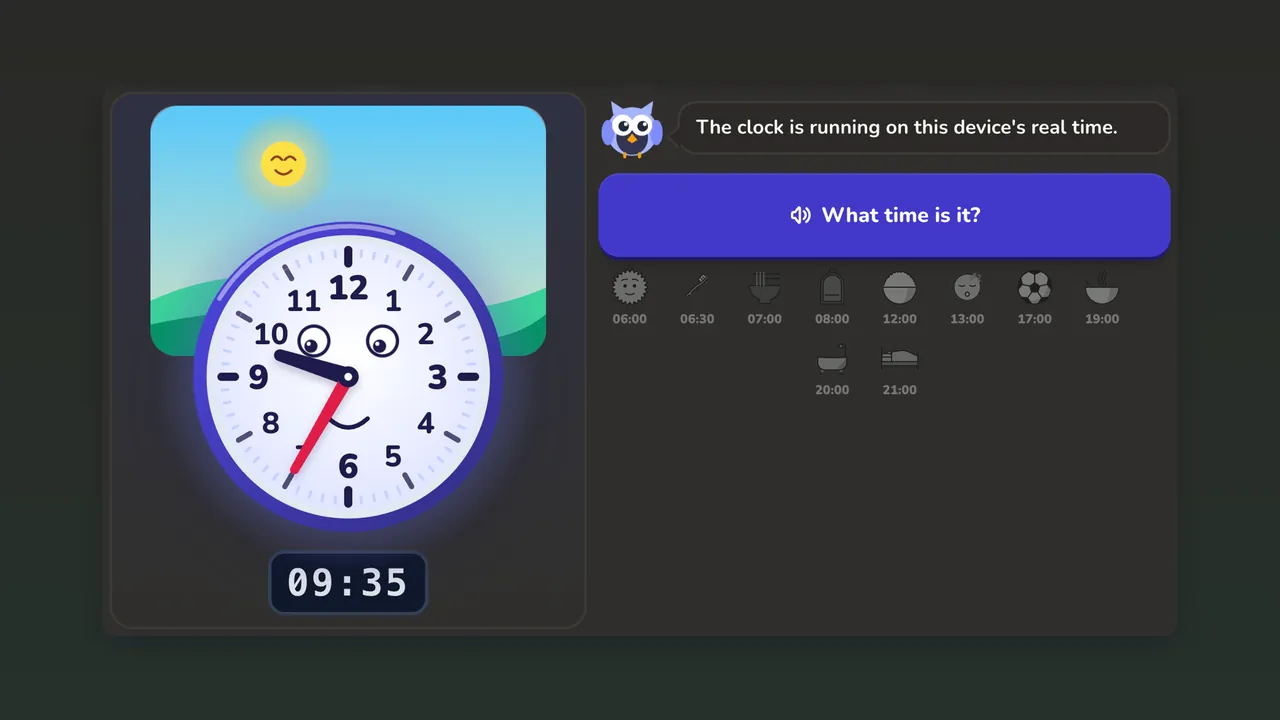
Clock LabAges 5+
Time only makes sense when it is tied to your child's own day — school, dinner, bedtime.
 Let them play
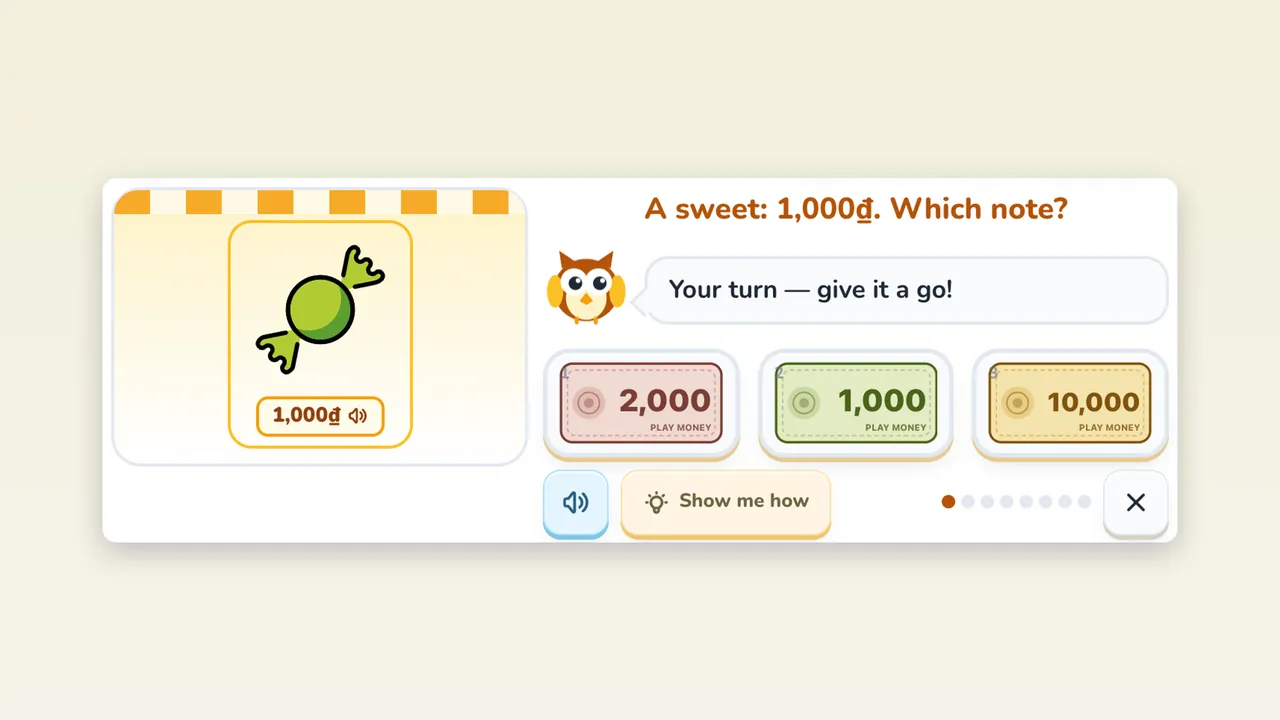
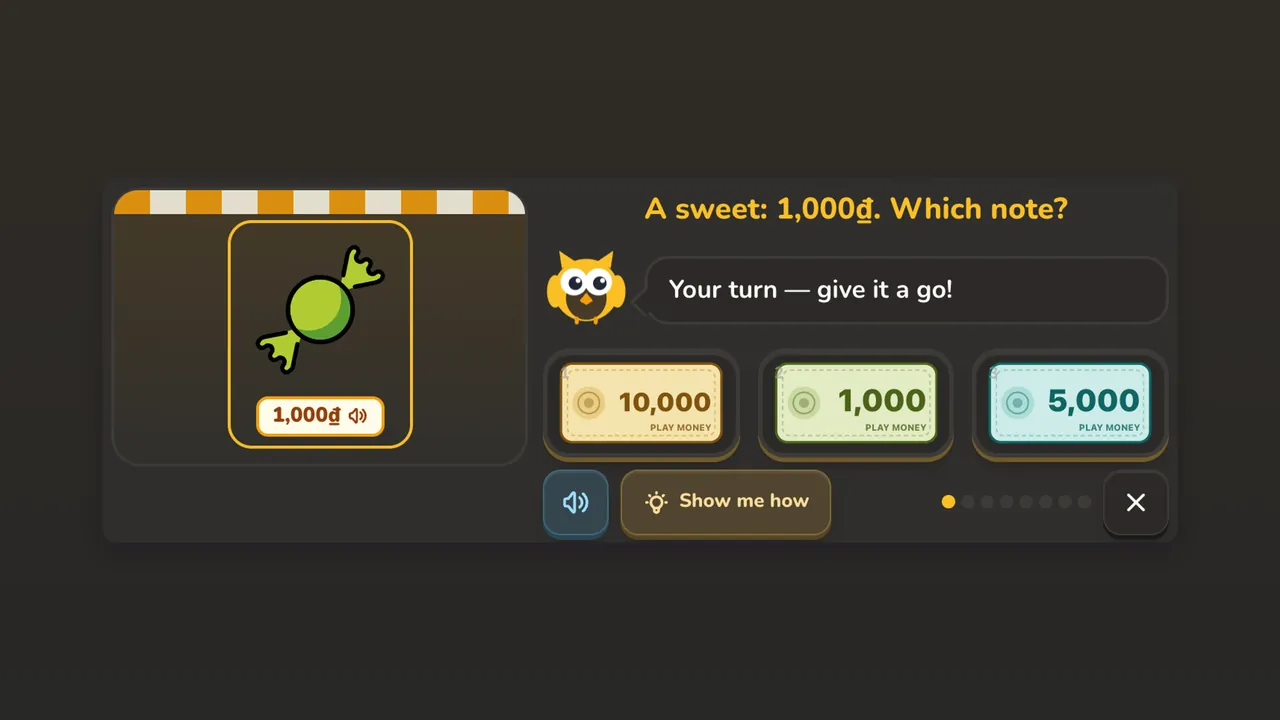
Little MarketAges 6+
Money only makes sense once you have counted out the change yourself, so here your child stands behind the stall.
Creativity
 Let them play
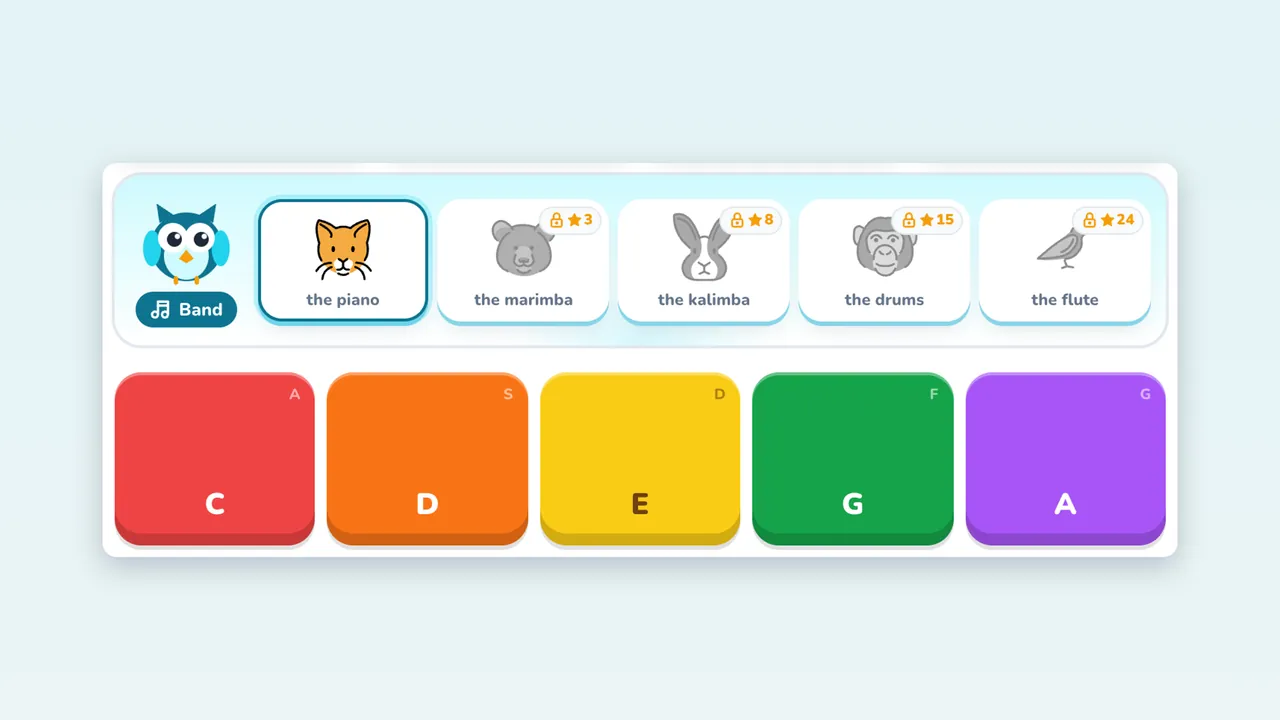
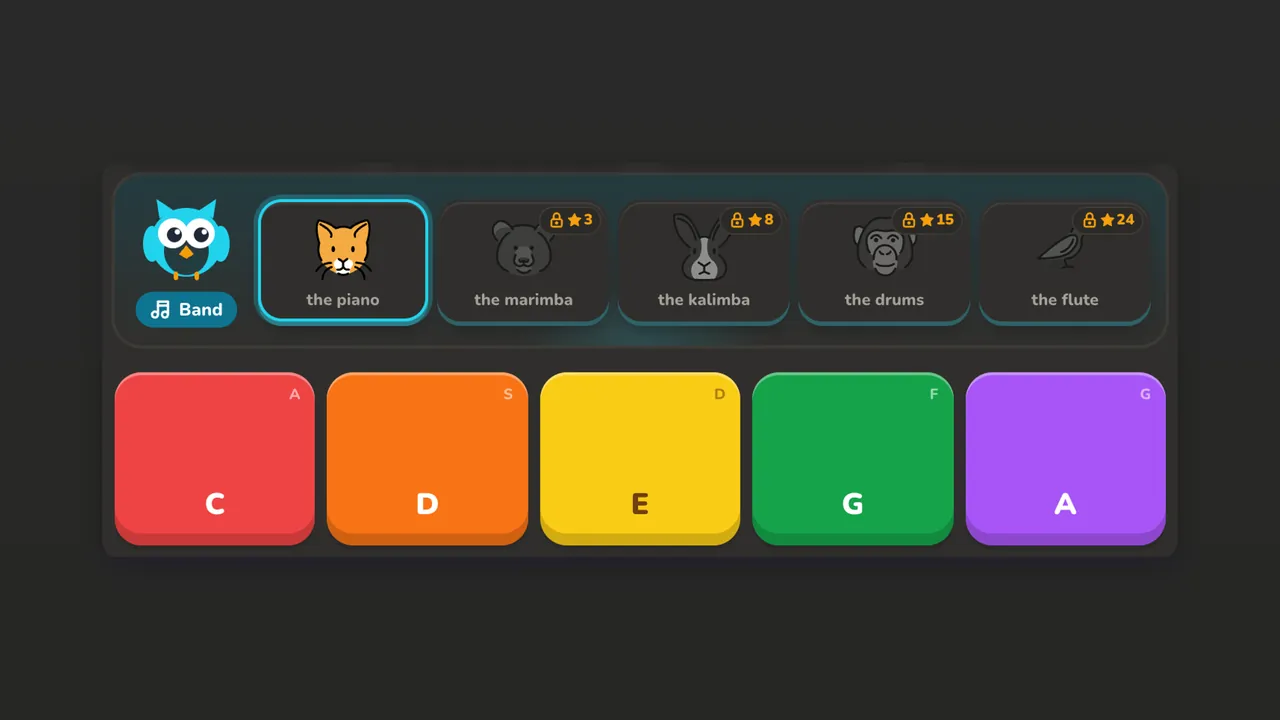
Tiny BandAges 3+
Your child is a musician from the very first tap and learns to listen once they already love playing, rather than sitting through notes before they are allowed to play.
 Let them play
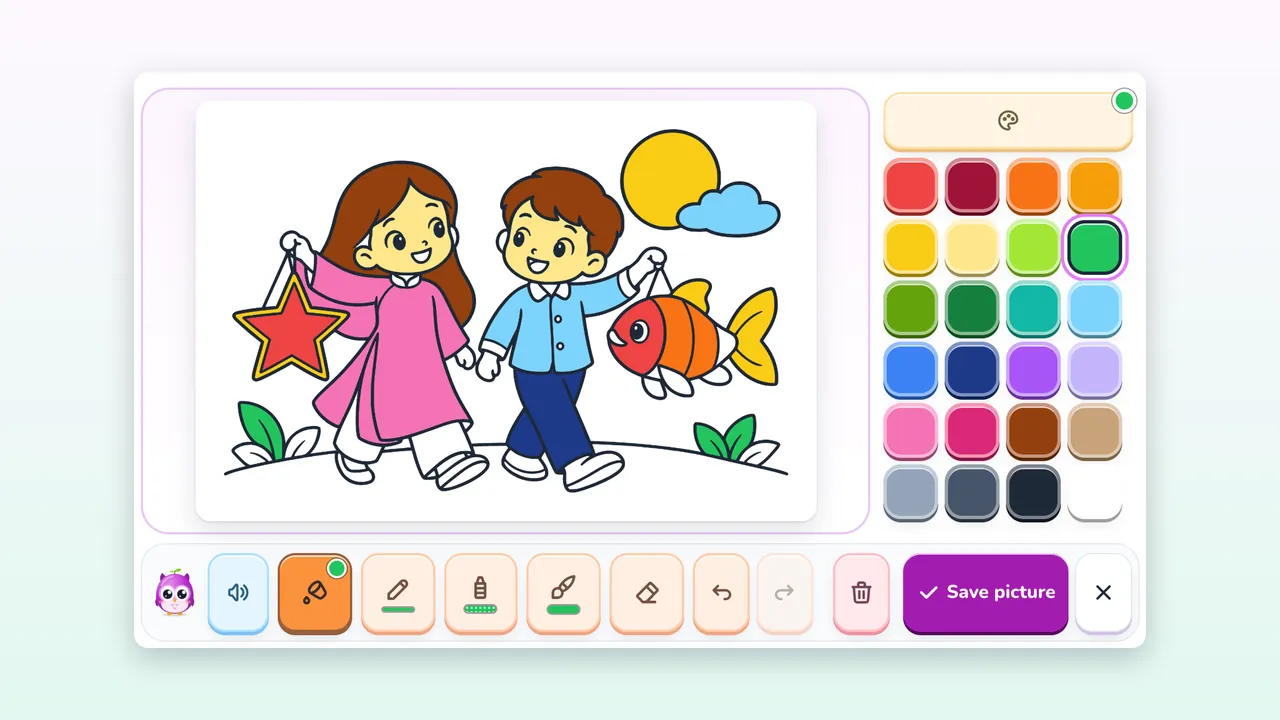
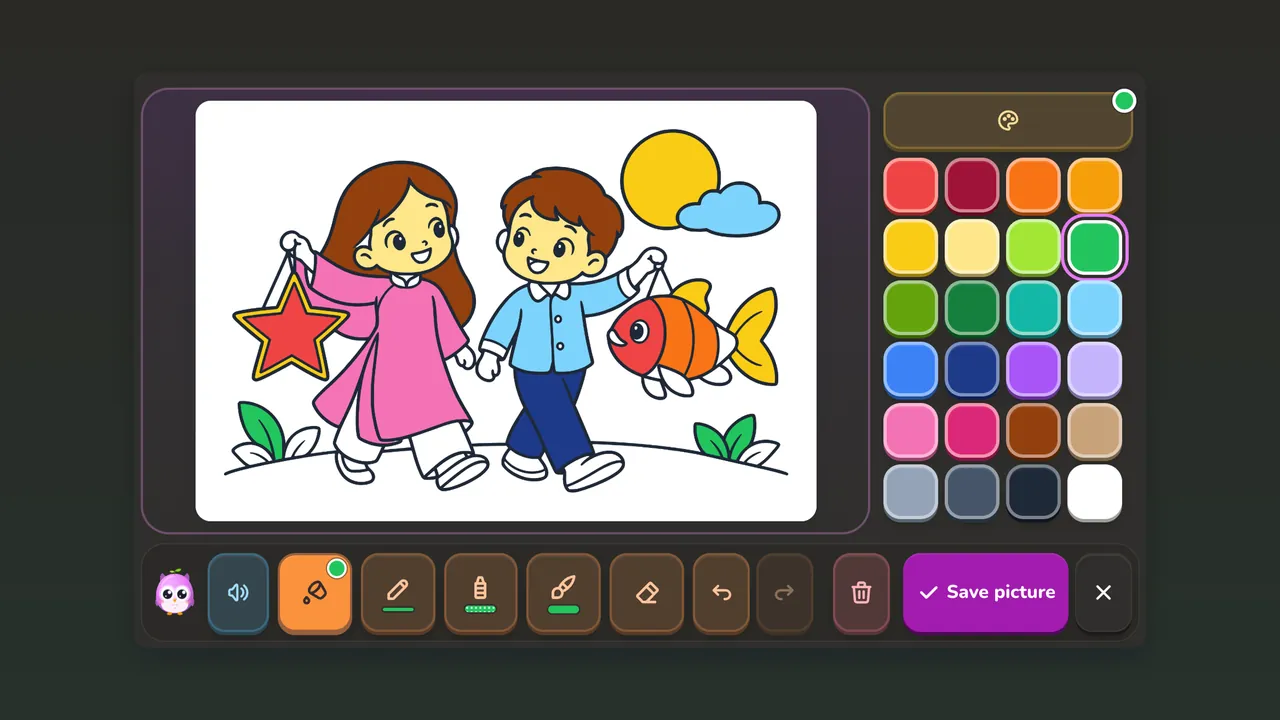
Little PainterAges 3+
Somewhere to colour, draw and show off a picture with nobody correcting it and no right answer — every picture a child makes is a good one.